


Overview of PM Surya Ghar Yojana
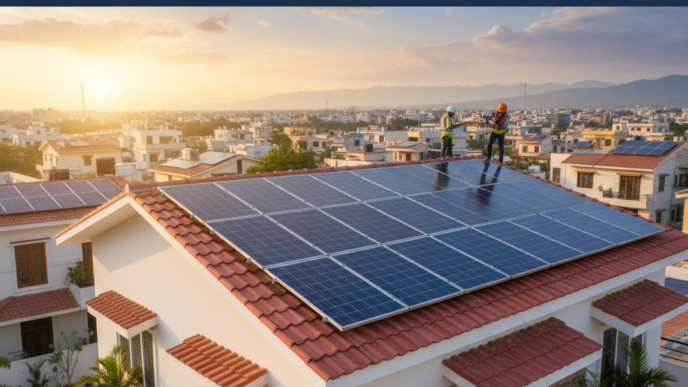
The PM Surya Ghar Yojana is a flagship program of the Government of India that invites homeowners to become prosumers – both producers and consumers – of solar electricity. Launched under the broader vision of the National Solar Mission, the scheme provides a subsidy of up to 30 % on the cost of rooftop solar panels, encourages net‑metering, and aims to install solar systems on millions of residences by 2025. By turning rooftops into mini‑power plants, the initiative seeks to cut household electricity bills, reduce carbon emissions, and accelerate India’s goal of 450 GW renewable energy capacity by the end of the decade. For citizens looking to lower their energy costs while supporting a cleaner grid, understanding the PM Surya Ghar Yojana solar panel installation process is the first step toward energy independence.
Recent data from the Ministry of New and Renewable Energy (MNRE) shows that over 2.5 million households have already applied for subsidies, and the government has earmarked ₹10,000 crore for financial incentives in the fiscal year 2024‑25. The scheme is open to residents across urban and rural landscapes, provided they meet basic eligibility criteria and have an unshaded roof area of at least 100 sq ft. With a growing network of certified installers and simplified online application portals, the PM Surya Ghar Yojana solar panel installation is becoming increasingly accessible to the average Indian homeowner.
Key Objectives of the Scheme
The objectives of the PM Surya Ghar Yojana are clearly defined and aligned with India’s sustainable development agenda: 
- Promote widespread adoption of rooftop solar panels in both metropolitan and remote communities.
- Enable consumers to offset a substantial portion of their electricity consumption with self‑generated solar power.
- Facilitate the export of surplus electricity to the grid through net‑metering, creating a revenue stream for households.
- Generate employment opportunities in the solar EPC (Engineering, Procurement, Construction) sector, supporting local economies.
These goals are reinforced by a national target to increase the share of solar power in the energy mix from the current 12 % to over 30 % by 2030. By integrating residential consumers into the renewable ecosystem, the scheme not only diversifies the energy supply but also builds resilience against fluctuating fuel prices and grid outages.
Eligibility Criteria for Participation
To qualify for the PM Surya Ghar Yojana solar panel installation, applicants must satisfy several straightforward conditions:
- The property must possess a roof that receives direct sunlight for a minimum of six hours daily and has a clear area of at least 100 sq ft.
- The applicant must be a registered electricity consumer with a valid connection from any Distribution Company (DISCOM).
- The installation must comply with local building bylaws, electrical safety norms, and fire‑safety regulations.
- Households belonging to low‑income or middle‑income brackets, as defined by the Ministry of Housing and Urban Affairs, are eligible for enhanced subsidy rates and financing assistance.
Additional documentation required includes proof of property ownership, recent electricity bills, and a detailed system design prepared by an approved solar EPC partner. The Ministry’s official portal provides a downloadable checklist to streamline the application process.
Financial Incentives and Subsidy Structure
One of the most compelling aspects of the PM Surya Ghar Yojana is its financial support mechanism:
- Up to 30 % subsidy on the total project cost for eligible households, reducing the upfront capital outlay significantly.
- Additional incentives for systems larger than 3 kW, encouraging families to opt for higher capacity installations that yield greater long‑term savings.
- Access to zero‑interest loans through partner banks, allowing consumers to spread the remaining cost over manageable EMIs.
- Revenue from surplus electricity export via net‑metering, which can offset the loan repayment and improve the overall return on investment.
These financial levers have been highlighted in recent news reports from The Times of India, which noted a 45 % increase in solar installations in tier‑2 cities after the subsidy rollout. The combined effect of reduced costs, easy financing, and earnings from excess generation makes the PM Surya Ghar Yojana solar panel installation an economically attractive proposition.
Step‑by‑Step Installation Process
Prospective participants can follow a clear, regulator‑approved workflow to bring a solar system online:
- Assess Roof Suitability – Conduct a site survey to evaluate roof orientation, shading, and structural load capacity. Many installers use drone imagery to generate precise feasibility reports.
- Select a Certified Installer – Choose an EPC partner listed on the official PM Surya Ghar Yojana portal; verified installers guarantee compliance with MNRE standards.
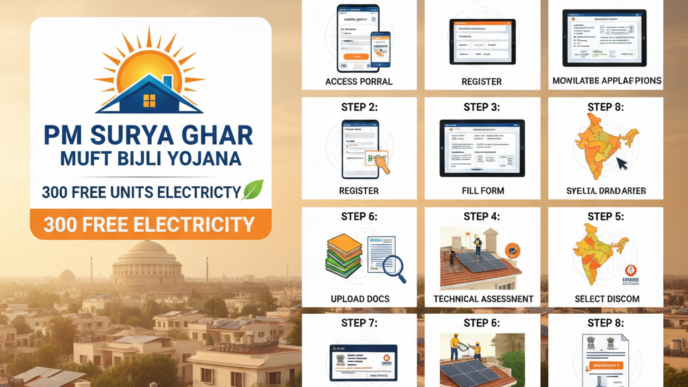
- Apply for Approval – Submit essential documents, including ownership proof, latest electricity bill, and the system design, to the respective DISCOM for technical clearance.
- Secure Financing – Apply for the government subsidy and, if needed, a zero‑interest loan from an empanelled bank to cover any remaining expenses.
- Installation and Safety Inspection – The chosen installer mounts the photovoltaic modules, connects the inverter, and performs a mandatory safety and performance audit.
- Net Metering Registration – Once commissioned, the homeowner registers the system with DISCOM to enable two‑way power flow and receive credits for exported electricity.
- Commissioning and Monitoring – The system is officially handed over after a final inspection, and real‑time performance can be tracked through the installer’s mobile app.
This end‑to‑end process typically spans 8‑12 weeks from application to commissioning, depending on regional approval timelines and installer availability.
Benefits Realised by Households
Adopting solar under the PM Surya Ghar Yojana delivers multi‑dimensional benefits:
- Cost Savings – Average households report a reduction of 30‑50 % in monthly electricity bills within the first year of operation.
- Environmental Impact – A typical 3 kW residential system offsets approximately 4 tonnes of CO₂ annually, contributing directly to India’s climate commitments.
- Energy Independence – Homeowners experience reduced vulnerability to electricity price hikes and grid disturbances, especially in regions with frequent outages.
- Property Value Appreciation – Real‑estate analysts estimate a 5‑7 % premium for homes equipped with certified solar installations.
Case studies from Gujarat and Rajasthan illustrate that families who installed solar in 2023 have already recovered up to 60 % of their initial investment through bill savings and net‑metering credits.
Potential Challenges and Mitigation Strategies
While the PM Surya Ghar Yojana is transformative, certain obstacles may impede smooth adoption:
- Upfront Capital Outlay – Even with a 30 % subsidy, the initial expense can be prohibitive for low‑income families. Mitigation includes leveraging government‑backed loan schemes and phased installation approaches.
- Regulatory Delays – Approval times vary across states; early engagement with DISCOM officials and submission of complete documentation can accelerate the process.
- Maintenance Requirements – Dust accumulation and occasional inverter failures necessitate periodic cleaning and monitoring. Selecting installers that offer comprehensive maintenance contracts ensures longevity and performance.
Addressing these challenges through proactive planning and leveraging available support mechanisms enables households to reap the long‑term advantages of solar energy without undue frustration.
Future Outlook and National Impact
The PM Surya Ghar Yojana is positioned as a catalyst for India’s renewable energy ambitions. With an anticipated deployment of 10 million rooftop solar systems by 2027, the scheme will contribute an estimated 15 GW of distributed generation capacity, easing pressure on centralized power plants. This decentralized model aligns with the government’s vision of a resilient, low‑carbon electricity grid that can accommodate the growing demand from electric vehicles and industrial electrification.
Moreover, the widespread adoption of residential solar will foster a culture of sustainability among citizens, encouraging energy‑efficiency practices such as LED lighting, smart appliance usage, and demand‑response participation. As more households join the solar ecosystem, the collective impact will be a measurable dip in fossil‑fuel consumption, enhanced energy security, and a robust foundation for India’s clean‑energy future.
For homeowners eager to contribute to a greener future while reaping tangible financial benefits, installing solar panels under the PM Surya Ghar Yojana is a pragmatic and forward‑thinking choice. With government support, clear financial incentives, and a streamlined installation pathway, the transition to solar power has never been more accessible.
Stay updated with the latest Yojana schemes and government initiatives for better awareness and eligibility. For personalized guidance on accessing these benefits, reach out to us.