


PM Kisan Yojana – A Quick Recap
The Pradhan Mantri Kisan Samman Nidhi (PM‑Kisan) scheme was launched in December 2018 as a flagship initiative of the Government of India to provide a minimum income support of ₹6,000 per year to small and marginal farmers. The assistance is transferred in three equal instalments of ₹2,000 each, typically every four months, to help meet critical agricultural expenditures such as seed procurement, fertilizer purchase, and labor wages. Since its inception, the programme has covered more than 12 crore farmer families, making it one of the largest direct cash‑transfer schemes in the world. The central government funds the entire outflow, while the Ministry of Agriculture & Farmers’ Welfare coordinates with state governments for beneficiary identification using land‑holding records maintained at the panchayat level. For a detailed overview, see the Wikipedia summary.
Latest Update: ₹2,000 Instalment Has Been Disbursed
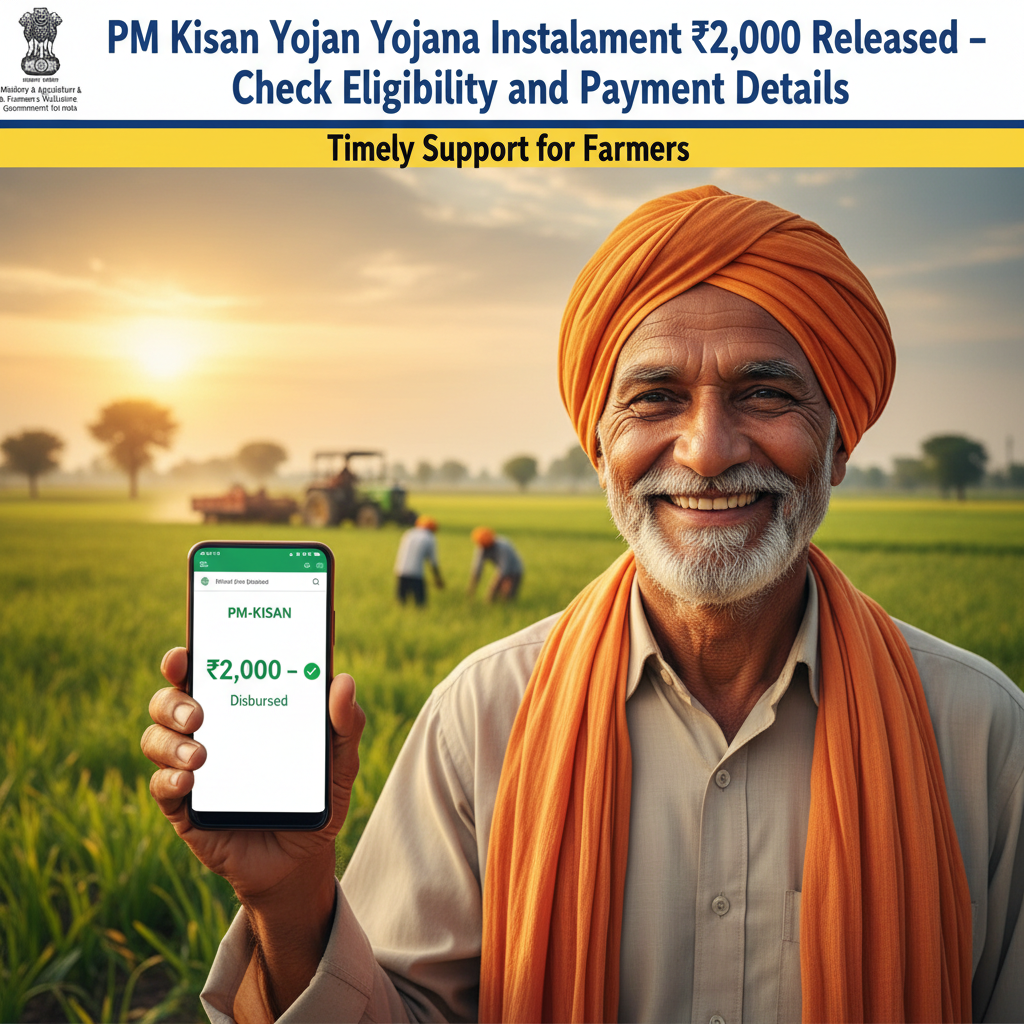
According to the most recent official communication from the Ministry of Agriculture & Farmers’ Welfare dated 14 February 2026, the third instalment of ₹2,000 for the fiscal year 2025‑26 has been released to all eligible beneficiaries who completed the mandatory e‑KYC verification before the cut‑off date of 31 January 2026. The credit appears in the bank accounts of registered farmers as a ₹2,000 transfer, and the transaction reference is captured on the PM‑Kisan portal. The ministry confirmed that this instalment marks the successful completion of the first‑year tranche for the current financial cycle and that subsequent instalments will be rolled out on a quarterly basis provided the beneficiary database remains up‑to‑date. For official details, refer to the PM‑Kisan portal.
Eligibility Criteria for the ₹2,000 Instalment
Eligibility under the PM‑Kisan scheme remains straightforward but is strictly enforced to ensure that the benefits reach the intended farming community: 
- Land‑holding size: The farmer must cultivate up to 2 hectares (approximately 5 acres) of land.
- Land ownership: The cultivable parcel must be registered in the name of the beneficiary, a spouse, or a dependent family member such as a child or parent.
- Bank account: The applicant must possess a valid, Aadhaar‑linked bank account capable of receiving direct benefit transfers.
- e‑KYC completion: The farmer must have successfully completed the e‑KYC verification on the official PM‑Kisan portal or mobile application, which involves linking the Aadhaar number with the bank account and submitting a recent photograph.
- Background check: No prior criminal conviction related to land encroachment or agricultural fraud can disqualify a claimant, subject to verification by the local revenue officer.
These criteria are designed to exclude large landholders and ensure that the assistance reaches the most vulnerable sections of the agrarian community.
How Beneficiaries Can Verify the ₹2,000 Payment
Beneficiaries have several user‑friendly options to confirm whether the ₹2,000 instalment has been credited to their account:
- Portal Check: Log in to the PM‑Kisan mobile application or visit the official website (pmkisan.gov.in) and select the “Beneficiary Status” tab. After entering the Aadhaar number and captcha, the portal displays a detailed breakdown of all instalments, including the date of credit and the amount.
- Instalment Section: Check the most recent entry under the “Instalments” section; a green tick or the text “₹2,000 – Disbursed” indicates successful transfer.
- Bank SMS Alert: Receive an automated SMS from the linked bank confirming the crediting of ₹2,000 to the account. The message typically includes the transaction reference number and the date of credit.
- In‑Person Verification: Visit the nearest Common Service Centre (CSC) or Krishi Vigyan Kendra (KVK) and request a printed receipt of the payment, which can be useful for official documentation.
These verification steps empower farmers to track their benefits in real time and detect any discrepancies promptly.
Common Issues and Troubleshooting
Although the majority of farmers have reported smooth receipt of the instalment, certain challenges have emerged that require attention:
- Delay in Reflection: In some instances, the credited amount may take up to 48 hours to appear in the bank statement after the official release date. This delay can be attributed to internal banking processing or temporary system overload on the portal.
- Incorrect Aadhaar Details: If the Aadhaar number entered during registration is mismatched or incomplete, the payment may be temporarily on hold. Farmers are advised to visit their nearest CSC to update or correct Aadhaar information and re‑initiate the e‑KYC process.
- Bank‑Related Hurdles: Occasionally, a beneficiary’s bank may flag the incoming transfer for verification, especially if the account is newly opened or if there are suspicious transaction patterns. Contacting the bank’s customer support with the reference number provided in the SMS can expedite clearance.
- Duplicate Entries: Rarely, the same beneficiary may appear multiple times in the database due to clerical errors. The ministry’s grievance redressal portal allows users to flag duplicates and request consolidation of records.
Addressing these issues quickly ensures that eligible farmers do not miss out on the financial support earmarked for their agricultural activities.
Impact on Farmers and Future Outlook
The timely release of the ₹2,000 instalment underscores the government’s commitment to providing a stable financial safety net for India’s agrarian community. For millions of small and marginal farmers, this amount translates into tangible support for meeting immediate agricultural costs. At a time when sowing seasons demand significant investment in seeds, fertilizers, and labor, the instalment helps bridge the gap between planning and execution. Moreover, the regularity of the instalments encourages long‑term financial planning, enabling farmers to invest in better irrigation facilities, adopt modern farming equipment, or diversify into high‑value crops such as horticulture and organic produce.
Looking ahead, the Ministry of Agriculture has outlined several initiatives aimed at strengthening the PM‑Kisan framework and expanding its reach:
- Integration with the PM‑GatiShakti platform to streamline beneficiary identification and reduce duplication of entries.
- Exploration of a pilot scheme that would increase the instalment size to ₹3,000 per tranche, pending approval from the Ministry of Finance.
- Adoption of blockchain‑based verification for land‑holding records to enhance transparency and reduce fraud.
- Adoption of additional biometric authentication layers in the e‑KYC process to minimize identity theft.
- Periodic sensitisation campaigns in rural areas to educate farmers about the importance of completing e‑KYC and maintaining up‑to‑date bank details.
These policy enhancements aim to make the scheme more efficient, transparent, and responsive to the evolving needs of the farming community.
Answers to Frequently Asked Questions
Q: When will the next instalment be released?
A: The next instalment is scheduled for disbursement around June 2026, subject to successful verification of all beneficiary records and compliance with the e‑KYC deadline.
Q: Can tenant farmers or sharecroppers benefit from the scheme?
A: Yes. Tenant farmers who have completed the e‑KYC process and possess a valid land‑holding certificate recognised by the local revenue authority are eligible for the instalment, provided they meet all other criteria.
Q: Is there any penalty for missing the e‑KYC deadline?
A: Payments for beneficiaries who miss the e‑KYC deadline are placed on hold and released only after the verification is completed. Therefore, it is advisable to complete the e‑KYC as early as possible to avoid unnecessary delays.
Q: What should I do if the ₹2,000 instalment has not appeared in my bank account?
A: First, verify the status on the PM‑Kisan portal. If the portal indicates “Disbursed,” contact your bank with the transaction reference. If the portal shows “Pending,” visit the nearest CSC to ensure your Aadhaar and bank details are correctly linked.
Q: Are there any tax implications on the ₹2,000 instalment?
A: The instalment is a welfare transfer and is not considered taxable income under the Income Tax Act. Beneficiaries do not need to declare it in their income tax returns.
Conclusion
The release of the ₹2,000 instalment under the PM‑Kisan Yojana marks a significant milestone for millions of Indian farmers, underscoring the government’s dedication to fostering agricultural prosperity. By staying informed about eligibility requirements, verification procedures, and troubleshooting strategies, beneficiaries can ensure they receive the full benefit without undue delays. Continued vigilance, prompt updates from the government, and active participation of farmers in maintaining accurate records will further enhance the impact of this scheme on rural livelihoods and contribute to the broader goal of achieving agricultural sustainability in India.
Stay updated with the latest Yojana schemes and government initiatives for better awareness and eligibility. For personalized guidance on accessing these benefits, reach out to us.