


Overview of Pradhan Mantri Awas Yojana
The Pradhan Mantri Awas Yojana (PMAY) was launched on 1 June 2015 with the vision of “Housing for All” by 2022. The programme is built around four verticals – In‑situ Rehabilitation for slum dwellers, Credit Linked Subsidy Scheme for low‑income families, Affordable Housing in Partnerships that invites private developers, and Beneficiary Linked Construction for individual house owners. Since its inception, more than 20 million homes have been either constructed or assisted across urban, rural and networked city clusters. The scheme provides interest subsidies on home loans, direct financial aid for building materials and incentives for developers who allocate a portion of their projects to affordable housing. Official data from the Ministry of Housing and Urban Affairs show that the urban component alone accounts for roughly 13 million houses, while the rural arm has supported over 7 million households.
PMAY is coordinated through the Ministry of Housing and Urban Affairs and implemented by state‑level nodal agencies, urban local bodies and panchayati raj institutions. The official handbook, available on the ministry’s website, details eligibility criteria, subsidy ceilings and documentation requirements. For deeper historical context, see the Wikipedia entry on PMAY.
Budget 2026: Anticipated Focus on Housing
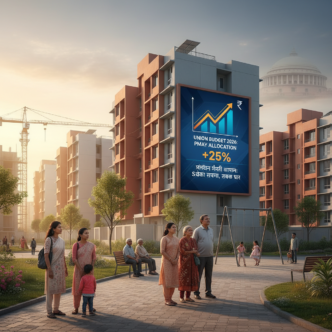
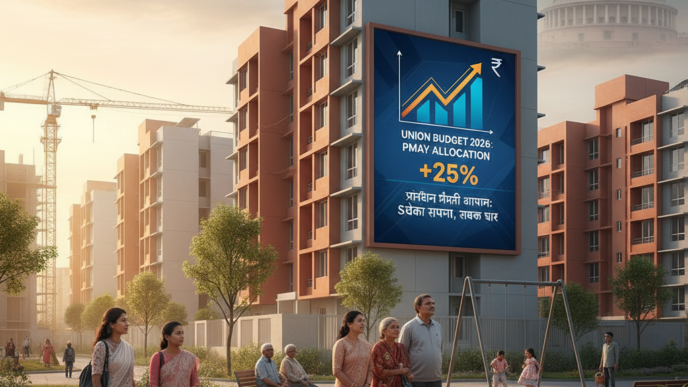
The Union Budget 2026, presented in February, placed housing at the top of the growth agenda, earmarking a 15 percent increase in the allocation for the Ministry of Housing and Urban Affairs. While the final budgetary numbers are still being disclosed, early parliamentary debates indicate that the uplift will translate into higher subsidy ceilings for Pradhan Mantri Awas Yojana beneficiaries, expanded credit‑linked assistance and additional funding for infrastructure upgrades in Tier‑2 and Tier‑3 cities. The speech also emphasized climate‑resilient housing, urging states to adopt green building norms in new affordable housing projects. 
Experts note that the increased fiscal space will allow the government to broaden the scheme’s reach, especially in emerging urban corridors where housing deficits are acute. The budgetary push aligns with the broader goal of inclusive growth, aiming to reduce the urban‑rural divide and create livelihood opportunities linked to construction and allied sectors.
Key Changes Announced
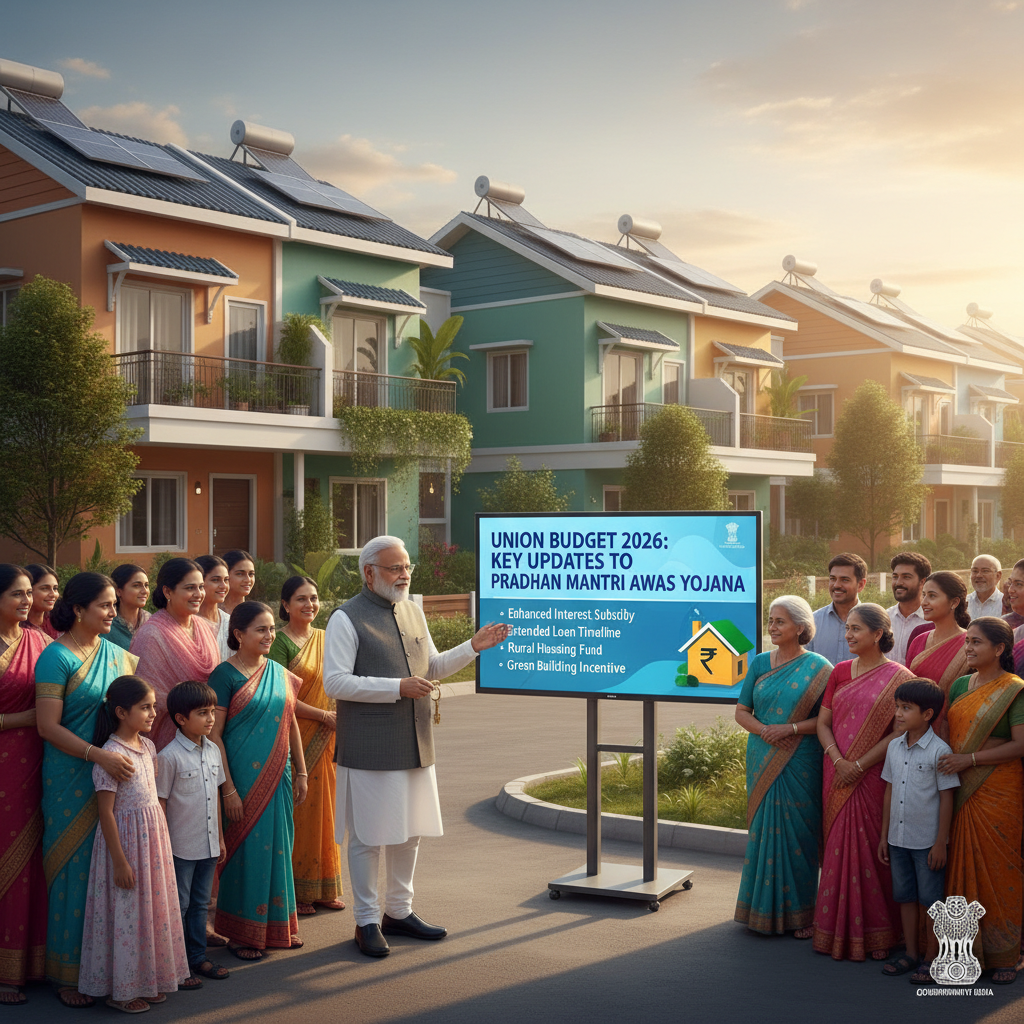
- Enhanced interest subsidy: The subsidy rate for loans up to ₹12 lakh will rise from 4 percent to 5 percent, directly lowering the effective interest burden for low‑and middle‑income borrowers.
- Extended loan sanction timeline: The permissible window for securing a sanctioned loan under PMAY has been pushed forward from March 2025 to March 2028, granting applicants an additional three years to complete paperwork and obtain financing.
- Rural housing allocation: A dedicated fund of ₹2,500 crore has been set aside for rural housing initiatives, complementing the urban component and targeting improvements for agrarian communities.
- Digital onboarding portal: A new online platform will centralize application intake, document verification and status tracking, cutting average processing time from 30 days to under 10 days.
- Green building incentive: Projects incorporating energy‑efficient designs and sustainable materials will qualify for an extra 0.5 percent subsidy on top of the standard PMAY benefits.
These measures are designed to make the scheme more attractive to first‑time homebuyers, reduce administrative bottlenecks and encourage environmentally responsible construction practices.
Eligibility and Application Process
Eligibility for PMAY remains anchored on household income and prior ownership of pucca (permanent) housing. Families with an annual income of up to ₹6 lakh are classified as “Low‑Income” and receive the highest subsidy tier, while those earning between ₹6 lakh and ₹12 lakh fall under the “Middle‑Income” bracket, enjoying a slightly lower subsidy but still significant financial relief. Applicants must possess a valid Aadhaar card, proof of income (salary slips, income‑tax returns or bank statements) and documentation of land ownership or tenancy.
The newly introduced Digital onboarding portal guides users step‑by‑step: uploading documents, selecting a preferred financing institution and receiving an automated application ID. Once the application is approved, beneficiaries can approach any participating bank or housing finance company to draw the subsidized loan, with the subsidy amount credited directly to the lender. For those interested in rural components, additional documentation such as land‑record extracts from the revenue department may be required. Further details on eligibility can be found on the official PMAY portal.
applicants are advised to verify their status using the status check tool and keep track of communication from the lender regarding subsidy disbursement.
Impact on Beneficiaries
If the announced budgetary measures are implemented as planned, the ripple effect could be transformative for millions of Indian households. The increased interest subsidy is projected to lower monthly EMI obligations by up to ₹1,200 for eligible families, making home ownership more attainable for middle‑income groups. The extended sanction period provides a safety net for applicants who need additional time to secure credit or complete construction, reducing the risk of project abandonment.
Rural funding is expected to improve living standards in agrarian districts, potentially curbing rural‑to‑urban migration pressures. The green building incentive may stimulate demand for eco‑friendly construction materials, encouraging local manufacturers to adopt sustainable practices and creating new livelihood opportunities in the green‑construction sector. Moreover, the digital portal is anticipated to increase transparency, minimize delays and enhance citizen satisfaction.
According to a recent survey by the Confederation of Indian Industry, 68 percent of respondents indicated that a higher subsidy would motivate them to pursue home ownership under PMAY, while 54 percent expressed interest in projects that incorporate energy‑efficient designs. These findings underscore the strong public demand for an expanded and modernised scheme.
Expert Opinions
Industry analysts view the budgetary push as a decisive step toward realizing the “Housing for All” vision. Dr. Anjali Mehta, a senior housing policy researcher at the Indian Institute of Human Sciences, remarked that “the additional fiscal allocation not only cushions existing beneficiaries but also creates a more attractive environment for private developers to invest in affordable housing projects, especially when coupled with green incentives.”
Nobel laureate economist Amartya Sen emphasized that “affordable housing must be coupled with basic services and livelihood opportunities to truly uplift the poor.” His observation highlights the need for a holistic approach that integrates housing with access to sanitation, education and employment.
Government officials, including Housing Secretary Mr. R. K. Verma, affirmed the administration’s commitment to “deliver quality, affordable homes to every eligible household by 2028, leveraging technology and sustainable practices.”
Future Outlook
Successful implementation will depend on seamless coordination between the central government and state administrations, as well as robust monitoring mechanisms. The Ministry plans to introduce third‑party audit reports and a citizen feedback portal to track progress, address grievances promptly and ensure transparency. Stakeholders remain cautiously optimistic; they anticipate that, with sustained political will and efficient fund disbursement, the revised PMAY framework could enable an additional 1.5 million households to secure safe, affordable housing by the end of 2028.
If these targets are met, India would move significantly closer to the original goal of universal shelter, while also fostering climate‑resilient infrastructure and inclusive urban development. Continuous dialogue with civil society, private developers and financial institutions will be essential to refine policies, address implementation bottlenecks and sustain momentum.
Stay updated with the latest Yojana schemes and government initiatives for better awareness and eligibility. For personalized guidance on accessing these benefits, reach out to us.