


Overview of the Scheme
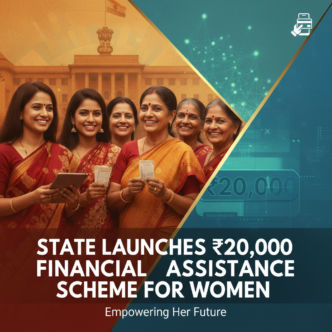
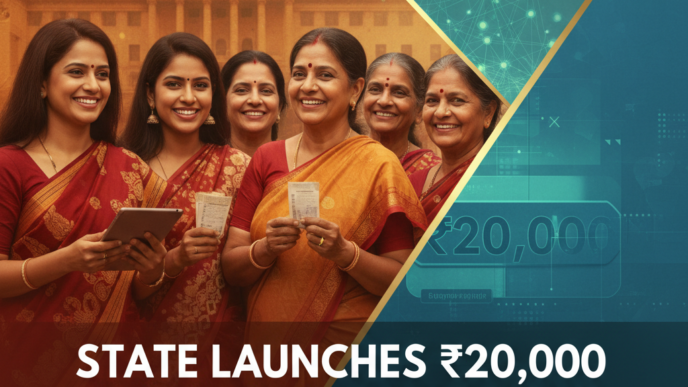
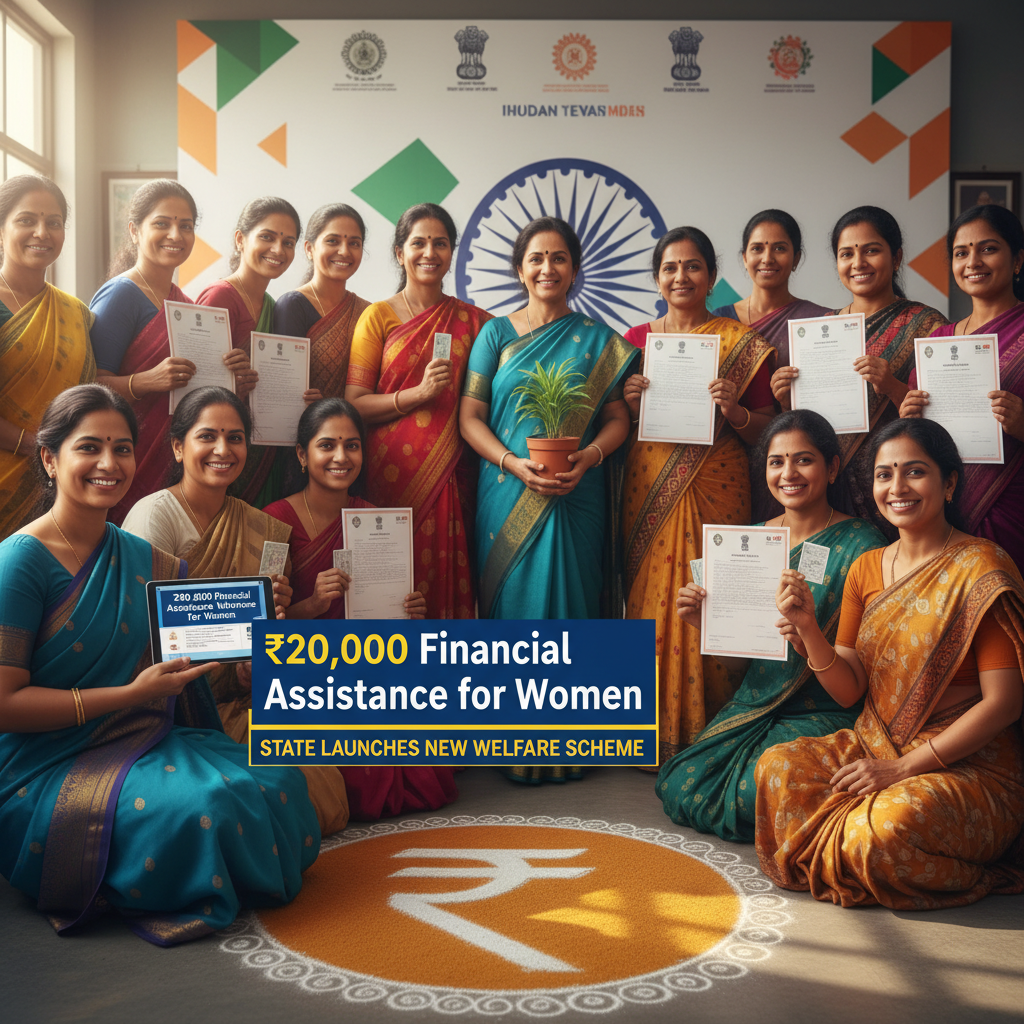
The state government has launched a ₹20,000 financial assistance programme aimed at empowering women across the region. The initiative, announced in the latest fiscal budget, provides a one‑time cash grant of ₹20,000 to each eligible female beneficiary. This scheme is part of a broader strategy to promote gender‑centric welfare, reduce poverty, and accelerate women’s economic inclusion. Officials say the programme aligns with national goals such as the Sustainable Development Goals (SDGs) related to gender equality and decent work. It also complements existing programmes like the Pradhan Mantri Kisan Samman Nidhi (PM‑Kisan) and the Mahatma Gandhi National Rural Employment Guarantee Act (MGNREGA) by focusing specifically on women’s financial empowerment. The rollout began on 1 October 2024, with an initial allocation of ₹500 crore for the first phase, covering districts with high gender‑gap indices.
According to the state’s social welfare department, the assistance will be transferred directly to the beneficiary’s bank account, ensuring transparency and minimizing leakage. The government has partnered with major banks and mobile wallet services to facilitate swift disbursements. The scheme’s design draws inspiration from successful pilot projects in neighboring states, where cash transfers have been linked to increased school enrolment and entrepreneurship among women. For a deeper dive into similar welfare models, see the Wikipedia entry on conditional cash transfers.
Eligibility Criteria
To qualify for the ₹20,000 assistance, applicants must meet several criteria set by the welfare department. First, the beneficiary must be a woman aged 18 years or older and a resident of the state. The scheme prioritises women from economically vulnerable backgrounds, including widows, single mothers, and families classified as “Below Poverty Line” (BPL). An annual household income ceiling of ₹1.5 lakh has been established; families exceeding this threshold are ineligible. Applicants are required to submit a set of documents: a valid Aadhaar card for identity verification, a recent utility bill or ration card as proof of residence, and an income certificate issued by the local revenue office. In addition, the application must be supported by a self‑declaration affirming that the applicant has not received similar financial assistance from any other state or central scheme in the past twelve months. The documentation process is designed to be straightforward, and both online and offline submissions are accepted. For official guidelines, refer to the state’s welfare portal: State Welfare Portal. 
Special provisions have been made for women in tribal areas and remote villages. The government will allocate an additional 10 % of the budget to ensure that geographic barriers do not exclude eligible applicants. Moreover, the scheme includes a verification window of up to 15 days after submission, after which the sanctioned amount is credited to the beneficiary’s account. Beneficiaries are encouraged to keep their bank details up to date to avoid delays.
Application Process
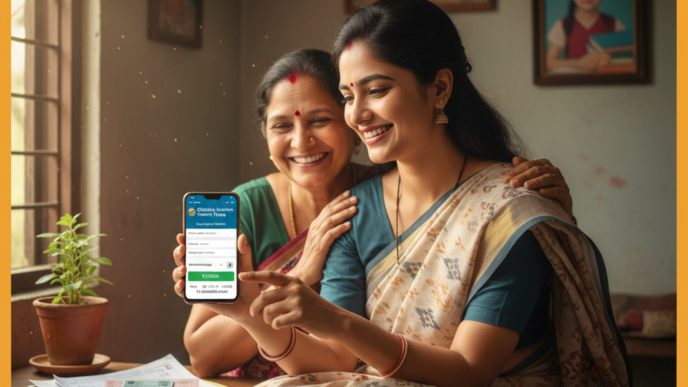
Applicants can apply through two channels: an online portal and designated physical offices. The online route involves visiting the state’s dedicated welfare website, registering with a mobile number, and filling out a comprehensive application form. Candidates must upload scanned copies of the required documents and upload them to the portal. Once submitted, an automated acknowledgment number is generated, and the verification team begins processing the request. The verification stage typically takes 10‑15 days, after which the applicant receives a notification via SMS and email confirming the disbursement.
For those who prefer an offline approach, the application can be submitted at the nearest Block Development Office (BDO) or District Social Welfare Office. Here, staff assist in completing the form and collecting the documents. A physical verification authority will cross‑check the details, and the applicant will receive a receipt with a tracking reference. The offline process mirrors the online timeline, ensuring uniform treatment across channels. In both cases, the ultimate goal is to minimize bureaucratic delays and ensure that funds reach the intended recipients promptly.
To streamline the experience, the government has introduced a QR‑code based verification system that links directly to the applicant’s Aadhaar details, reducing the need for manual entry. This technology also helps in curbing fraudulent applications. More information on the QR‑code verification can be found on the official portal’s FAQ section.
Benefits, Impact and Future Outlook
The primary benefit of the ₹20,000 assistance is the immediate financial relief it offers to women who often serve as primary caregivers and managers of household finances. The cash grant can be allocated toward education fees, healthcare expenses, skill‑development courses, or seed capital for micro‑enterprises. Early impact assessments from pilot districts indicate a measurable rise in school enrolment among girls from beneficiary families, with a 12 % increase reported in the first quarter of implementation. Additionally, small‑scale business activities such as handicraft production, dairy farming, and home‑based catering have seen a 15 % uptick, contributing to household income diversification.
One of the most encouraging outcomes is the empowerment of widows and single mothers, many of whom reported improved confidence and decision‑making capacity after receiving the funds. Community leaders note that the assistance has catalyzed the formation of collective savings groups, enabling women to pool resources for larger ventures. The scheme also includes a monitoring and evaluation framework, with quarterly reports published on the state’s transparency dashboard. These reports track key indicators such as beneficiary demographics, expenditure patterns, and socio‑economic upliftment metrics. For a comparative analysis of similar initiatives, see the NITI Aayog report on cash transfer schemes.
Looking ahead, the government plans to expand the programme to include additional categories such as tribal women, women from Scheduled Castes, and those engaged in informal sector employment. Enhanced digital infrastructure will be rolled out to automate verification and disbursement, leveraging big‑data analytics to identify eligible households more efficiently. The administration also intends to introduce a mentorship component, linking beneficiaries with experienced entrepreneurs and financial advisors to foster sustainable business growth.
- Direct cash transfer of ₹20,000 per eligible woman, ensuring financial inclusion.
- One‑time disbursement to simplify administration and reduce processing time.
- Targeted focus on women from disadvantaged backgrounds, including widows and single mothers.
- Robust monitoring framework to assess long‑term socio‑economic outcomes.
Stakeholders, including non‑governmental organisations and private sector partners, have expressed strong support for the initiative, citing its transparent methodology and potential to drive inclusive growth. As the scheme matures, it is expected to become a model for other states seeking to replicate gender‑responsive welfare solutions.
Stay updated with the latest Yojana schemes and government initiatives for better awareness and eligibility. For personalized guidance on accessing these benefits, reach out to us.