


Overview of the Abhay Yojana Extension
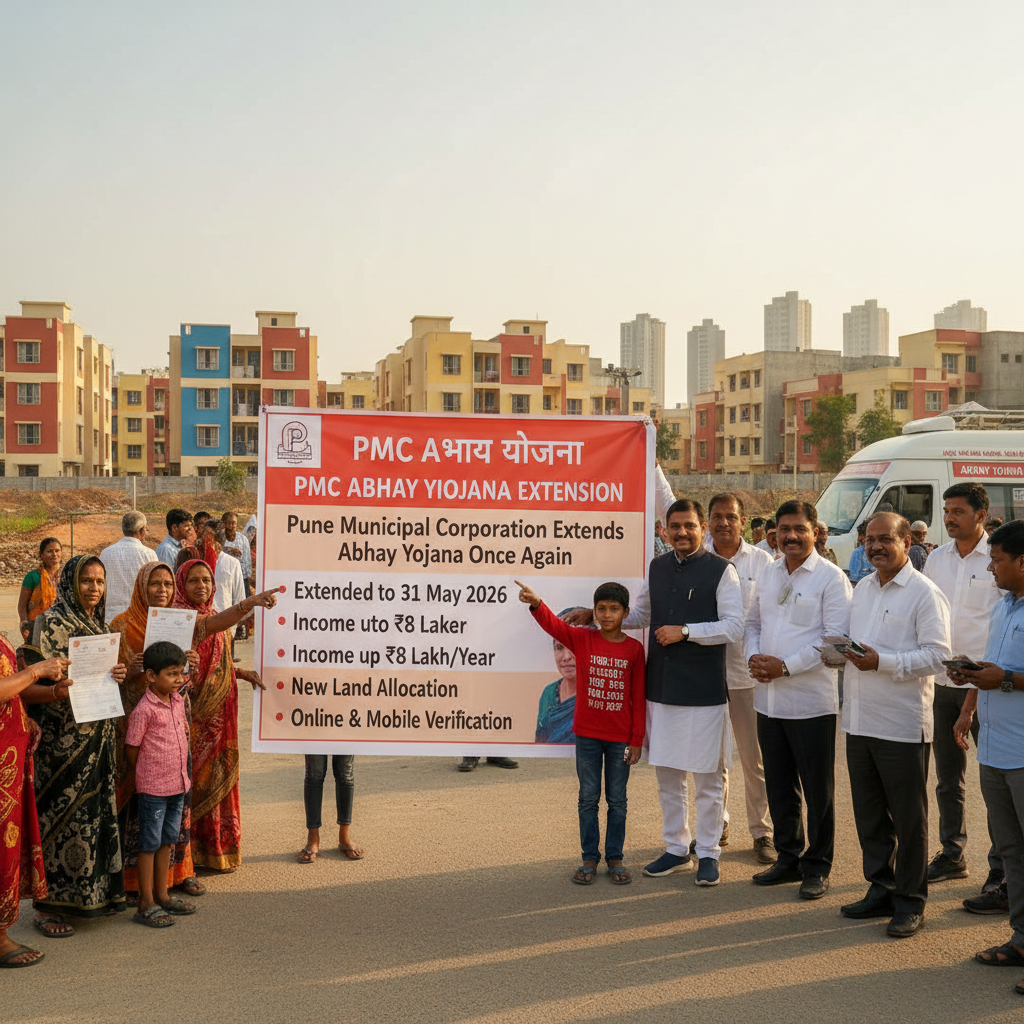
The Pune Municipal Corporation (PMC) has announced a further extension of the Abhay Yojana, the flagship affordable‑housing programme aimed at low‑income families across the city. The latest rollout pushes the application deadline to 31 May 2026, granting an additional three‑month window for prospective beneficiaries to submit their paperwork. Alongside the extended timeline, the civic body has widened eligibility to capture a larger pool of informal workers, daily‑wage earners and families with annual incomes up to INR 8 lakh. This move reflects the administration’s resolve to ensure that vulnerable households are not left behind amid lingering economic pressures and the after‑effects of the COVID‑19 pandemic.
Key Features of the Extension
In addition to the longer registration period, the extension brings several concrete enhancements:
- Extended application period – the deadline now falls on 31 May 2026, giving applicants extra time to gather required documents.
- Broadened beneficiary scope – families with an annual income of up to INR 8 lakh (and INR 10 lakh for slum‑area residents) are now eligible, alongside informal sector workers earning a minimum of INR 150 per day.
- Additional plot allocation – an extra 2 hectare cluster of land in peripheral wards will be earmarked to accommodate the surge in demand.
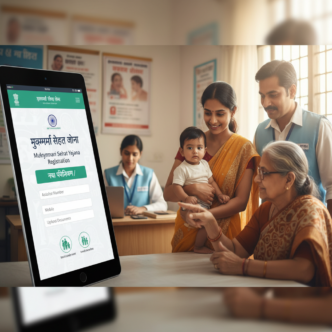
- Streamlined verification – a dedicated online portal and mobile verification units have been set up to expedite document validation and cut processing times.
Background and Objectives
Originally launched in 2021 as a short‑term response to the acute housing shortage faced by Pune’s economically disadvantaged residents, the Abhay Yojana has evolved into a multidimensional relief package. It now encompasses not only plot allotment but also access to basic utilities, sanitation, and educational support for children of beneficiaries. The recent extension underscores the civic body’s recognition of persistent challenges, particularly in the wake of the pandemic‑induced economic slowdown that has deepened poverty among informal workers and daily‑wage earners. 
Eligibility Criteria in Detail
Applicants must satisfy the following conditions to qualify for the extended scheme:
- Residency – must be a permanent resident of Pune city, verifiable through a ration card, voter ID or utility bill.
- Income Ceiling – household income should not exceed INR 8 lakh per annum for general categories; INR 10 lakh for families residing in notified slum areas.
- Land Ownership – applicants must not own any other pucca (permanent) residential property within the municipal limits.
- Documentation – submission of identity proof, income certificate, land lease agreement (if applicable) and a self‑declaration form.
- Special provisions – women‑headed households, differently‑abled applicants and senior citizens receive priority in plot allocation and enjoy relaxed verification timelines.
Application Process
The application workflow has been fully digitised to enhance transparency and ease of access. Prospective beneficiaries can follow these steps:
- Visit the official Abhay Yojana portal at abhay.pune.gov.in and create a new user account.
- Complete the online form with personal details, income information and residential address.
- Upload scanned copies of the required documents in PDF or JPEG format.
- Submit the application and note the acknowledgment number displayed on the screen.
- Await verification by the municipal verification team, who may request additional documents or clarification.
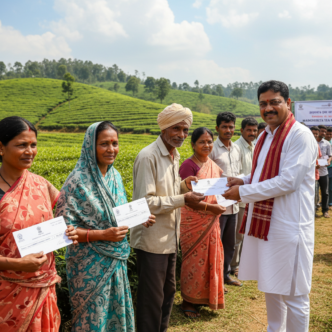
For those who prefer offline assistance, mobile verification vans will be stationed at community centres across the city on a rotating weekly schedule, ensuring that residents in remote slum clusters can also participate.
Impact on Urban Poor
Early data indicate a significant surge in interest. Within the first two weeks of the extended deadline, more than 12,000 new applications have been logged – a 35 % increase compared with the same period last year. If the uptake continues, the programme is projected to provide secure housing for an additional 45,000 families, translating into roughly 225,000 individuals gaining stable shelter and improved living conditions.
Beyond mere accommodation, the scheme adopts a holistic approach to uplift beneficiary households. Recipients will gain access to subsidised water connections, dedicated electricity metering and a community health worker who conducts periodic health check‑ups. Partnerships with local NGOs have also facilitated skill‑development workshops for adult members of beneficiary families, creating pathways toward sustainable livelihoods. The initiative aligns with broader national goals for affordable housing, as reflected in resources such as the Affordable housing in India Wikipedia entry.
Challenges and Mitigation Strategies
Despite the positive momentum, several implementation hurdles remain:
- Document verification bottlenecks – the influx of applications may strain existing verification infrastructure.
- Land acquisition delays – securing the additional peripheral plots is subject to regulatory approvals that can be time‑consuming.
- Awareness gaps – a segment of the target population, especially in isolated slum areas, may remain unaware of the extension.
To address these concerns, the PMC has announced a multi‑pronged strategy. Additional verification officers will be deployed to handle the workload, while a fast‑track committee will expedite land acquisition processes. An aggressive outreach campaign will utilise pamphlets, street plays and WhatsApp community groups to disseminate information. Moreover, the civic body is collaborating with civil‑society organisations to conduct on‑ground awareness drives in high‑need neighborhoods.
Future Outlook
The latest extension of the Abhay Yojana epitomises the Pune Municipal Corporation’s proactive stance on inclusive urban development. By continuously refining eligibility parameters, streamlining administrative procedures and expanding land resources, the civic body aims to create a replicable model for other metropolitan areas grappling with similar housing crises. Stakeholders – including resident welfare associations, private developers and civil‑society groups – have expressed optimism that sustained policy momentum could eventually eradicate informal settlements in the city’s core zones.
Looking ahead, the PMC plans to publish quarterly performance reports detailing plot allotments, beneficiary demographics and utilization of ancillary services such as water, electricity and health support. Transparent reporting and community feedback loops will be crucial to ensure that the benefits of the scheme are fully realised and that no eligible applicant is inadvertently omitted.
Stay updated with the latest Yojana schemes and government initiatives for better awareness and eligibility. For personalized guidance on accessing these benefits, reach out to us.