


Introduction
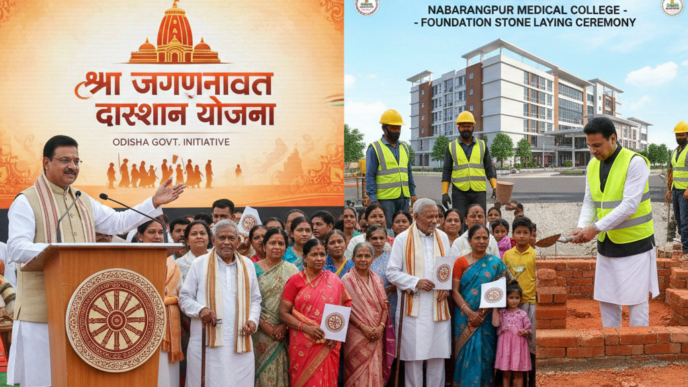
Odisha Chief Minister Naveen Patnaik recently launched the Shri Jagannath Darshan Yojana and laid the foundation stone for the upcoming Nabarangpur Medical College. The ceremony, broadcast by multiple local news outlets, highlighted a dual strategy that blends cultural tourism with healthcare expansion. By tying together a statewide pilgrimage facilitation scheme with a modern medical education hub, the state government aims to stimulate economic activity in the southern tribal belt while addressing long‑standing health service gaps.
Media reports from Bhubaneswar indicate that the inauguration was attended by senior officials from the Departments of Tourism, Health and Family Welfare, and Transport, as well as representatives of the Nabarangpur district administration. The event coincided with a surge in domestic pilgrim numbers ahead of the annual Rath Yatra, underscoring the timing’s strategic relevance. Analysts note that the initiative reflects a broader trend in Indian state policy of leveraging heritage assets for socio‑economic development.
Objectives of the Scheme
The primary objective of the Shri Jagannath Darshan Yojana is to enhance accessibility to the iconic Jagannath Temple in Puri for devotees across India and abroad. To achieve this, the program proposes a comprehensive network of transportation services, dedicated pilgrimage routes, and upgraded facilities at key entry points. Concurrently, the establishment of Nabarangpur Medical College seeks to alleviate the chronic shortage of qualified healthcare professionals in the southern tribal region of Odisha. 
Key policy targets include:
- Reducing travel time between major urban centers and Puri through a state‑run shuttle service.
- Introducing a digital pilgrimage pass system aimed at streamlining entry and minimizing queue lengths.
- Providing affordable accommodation options via public‑private partnerships to ensure inclusivity for economically disadvantaged pilgrims.
- Deploying crowd‑management technologies, such as real‑time visitor analytics, to improve safety and preserve the sanctity of the shrine.
Together, these measures are projected to serve over 5 million pilgrims annually within the first five years, according to preliminary state estimates.
Key Features and Implementation Mechanisms
Among the notable components of the Shri Jagannath Darshan Yojana are:
- State‑run shuttle service: Direct bus links connecting Bhubaneswar, Cuttack, Rayagada and other major cities to Puri, with dedicated pilgrimage lanes and priority boarding.
- Digital pilgrimage pass: A mobile‑app based ticketing system that issues QR‑coded passes, enabling seamless entry and real‑time updates on crowd density.
- Affordable accommodation: Partnerships with hotel chains and local homestay operators to provide subsidised rooms, especially during peak seasons.
- Crowd‑management technology: Integration of surveillance cameras and AI‑driven analytics to monitor visitor flows, predict congestion points, and trigger rapid response protocols.
The scheme is backed by an initial financial outlay of approximately ₹1,200 crore, sourced from the state’s development budget and supplemented by central government grants under the “Tourism Infrastructure Development” scheme. Detailed project reports attribute roughly 45 % of the allocation to transport infrastructure, 30 % to accommodation and digital services, and the remaining 25 % to crowd‑management tools and monitoring systems.
For further reading on similar pilgrimage‑centric initiatives, see the Jagannath Temple Wikipedia page and the official Odisha Tourism portal.
Nabarangpur Medical College: Vision, Infrastructure and Community Impact
The Nabarangpur Medical College, slated to commence operations within the next two years, is envisioned as a flagship institution for medical education in Odisha’s tribal heartland. The college will be equipped with state‑of‑the‑art laboratories, a 300‑bed teaching hospital, and specialized research centres focused on tropical diseases prevalent in the region, such as filariasis and kala‑azar.
Key design elements include:
- An annual intake capacity of 150 undergraduate MBBS students, with reservations allocated to candidates from scheduled tribes and other marginalized groups.
- A curriculum that integrates modern biomedical science with traditional health practices unique to Odisha’s tribal communities, including Ayurvedic and folk medicine modules.
- Collaboration agreements with the National Medical Commission and several leading Indian universities for faculty exchange and research collaborations.
Local health officials anticipate that the college will reduce patient migration to tertiary hospitals in Bhubaneswar and Chennai by up to 20 %, conserving an estimated ₹500 crore in annual travel expenses for patients and families. Moreover, the institution is expected to create approximately 2,500 direct and indirect jobs, ranging from academic positions to administrative and support staff.
Community impact assessments conducted by the Odisha Institute of Public Administration suggest that the medical college will improve health outcomes for an estimated 1.2 million residents within a 100‑km radius, particularly in maternal and child health indicators.
Government Funding, Timeline and Accountability Framework
The implementation roadmap for the Shri Jagannath Darshan Yojana is divided into three distinct phases:
- Phase One (2025‑2026): Launch of the transportation network and digital pass platform, accompanied by pilot pilgrimage events during the month of Chaitra.
- Phase Two (2026‑2028): Commencement of construction for Nabarangpur Medical College, recruitment of faculty, and procurement of medical equipment.
- Phase Three (2029 onward): Full operationalisation of tourism services and the medical institute, with periodic performance reviews conducted by an independent advisory board comprising industry experts and civil‑society representatives.
To ensure transparency, the state government has committed to publishing quarterly progress reports on its official portal. These reports will detail fund utilisation, milestone achievements, and audit findings. In addition, an online dashboard will enable citizens to track real‑time developments, facilitating public oversight and fostering accountability.
Socio‑Economic Benefits and Expected Outcomes
Once fully operational, the combined scheme is projected to deliver multiple socio‑economic benefits for citizens of Odisha and beyond:
- Boost tourism revenues for local businesses, including hotels, restaurants, transport operators, and handicraft vendors.
- Create employment opportunities for thousands of residents, spanning hospitality, information technology, healthcare, and academic sectors.
- Enhance access to quality healthcare for underserved tribal populations, reducing mortality rates associated with preventable diseases.
- Promote cultural preservation by supporting traditional arts and crafts linked to the Jagannath tradition, thereby generating additional income streams for artisans.
These anticipated outcomes align with the state’s broader agenda of achieving inclusive growth and improving the Human Development Index in remote districts, as highlighted in the Government of India’s open data repository.
Challenges and Mitigation Strategies
Despite its ambitious scope, the Shri Jagannath Darshan Yojana faces several logistical and operational challenges. Infrastructure development in a geographically rugged area like Nabarangpur requires meticulous planning to mitigate delays caused by monsoon conditions and terrain constraints. Additionally, ensuring the smooth operation of pilgrimage services demands robust coordination among multiple agencies, including the police, transport department, and tourism board.
To address these hurdles, the government has announced plans to engage experienced private contractors with a proven track record in hill‑road construction. Satellite‑based monitoring tools will be employed for real‑time project tracking, allowing for rapid identification of bottlenecks. Stakeholder consultations are also scheduled to gather feedback from pilgrim communities and local residents, ensuring that the scheme remains responsive to ground realities.
Experts in urban planning have praised the integrated approach but caution that sustained political commitment and adequate funding are essential to overcome implementation gaps. A recent analysis published by the World Bank underscores the importance of “holistic infrastructure planning” when linking tourism development with health sector enhancements.
Future Outlook and National Significance
The Shri Jagannath Darshan Yojana represents a forward‑looking model that merges cultural heritage with modern development, positioning Odisha as a benchmark state for integrated policy making in India. If successful, the scheme could serve as a replicable template for other regions seeking to leverage religious tourism for economic upliftment while simultaneously strengthening local health ecosystems.
Political analysts suggest that the initiative may also influence national policy discourse, encouraging the Centre to adopt similar multi‑sectoral frameworks for other iconic pilgrimage sites such as Tirupati and Kedarnath. As the project progresses, it will be closely watched by policymakers, investors, and civil‑society groups alike.
Stay updated with the latest Yojana schemes and government initiatives for better awareness and eligibility. For personalized guidance on accessing these benefits, reach out to us.