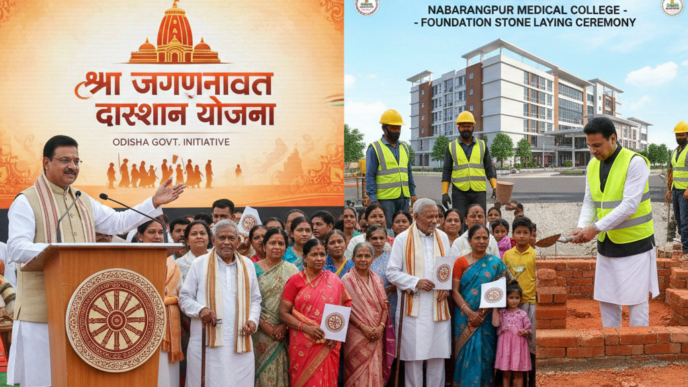



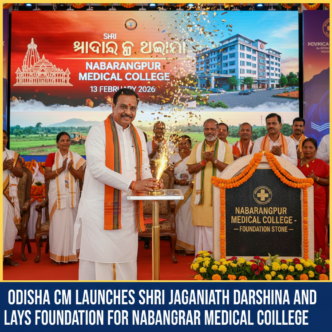
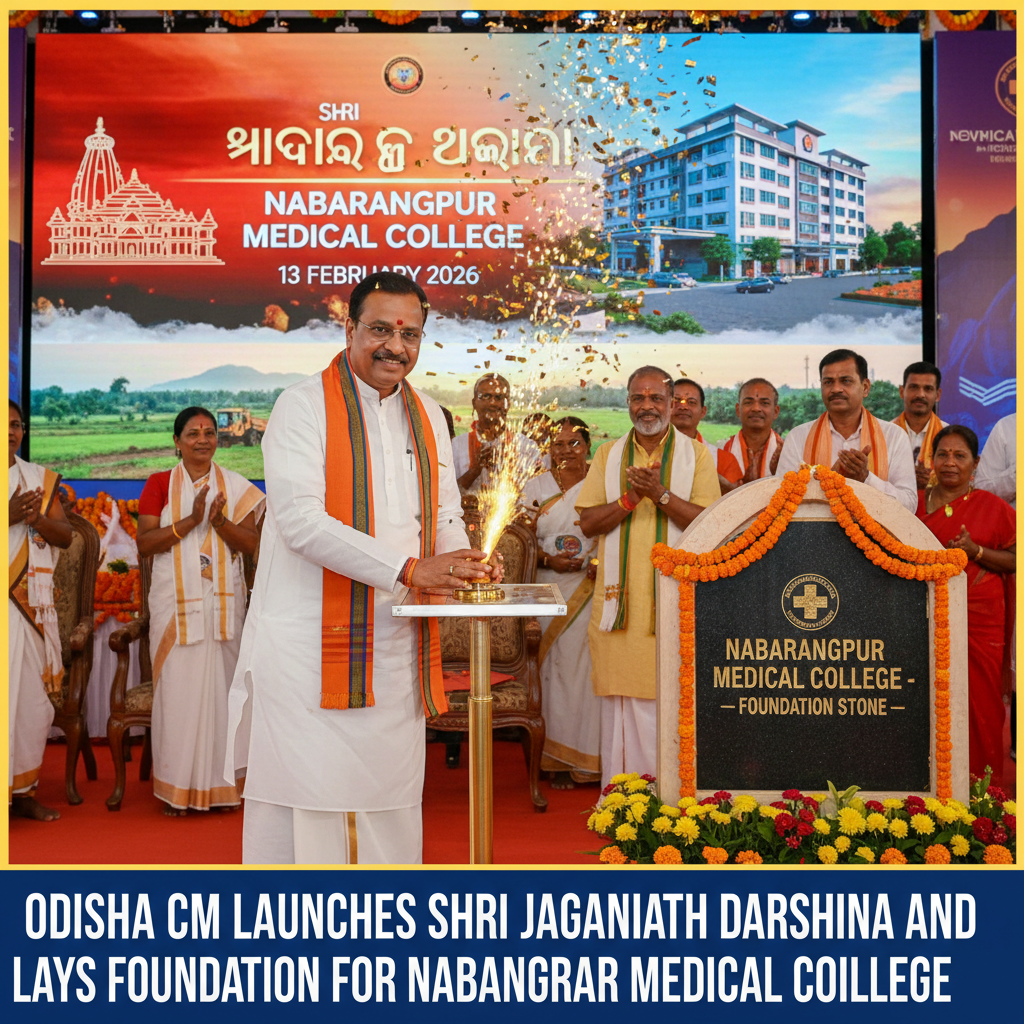
Odisha CM inaugurates Shri Jagannath Darshan Yojana and lays foundation for Nabarangpur Medical College
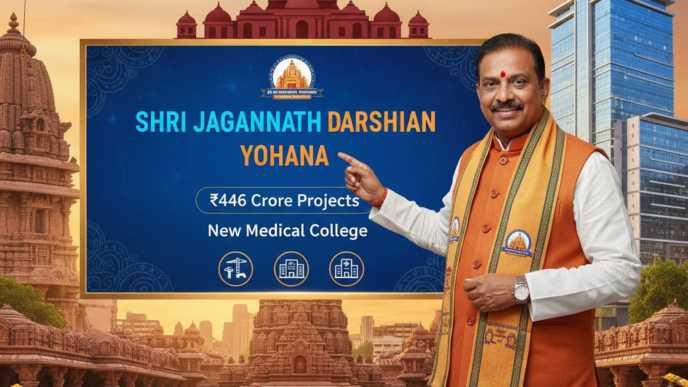
On 13 February 2026, Chief Minister Mohan Charan Majhi presided over a landmark ceremony in Nabarangpur, Odisha, where he laid the foundation stone for the new Nabarangpur Medical College and simultaneously launched the Shri Jagannath Darshan Yojana. The event, attended by senior ministers, tribal community leaders and representatives of pilgrimage committees, highlighted the state’s dual focus on strengthening healthcare infrastructure in tribal regions and promoting cultural‑tourism through a dedicated pilgrimage scheme. The inauguration was streamed live across Odisha’s official portal, attracting millions of viewers and underscoring the government’s commitment to equitable development. Officials announced that the medical college will be built on a 150‑acre campus on the outskirts of Nabarangpur town, while the Shri Jagannath Darshan Yojana aims to provide subsidised travel and guided tours for devotees heading to the Jagannath Temple in Puri and other sacred sites across the state. The ceremony thus marked a symbolic unification of health and heritage initiatives designed to uplift one of eastern India’s most underserved regions.
About the Shri Jagannath Darshan Yojana
The Shri Jagannath Darshan Yojana is a state‑run pilgrimage subsidy programme that seeks to make the revered Jagannath Temple in Puri and other prominent spiritual destinations accessible to a wider cross‑section of citizens, especially those from economically weaker and tribal backgrounds. Under the scheme, eligible beneficiaries receive a 50 percent discount on bus and train fares, complimentary entry to designated heritage sites, and accommodation in government‑approved dharamshalas. A dedicated digital portal, accessible via web and mobile, enables users to book travel, track itineraries and receive real‑time alerts on crowd management, safety protocols and weather conditions. The portal also integrates with the Odisha Transport Department’s ticketing system, ensuring seamless subsidy application at the point of sale.
- Eligibility: Residents of Odisha belonging to the below‑poverty‑line (BPL) category, tribal communities, senior citizens above 60 years, and persons with disabilities.
- Benefits: 50 % fare concession on state‑run buses and trains, free entry to select heritage monuments, priority darshan passes during peak festival periods, and access to cultural performances organised by the Department of Tourism.
- Pilgrimage Destinations Covered: Puri (Jagannath Temple), Konark (Sun Temple), Bhubaneswar (Lingaraj Temple), Koraput (Vishnu Temple), and select sites in the tribal belt such as the Maa Bhnkuneshwari shrine.
According to the scheme’s official brochure, the state anticipates a 20 percent increase in annual tourist footfall to these sites within the first two years, translating into an estimated INR 1,200 crore boost to the local tourism sector. The initiative also aims to create approximately 3,500 direct and indirect employment opportunities in hospitality, transportation and guiding services, particularly in tribal districts where job creation remains a critical development priority. 
Nabarangpur Medical College – Vision and Infrastructure
The upcoming Nabarangpur Medical College is envisioned as a flagship institution to address the acute shortage of tertiary healthcare services in the southern tribal belt of Odisha. Spanning 150 acres on the periphery of Nabarangpur town, the campus will house a modern teaching hospital with 500 beds, state‑of‑the‑art diagnostic laboratories, a trauma centre equipped for emergency response, and a dedicated research block focusing on infectious diseases prevalent in the region, such as malaria, dengue and leprosy. The college is slated to admit 150 undergraduate MBBS students annually, with plans to expand to postgraduate programmes in the later phases. The state has earmarked INR 450 crore for the initial construction phase, with additional funding expected from central schemes including the National AYUSH Mission and the Pradhan Mantri – Ayushman Bharat Health Infrastructure Mission. Partnerships with leading private hospitals in Bhubaneswar and Visakhapatnam are being finalised to provide clinical rotation opportunities, ensuring students gain exposure to advanced medical practices and specialised care.
Construction is scheduled to commence in the next quarter, with the first phase of infrastructure development expected to be completed within 24 months. The institution will also incorporate a digital library, tele‑medicine hub and simulation labs to enhance pedagogical outcomes. Officials have emphasized that the medical college will serve as a catalyst for attracting specialized healthcare professionals to the region, thereby reducing the need for patients to travel to distant metros for specialized treatment.
Economic and Social Impact
Stakeholders project that the Nabarangpur Medical College will generate roughly 1,200 direct jobs during the construction phase and about 500 permanent positions once fully operational. Indirectly, the project is expected to stimulate growth in ancillary sectors such as construction materials, hospitality, retail and transportation, potentially injecting an estimated INR 2,500 crore into the local economy over the next five years. Parallelly, the Shri Jagannath Darshan Yojana is projected to raise tourist arrivals to Puri and other spiritual sites by approximately 20 percent annually. This surge is anticipated to create around 3,500 new employment opportunities in guiding, hospitality and ancillary services, with a particular emphasis on uplifting youth from tribal communities.
Beyond employment, the combined impact is expected to improve health outcomes for residents of Nabarangpur and surrounding districts. By reducing travel time to advanced medical care and providing affordable pilgrimage options, the initiatives aim to enhance quality of life and foster a sense of cultural pride among marginalized groups. Economists suggest that the tourism scheme could have a multiplier effect, encouraging private investors to develop boutique hotels, heritage circuits and eco‑tourism ventures that align with Odisha’s rich cultural assets, thereby diversifying the state’s economic base.
Political Reactions and Policy Context
The dual launch has drawn praise from the ruling Biju Janata Dal (BJD), which highlighted the initiatives as “milestones in inclusive development” and a fulfillment of the party’s election manifesto commitments. Chief Minister Majhi described the projects as part of a broader “triple‑track” strategy that intertwines health, tourism and employment generation. Conversely, opposition parties including the Bharatiya Janata Party (BJP) and the Indian National Congress (INC) have raised concerns about the feasibility of the subsidy model under the Shri Jagannath Darshan Yojana, warning that it could strain the state’s fiscal resources unless paired with robust revenue‑generation mechanisms. Critics also questioned the timeline for the medical college, demanding transparent procurement processes and stricter oversight to prevent cost overruns. Despite these reservations, government spokespersons assert that the projects are backed by thorough feasibility studies and will be implemented in a phased manner with regular progress reviews.
Policy analysts note that the initiatives align with national priorities such as the Ayushman Bharat scheme, which seeks to provide universal health coverage, and the Swadesh Darshan programme, aimed at boosting thematic tourism. By integrating these national frameworks with state‑specific goals, the Odisha government aims to position itself as a model for holistic regional development, especially in tribal-dominated areas that have historically lagged behind in infrastructure and service delivery.
Expert Opinions and Future Outlook
Public health experts view the establishment of a medical college in Nabarangpur as a strategic response to the chronic shortage of tertiary care facilities in southern Odisha. They caution, however, that success will hinge on efficient project execution, transparent procurement and sustained investment in faculty development and research initiatives. Dr. Anjali Patnaik, a public health scholar at the Indian Institute of Public Health, remarked that “the true measure of this endeavour will be the reduction in patient referrals to distant hospitals and the improvement in health indicators such as maternal mortality and disease surveillance.”
Tourism economists see the Shri Jagannath Darshan Yojana as a catalyst for sustainable economic growth. Prof. Ramesh Chandra of the Centre for Development Studies noted that “by subsidising travel and enhancing the visitor experience, the scheme can unlock the untapped potential of Odisha’s spiritual tourism circuit, encouraging private sector participation while ensuring that benefits flow to local communities.”
Looking ahead, policymakers plan to monitor key performance indicators, including student enrollment rates, graduation outcomes, patient footfall at the new hospital and tourist satisfaction scores. The state has pledged to publish annual progress reports and to solicit feedback from civil society, academic institutions and industry stakeholders to refine the programmes. If implemented effectively, the twin initiatives could serve as a replicable model for other states grappling with similar challenges in health infrastructure and cultural‑tourism development.
Stay updated with the latest Yojana schemes and government initiatives for better awareness and eligibility. For personalized guidance on accessing these benefits, reach out to us.