


Overview of the Announcement
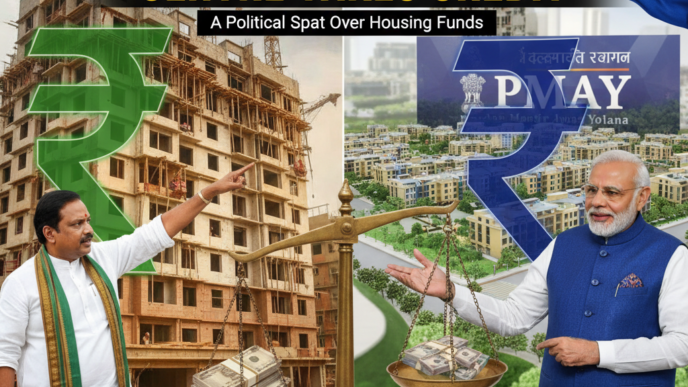
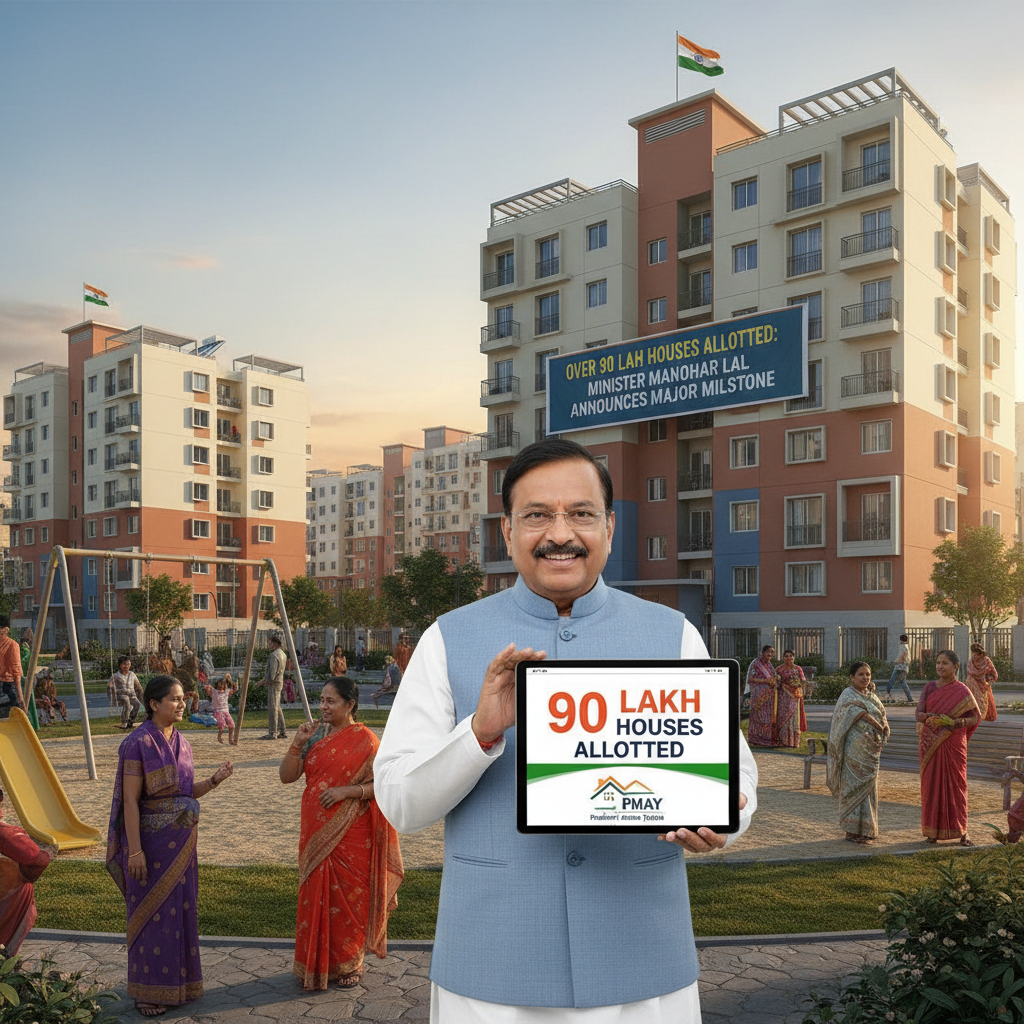
Union Minister of Housing and Urban Affairs Manohar Lal recently disclosed that more than 90 lakh houses have been allotted under the Pradhan Mantri Awas Yojana (PMAY). The statement was made during a press briefing in New Delhi, where the minister highlighted the latest quarterly figures and praised the coordinated effort between the Centre, state governments, and private developers. According to the minister, this latest tranche represents a substantial jump from the previous quarter’s numbers, underscoring the government’s commitment to accelerate affordable housing delivery for millions of citizens across urban and rural pockets of India. The announcement comes at a time when the nation is reviewing progress toward the broader Vision 2030 goal of “Housing for All” and as the Ministry prepares to launch a suite of digital and sustainability‑focused initiatives to strengthen the scheme’s impact.
Key Statistics and Milestones
The latest data reveals that the cumulative houses allotted under PMAY now exceed 3 crore, with the most recent addition of 90 lakh units marking a historic surge. Minister Manohar Lal emphasized that the scheme has moved beyond incremental gains to a phase of rapid expansion, driven by a significant increase in fiscal allocation. Official Ministry sources indicate that budgetary support for PMAY has risen from Rs 6,000 crore in FY 2015‑16 to over Rs 30,000 crore in FY 2025‑26, enabling faster sanctioning of projects.
- Total houses allotted since inception: over 3 crore.
- Latest quarter addition: more than 90 lakh houses.
- Top performing states: Uttar Pradesh, Maharashtra, and Madhya Pradesh.
- Breakdown of components: slum rehabilitation, in‑situ development, credit‑linked subsidy, and beneficiary‑-led construction.
- Demographic focus: urban poor, rural low‑income families, and marginalised communities.
Policy Implications
The milestone underscores the efficacy of a multi‑layered governance model where central funding, state‑level implementation, and private sector participation converge to produce tangible results. Analysts view the acceleration as a strong indicator that the government’s housing policy is gaining momentum toward the Vision 2030 target of eliminating the urban housing deficit by 2027. Policy implications include: 
- Enhanced fiscal capacity to sustain subsidies and infrastructure development.
- Greater inclusion of peri‑urban and semi‑urban populations through expanded credit‑linked subsidy schemes.
- Potential to stimulate ancillary industries such as construction materials, logistics, and renewable‑energy‑efficient building technologies.
- Improved socio‑economic outcomes for beneficiaries, including job creation and reduced informal settlement growth.
Moreover, the data suggests that sustained delivery at the current rate could reduce the national urban housing deficit by up to 15 % by the end of the decade, positioning India as a benchmark for large‑scale affordable housing initiatives worldwide.
Challenges and Criticisms
Despite the celebratory tone, experts caution that several structural challenges remain. The rapid pace of allocation brings to the fore concerns about construction quality, land acquisition delays, and financing bottlenecks that could impede long‑term sustainability. Critics also point out that the benefits are not evenly distributed, with certain marginalized groups—such as women‑headed households and tribal communities—still reporting limited access to the scheme’s core components. Opposition parties have accused the government of “selective outreach,” arguing that data on ground‑level impact often masks gaps in beneficiary selection and on‑ground delivery. Specific challenges include:
- Ensuring that houses meet prescribed safety and durability standards.
- Addressing delays in land demarcation and clearance processes at the state level.
- Managing the fiscal burden of subsidies while maintaining fiscal prudence.
- Providing adequate support for operation and maintenance of newly constructed units.
These concerns highlight the need for robust monitoring mechanisms, transparent beneficiary verification, and targeted interventions to bridge the identified gaps.
Comparative Perspective and Future Roadmap
When compared with earlier years, the current allocation rate is roughly 30 % higher than the average annual additions recorded between 2016 and 2020. This acceleration aligns closely with the steep rise in budgetary outlays, reflecting the government’s strategic prioritisation of affordable housing. Looking ahead, the Ministry of Housing and Urban Affairs has outlined a comprehensive roadmap to sustain and deepen the impact of PMAY:
- Launch of a digital portal for real‑time monitoring of allotment status, grievance redressal, and beneficiary verification.
- Integration of climate‑resilient building materials and green construction practices to enhance sustainability.
- Expansion of the credit‑linked subsidy scheme to cover low‑income families in peri‑urban zones, thereby broadening the scheme’s geographic footprint.
- Strengthening partnerships with private developers through public‑private partnership (PPP) models that incentivise affordable housing construction.
- Implementation of a dedicated monitoring and evaluation framework to assess quality, timeliness, and socio‑economic outcomes of allotted houses.
These initiatives aim to ensure that the houses not only become a reality on paper but also deliver lasting, quality shelter that improves the living standards of beneficiary families across the country.
In summary, the announcement that over 90 lakh houses have been allotted under the Pradhan Mantri Awas Yojana marks a pivotal moment in India’s affordable housing landscape. It reflects both the government’s decisive action and the complex challenges that lie ahead in achieving truly inclusive, quality housing for every citizen.
Stay updated with the latest Yojana schemes and government initiatives for better awareness and eligibility. For personalized guidance on accessing these benefits, reach out to us.