


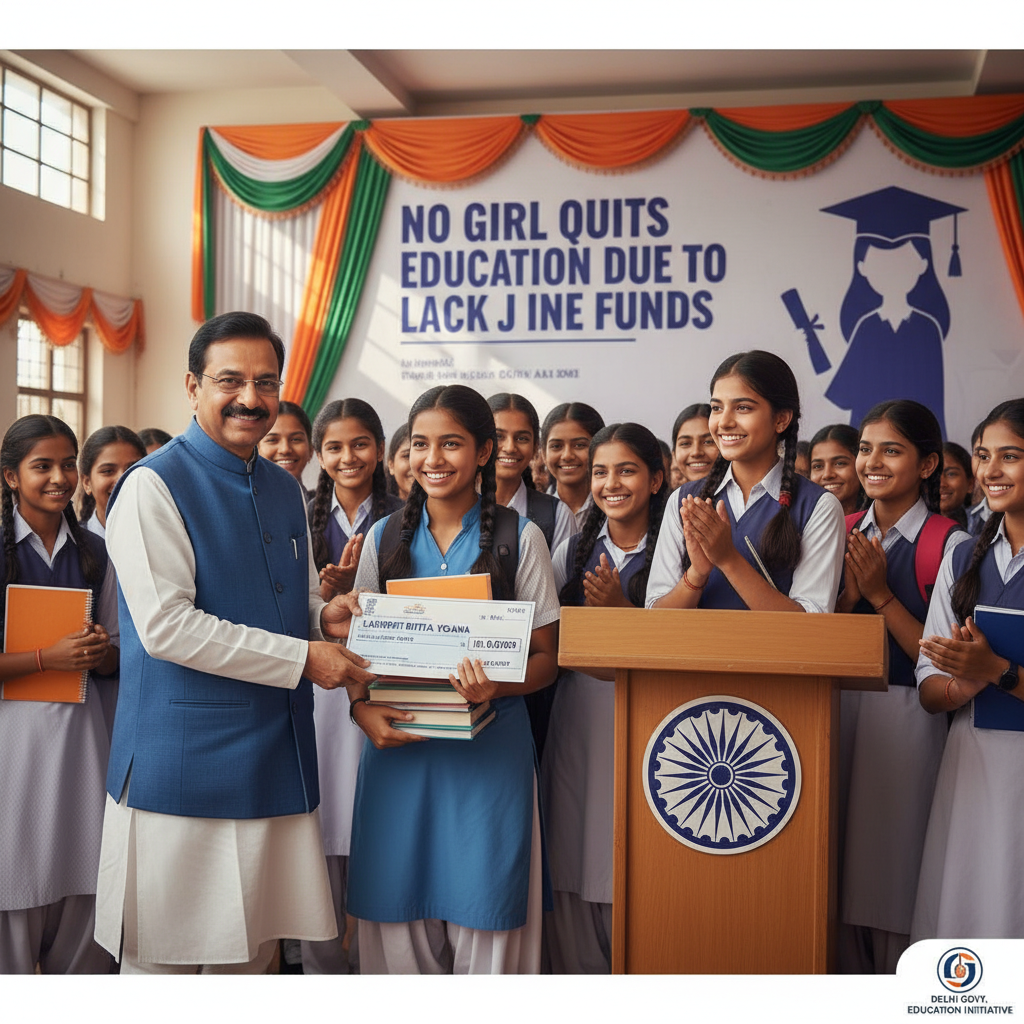
Delhi CM Launches Lakhpati Bitiya Yojana
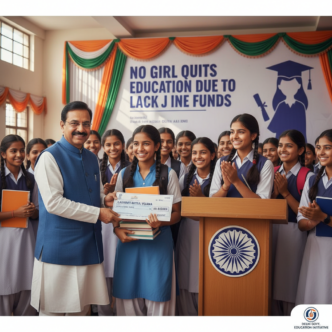
The Delhi Chief Minister has formally launched the Lakhpati Bitiya Yojana, a landmark program aimed at ensuring that no girl discontinues her education because of monetary constraints. Under this scheme, eligible female students from economically weaker sections receive a direct cash transfer of INR 10,000 per academic year that can be used for tuition fees, books, transport and other scholastic expenses. By providing a predictable financial infusion, the initiative removes the economic barriers that historically force families to pull their daughters out of school.
Eligibility Criteria
The scheme is targeted at girls belonging to families with an annual income of less than INR 8 lakh. Beneficiaries must be enrolled in recognized government or private schools, colleges or vocational institutions. Priority is accorded to those who have previously dropped out and are seeking re‑entry, as well as to girls who were married before the age of 18, provided they continue their studies. This dual focus on re‑engagement and anti‑child‑marriage reinforces the government’s commitment to both education and gender equity.
- Annual family income below INR 8 lakh.
- Enrollment in a recognized educational institution.
- Preference for girls who have re‑entered education or married before 18.
Implementation Mechanism
Funds are transferred directly to beneficiaries’ bank accounts through the Delhi Direct Benefit Transfer platform. Annual verification is carried out jointly by the School Education Department, the Social Welfare Department and local panchayats. Any change in enrollment status triggers an automatic review of disbursement, ensuring that support follows the student throughout her academic journey. 
An independent Monitoring Committee, comprising educators, civil society representatives and auditors, conducts periodic audits of disbursement records and undertakes field visits to gauge on‑ground impact. This oversight mechanism is designed to safeguard against delays, fraud and misuse of funds.
Expected Impact
Preliminary modeling suggests that the scheme could reduce dropout rates among girls by up to 15 percent within the first two years. It is also expected to boost enrollment in technical and vocational courses, aligning educational outcomes with market demands. Beyond the classroom, educating girls has a multiplier effect: studies cited by the UNESCO indicate that educated women are more likely to adopt healthier practices, achieve higher employment rates and contribute to overall economic growth.
Funding and Budget Allocation
For the inaugural phase, the Delhi government has allocated INR 500 crore, targeting approximately 500,000 eligible girls across the capital. The budget will be reviewed annually, with provisions to scale up the scheme in subsequent years based on performance metrics and fiscal sustainability. To augment the fund pool, the administration plans to partner with private sector donors and philanthropic organisations under their corporate social responsibility mandates.
Stakeholder Engagement
Key stakeholders include school principals, teachers, community leaders and NGOs working on women’s empowerment. The government will roll out an extensive cohort of awareness campaigns, workshops and webinars to inform families about the scheme’s benefits and enrollment procedures. NGOs will play a pivotal role in identifying eligible candidates, assisting with documentation and providing counseling services to keep girls motivated to continue their studies.
Challenges and Mitigation Strategies
Potential obstacles involve accurate beneficiary identification, preventing fraudulent claims and ensuring timely disbursements. To address these, the government will employ biometric verification at the point of enrollment and leverage data analytics to detect anomalous patterns. A dedicated helpline and mobile application will enable beneficiaries to track disbursement status, submit grievances and receive real‑time updates.
Case Studies from Pilot Districts
In the pilot districts of East Delhi and North East Delhi, early implementation has already yielded encouraging results. Schools participating in the pilot reported a drop of 8 percent in girl dropout rates within the first semester, while attendance rose by 12 percent. Parents highlighted that the cash transfer alleviated the financial burden of purchasing school supplies, enabling them to keep their daughters enrolled.
One illustrative story is that of Anjali, a 16‑year‑old resident of Shiv Vihar. Previously forced to leave school to support her family’s income, Anjali received the Lakhpati Bitiya Yojana disbursement, purchased a laptop and resumed her studies in computer applications. She now aspires to pursue a career in software development, underscoring the scheme’s transformative potential.
Monitoring and Evaluation
The Delhi government has instituted a robust Monitoring and Evaluation framework that blends quantitative indicators with qualitative feedback. Core performance metrics comprise the number of beneficiaries enrolled, disbursement timeliness, dropout reduction percentage and transition rates to higher education. Quarterly reports are published on the official portal, providing transparency and public accountability.
Independent third‑party auditors conduct annual audits, the findings of which are presented to the state legislature. This continuous oversight loop ensures that corrective measures can be swiftly implemented to enhance scheme effectiveness.
Future Outlook
If the initial rollout proves successful, the Delhi administration intends to expand the Lakhpati Bitiya Yojana to cover higher education scholarships and integrate it with other youth empowerment programmes. The long‑term vision is to construct a comprehensive ecosystem that supports girls from primary education all the way through higher studies and into the workforce.
By institutionalising financial support for education, the scheme sets a precedent for other Indian states to adopt similar models, potentially reshaping the educational landscape for women nationwide. Continuous refinement, stakeholder collaboration and transparent reporting will be essential to realise this ambitious vision.
Stay updated with the latest Yojana schemes and government initiatives for better awareness and eligibility. For personalized guidance on accessing these benefits, reach out to us.