


Overview of Mukhyamantri Konya Bibaha Yojana
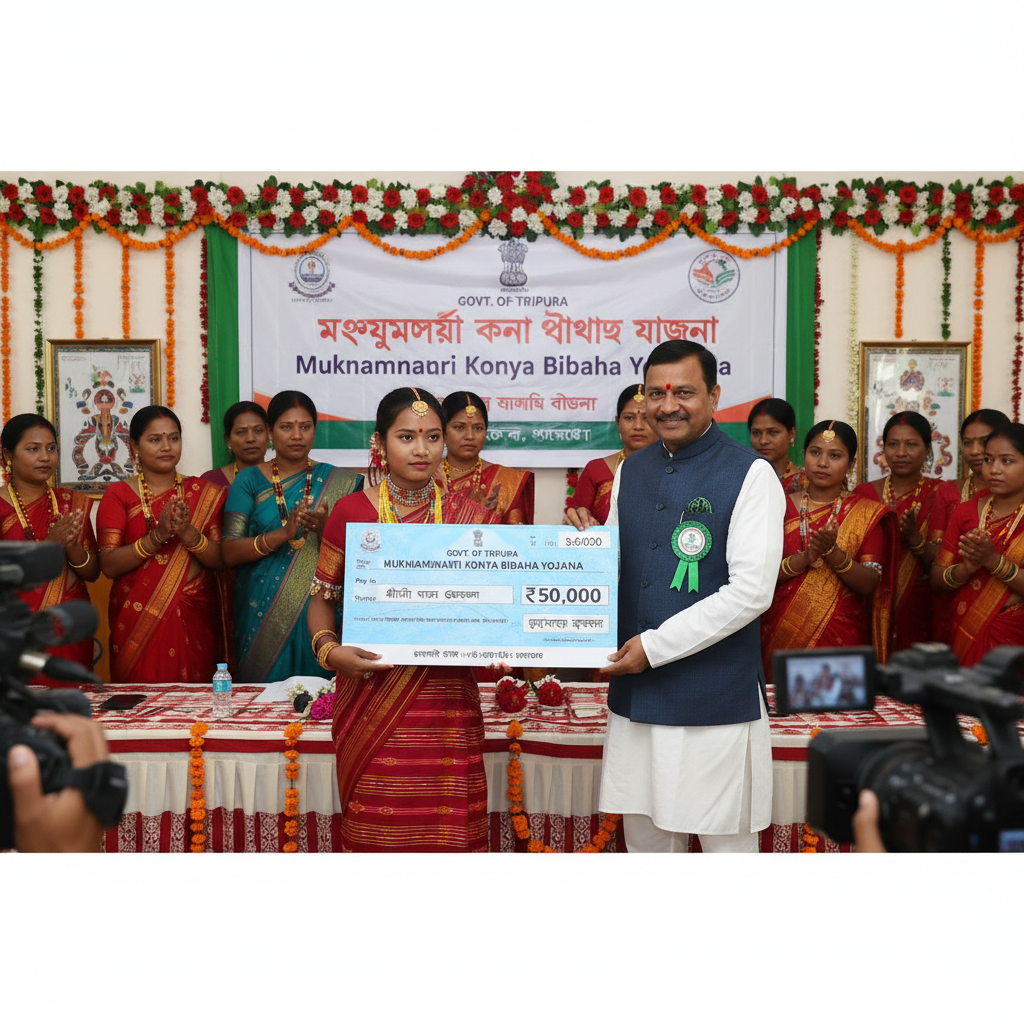
The Mukhyamantri Konya Bibaha Yojana is a pioneering marriage incentive programme launched by the Government of Tripura to uplift tribal women through financial assistance at the moment of marriage. Initiated in 2021 under the vision of Chief Minister Biplab Kumar Deb, the scheme provides a one‑time cash grant of Rs 50,000 to eligible brides belonging to Scheduled Tribes who are permanent residents of the state. This support is transferred directly into the beneficiary’s bank account after the marriage ceremony has been legally registered, thereby ensuring transparency and reducing opportunities for fraud. The primary objectives of the Yojana are to alleviate the economic burden on tribal families, promote timely marriage registration, and encourage the socio‑economic empowerment of women from historically marginalised communities. By coupling cash assistance with a mandatory marriage registration requirement, the programme also seeks to generate reliable demographic data that can inform policy decisions related to education, health and employment for tribal citizens.
Key Features, Eligibility and Application Process
Eligibility criteria for the scheme are strictly defined to ensure that assistance reaches the intended audience. Applicants must be female, at least 18 years of age, and must not have previously received a similar incentive under any central or state‑run marriage scheme. They are required to submit a set of documents that includes a valid Aadhaar card, a domicile certificate confirming residence in Tripura, a tribal certificate, and the marriage registration certificate issued under the Tripura Marriage Act. Applications may be lodged either through the official online portal of the Social Welfare Department or in person at the nearest panchayat office, provided they are submitted at least 30 days before the planned wedding date. Once the application is received, the tribal welfare officer conducts a verification process that cross‑checks the submitted documents with tribal authority records. Upon successful verification, the amount is credited directly to the beneficiary’s designated bank account via the Direct Benefit Transfer (DBT) system, a mechanism that guarantees receipt within 7–10 working days of approval.
- The scheme covers all districts of Tripura, with special focus on remote blocks where tribal populations are concentrated.
- Applicants must register their marriage under the Tripura Marriage Act to qualify for the incentive.
- The application can be completed either online via the state’s welfare portal or offline at local panchayat offices.
Benefits for Families and Societal Impact
The financial infusion of Rs 50,000 serves multiple purposes beyond simply offsetting wedding expenses. For many families, the amount covers costs such as venue hire, catering, traditional attire and ceremonial gifts, thereby preventing the need for borrowing or selling assets. This economic relief has been credited with discouraging early or forced marriages in tribal pockets, as families now have the financial flexibility to wait for the bride to reach the legal age and to pursue educational or vocational opportunities. Moreover, by recognising the bride’s role in the household through a state‑issued cash incentive, the Yojana fosters a sense of dignity and empowerment, encouraging greater participation of women in decision‑making processes within the family and community. Early impact assessments reveal a measurable increase in the registration of marriages among Scheduled Tribe households, leading to improved documentation of vital events such as births and deaths. Advocacy groups have also observed a gradual shift toward later marriage ages, which correlates with better maternal and child health outcomes. The scheme thus contributes indirectly to broader development goals, including gender equality and the reduction of child marriage prevalence. 
Implementation, Administration and Recent Developments
Administration of the Mukhyamantri Konya Bibaha Yojana rests with the Social Welfare Department of Tripura, which oversees every stage from document verification to fund disbursement. Local panchayats play an instrumental role in mobilising applicants, assisting with document collection and guiding beneficiaries through the online submission process. An interactive dashboard, hosted on the department’s official website, provides real‑time tracking of each application’s status, allowing both officials and applicants to monitor progress and anticipate payment timelines. In the event of grievances—such as delayed payments or errors in verification—beneficiaries can lodge complaints through a dedicated grievance redressal portal, where the department commits to resolving issues within 15 working days. Recent policy updates have amplified the scheme’s reach. During a high‑level review meeting, Chief Minister Deb highlighted the positive correlation between the Yojana and rising marriage registration rates among tribal communities. He announced an upcoming increase in the incentive amount to Rs 75,000 for the next fiscal year, aiming to keep pace with inflation and mounting living costs. Additionally, the department is integrating the scheme with the national digital marriage registry to streamline verification processes, reduce processing times and enhance data accuracy.
Future Outlook, Challenges and Solutions
Looking ahead, experts suggest that expanding outreach through community workshops, mobile awareness campaigns and partnerships with local NGOs could significantly boost enrolment, especially in hard‑to‑reach villages. A key challenge remains the accessibility of banking services in remote tribal regions; many beneficiaries still travel long distances to reach a branch, causing delays in receiving the transferred funds. To mitigate this, the Social Welfare Department has entered into collaborations with cooperative banks and micro‑finance institutions to deploy mobile banking vans that visit villages on a scheduled basis, ensuring that cash transfers can be completed on the spot. Awareness drives conducted in regional languages—such as Kokborok and Tripuri—have proven effective in educating families about required documentation, deadlines and the benefits of formal marriage registration. Despite these hurdles, the Yojana is increasingly viewed as a replicable model for other states seeking to address gender inequity and poverty through targeted cash incentives. Continuous monitoring, data‑driven refinements and stakeholder engagement are expected to cement its role as a catalyst for socio‑economic upliftment among Tripura’s tribal women.
Stay updated with the latest Yojana schemes and government initiatives for better awareness and eligibility. For personalized guidance on accessing these benefits, reach out to us.