


Union Minister Announces Allocation of 90 Lakh Pradhan Mantri Awas Yojana Houses
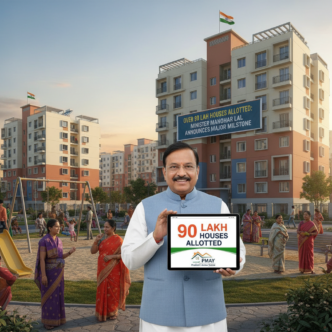
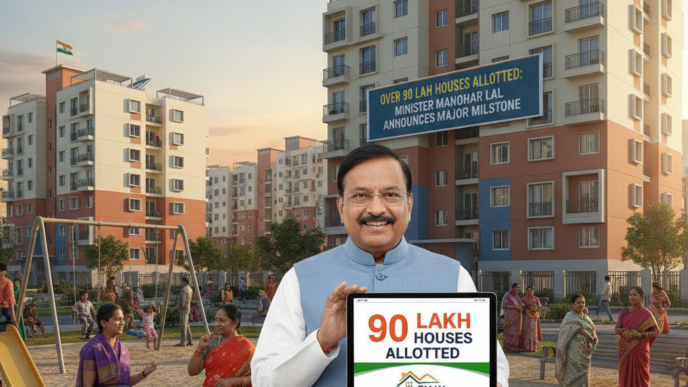
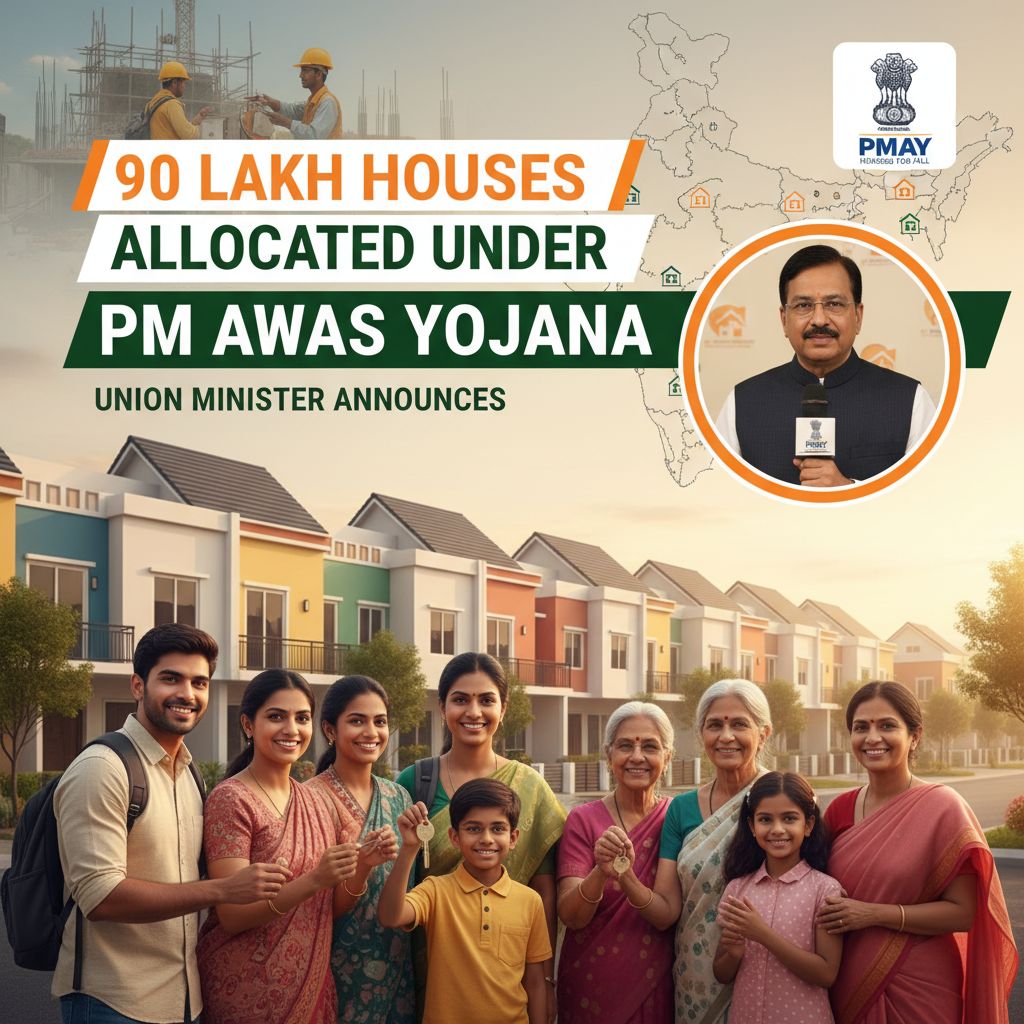
The Union Minister of Housing and Urban Affairs, Manohar Lal, revealed on Monday that the government has successfully allocated over 90 lakh Pradhan Mantri Awas Yojana houses to eligible families across India. This milestone not only underscores the scale of the programme but also marks a decisive step toward the broader goal of “Housing for All” by 2022, with residual targets being pushed forward into the next fiscal cycle. Speaking at a press briefing in Delhi, the minister highlighted that the achievement reflects a coordinated push between central ministries, state governments, and private sector partners, all working to accelerate the delivery of affordable, pucca housing to the nation’s low‑income segments.
Overview of Pradhan Mantri Awas Yojana
Launched in June 2015, the Pradhan Mantri Awas Yojana (PMAY) is a flagship initiative of the Ministry of Housing and Urban Affairs aimed at providing a dignified roof to every Indian household. The scheme is bifurcated into two primary components: PMAY‑Urban, which targets families residing in urban locales, and PMAY‑Gramin, which focuses on rural dwellers lacking access to proper housing. Eligibility is determined on the basis of income criteria, with the Economic Weaker Section (EWS) earning up to ₹3 lakh annually, the Low‑Income Group (LIG) up to ₹6 lakh, and the Middle‑Income Group (MIG) up to ₹12 lakh. Beneficiaries can avail a subsidised home‑loan interest rate of up to 4 % under the Credit‑Linked Subsidy Scheme (CLSS), direct cash assistance for house construction, or a combination of both, depending on the chosen implementation model.
Allocation Statistics and Impact
The latest data released by the Ministry of Housing and Urban Affairs indicates that a cumulative total of 90,00,00,000 houses have been allotted nationwide, breaking down into 49,00,00,000 units under the EWS category, 22,00,00,000 under LIG, and 14,00,00,000 under the MIG segment. This granular distribution reflects the scheme’s emphasis on tailoring assistance to the specific economic strata of beneficiaries. Moreover, the minister pointed out that the allocation figures have surged by 18 % year‑on‑year, driven by the expansion of the credit‑linked subsidy ceiling, the introduction of faster approval processes, and the strategic utilisation of innovative construction technologies such as 3‑D printing and precast concrete. These measures have not only reduced construction costs by an estimated 12 % but also shortened project timelines, enabling families to move into their new homes within 12‑18 months of approval. 
State‑wise Distribution and Regional Priorities
When examined on a state‑by‑state basis, stark regional patterns emerge. Uttar Pradesh tops the list with over 12 lakh houses allocated, followed closely by Maharashtra with 9.5 lakh, and Gujarat with 8.7 lakh units. The minister underscored that these allocations are part of a broader strategy to ensure equitable coverage across high‑burden states, where urbanisation pressures and population density amplify the need for affordable housing. To reinforce this approach, the Ministry has entered into memoranda of understanding (MoUs) with state urban development authorities, facilitating joint monitoring of project milestones and ensuring that state‑level implementation aligns with national benchmarks. In addition, the Centre has earmarked additional incentive grants for states that exceed their quarterly allocation targets, thereby incentivising faster delivery and better utilisation of existing infrastructure.
- Target for 2025: Allocate an additional 30 lakh Pradhan Mantri Awas Yojana houses to meet residual demand.
- Focus on affordable financing through partnerships with nationalised and private banks.
- Adoption of innovative building technologies to reduce costs and accelerate construction.
- Strengthening of grievance redressal mechanisms through a dedicated helpline.
- Expansion of the subsidy ceiling for EWS categories to widen beneficiary reach.
Challenges, Solutions, and Recent Context
Despite the impressive headway, the rollout of PMAY houses still grapples with persistent challenges. Land acquisition remains a bottleneck in many metropolitan areas, where escalating property prices and complex cadastral records can delay project commencement. Additionally, regulatory hurdles related to building permits and environmental clearances have occasionally slowed down construction pipelines. To mitigate these concerns, the Ministry has introduced a streamlined single‑window clearance system that consolidates approvals from various municipal bodies, thereby cutting down processing times by up to 30 %. Furthermore, the government is leveraging public‑private partnerships (PPPs) to mobilise private developers, offering them tax incentives and guaranteed purchase of completed units at pre‑determined rates. This model not only injects capital into the sector but also ensures that the supply side expands in line with demand.
Recent policy amendments have also sought to address financing constraints. In the 2024 Union Budget, the allocation for the Credit‑Linked Subsidy Scheme was increased by 25 %, enabling a larger pool of low‑income families to access subsidised home loans. The Ministry has also rolled out a “Housing Credit Guarantee” scheme, which provides a government‑backed guarantee to lending institutions, thereby encouraging banks toextend credit to EWS and LIG beneficiaries who might otherwise be deemed high‑risk. These interventions collectively aim to create a more fertile financial ecosystem that can sustain the ambitious allocation targets.
Impact on Citizens and Socio‑Economic Benefits
The human dimension of the scheme is perhaps its most compelling narrative. Beneficiaries across urban slums and rural hamlets have expressed renewed optimism as they transition from kutcha (temporary) dwellings to permanent, pucca houses. This shift brings with it a cascade of health, educational, and economic advantages. A recent survey conducted by the National Sample Survey Office (NSSO) revealed a 15 % increase in household savings among families that have secured a PMAY house, primarily due to reduced rent expenditures and lower utility costs associated with improved building envelope efficiency. Moreover, children residing in newly constructed homes have reported better attendance at schools, attributing the improvement to reduced health ailments linked to poor ventilation and structural instability.
Beyond individual households, the wider community reaps benefits. Access to safe, dignified housing has been shown to decrease rates of informal settlement evictions, thereby stabilising neighbourhoods and reducing crime levels. In several states, the arrival of PMAY residents has spurred the development of ancillary services such as schools, hospitals, and markets, contributing to overall regional development. The government’s own impact assessment projects that each newly built house generates approximately ₹1.2 lakh in indirect economic activity, underscoring the scheme’s role as a catalyst for macro‑level growth.
Future Roadmap and Governance Mechanisms
Looking ahead, the Ministry of Housing and Urban Affairs plans to institute a quarterly review framework that will publish granular, state‑wise data on allocation and construction progress. This transparency measure aims to foster accountability and enable swift corrective actions whenever deviations from targets are observed. In addition, the Centre intends to increase the subsidy ceiling for the EWS category from ₹2.67 lakh to ₹3 lakh per unit, a move projected to absorb an additional 5 lakh beneficiary families by the end of 2025. A dedicated helpline, reachable at 1800‑11‑2300, has also been launched to facilitate grievance redressal, providing beneficiaries with real‑time updates on application status, payment schedules, and construction timelines.
Strategically, the roadmap places a strong emphasis on leveraging technology to enhance efficiency. The adoption of Geographic Information System (GIS) mapping tools will allow planners to identify under‑served clusters, optimise land allocation, and monitor construction progress in real time. Meanwhile, pilot projects exploring modular construction and low‑cost prefabricated panels are expected to further shrink building costs, making the dream of affordable housing increasingly attainable for the nation’s most vulnerable segments.
Conclusion
In summary, the allocation of over 90 lakh Pradhan Mantri Awas Yojana houses represents a watershed moment in India’s quest for inclusive and equitable urban development. By marrying policy interventions with innovative construction practices, and by forging robust partnerships between central and state governments, the scheme is steadily inching toward the vision of “Housing for All.” Continued focus on financing accessibility, streamlined regulatory processes, and data‑driven governance will be pivotal in sustaining this momentum. As the nation moves closer to the 2024 electoral horizon, the successful execution of PMAY will not only enhance living standards but also reinforce the government’s commitment to delivering tangible, people‑centric outcomes.
Stay updated with the latest Yojana schemes and government initiatives for better awareness and eligibility. For personalized guidance on accessing these benefits, reach out to us.