


India Launches 1,000 Dal Mill Initiative to Boost Pulse Processing
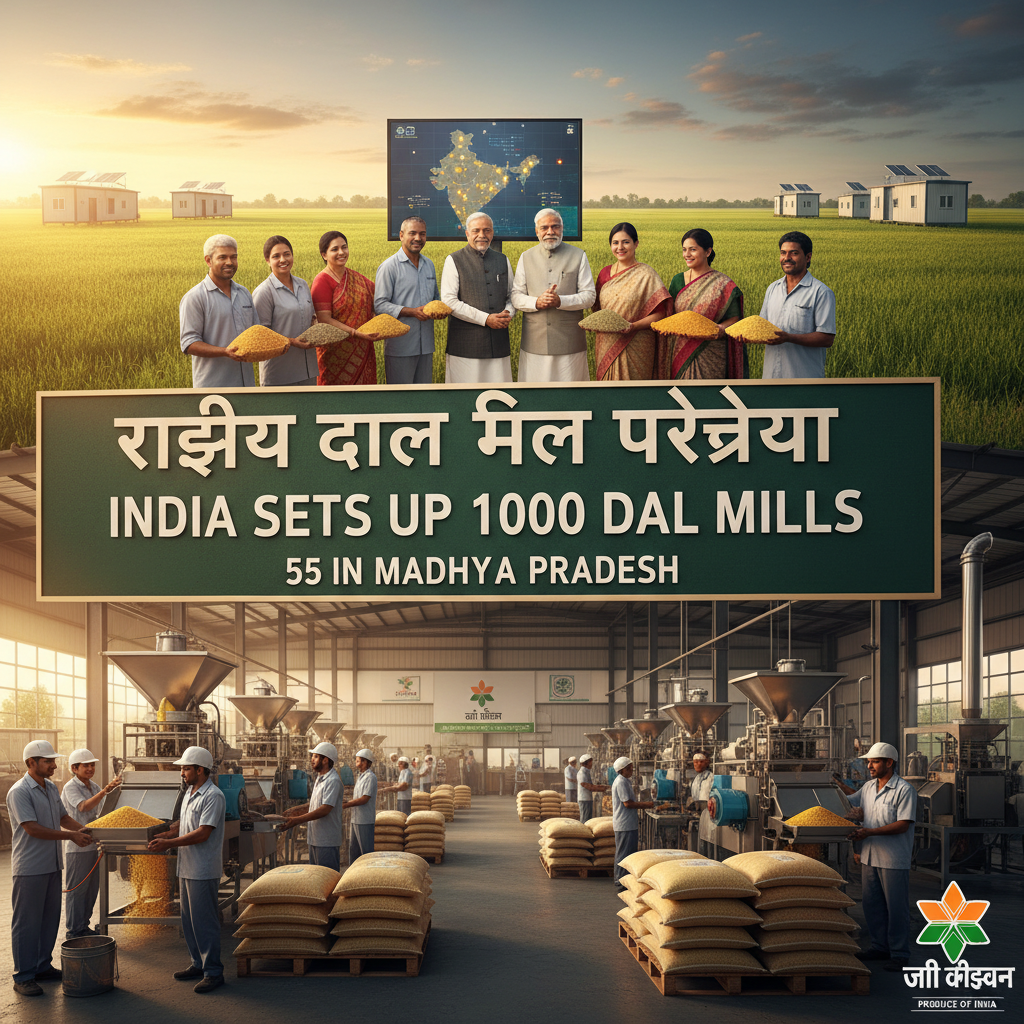
The Ministry of Agriculture and Farmers Welfare announced a landmark programme to establish 1,000 dal milling units across the country, with 55 of these state‑of‑the‑art facilities earmarked for Madhya Pradesh. The rollout, which dovetails with the broader objective of reducing India’s dependence on imported pulses, will be funded through the Agricultural Infrastructure Development Fund and is slated to begin operations in phases over the next three years. By expanding domestic processing capacity by an estimated 30 percent, the scheme aims to deliver affordable pulses to consumers while ensuring better price realization for growers, thereby strengthening the entire agricultural value chain. This initiative aligns with recent government efforts such as the pulse sector revitalisation strategy and the National Agricultural Market (e‑NAM) reforms, underscoring a coordinated push to modernise farm‑to‑fork ecosystems.
Key Objectives and National Vision
The dal mill programme rests on four core pillars: expanding processing infrastructure, safeguarding farmer incomes, curbing post‑harvest losses, and enhancing food security. Officials project that the new mills will augment India’s pulse processing capacity from the current 13 million tonnes to over 17 million tonnes annually, a surge that would enable the nation to meet domestic demand entirely and generate surplus for export. In addition, the scheme seeks to stabilise market prices by smoothing supply fluctuations, a critical factor for a country where pulses constitute a staple protein source for over 30 percent of the population. By integrating modern milling technology with cooperative models, the initiative also aspires to foster rural entrepreneurship and stimulate ancillary industries such as packaging, logistics, and quality testing services.
Implementation Strategy and Phased Rollout
Phase one of the programme prioritises states with high pulse cultivation acreage and robust cooperative networks, including Maharashtra, Karnataka, and naturally Madhya Pradesh. The Ministry will provide technical assistance, on‑ground training, and a monitoring cell to ensure adherence to quality standards. Funding will be sourced from the Agricultural Infrastructure Development Fund, which earmarks central subsidies for agro‑processing projects. In subsequent phases, additional units will be commissioned in batches of 300 per quarter, with the full quota of 1,000 mills targeted for completion by the end of the three‑year horizon. State governments are encouraged to identify viable sites, streamline land acquisition, and facilitate electricity connections to accelerate deployment. 
Benefits for Farmers, Consumers and the Economy
For farmers, the proximity of processing units translates into reduced post‑harvest losses—estimated at 15‑20 percent of the harvested pulse—by enabling immediate cleaning, de‑hulling and packaging. Direct access to milling facilities empowers growers to sell processed dal at farm‑gate prices that are typically 10‑15 percent higher than raw grain rates, thereby improving net realizations. The initiative also includes tailored training programmes on nutrient‑efficient cultivation, pest management and post‑harvest handling, fostering a culture of quality and compliance. Economists forecast that the programme could generate up to 200,000 direct and indirect jobs across the value chain, attract private equity into the agro‑food sector, and enhance export potential, positioning India as a competitive player in the global pulses market.
State‑Specific Focus on Madhya Pradesh and Local Impact
Madhya Pradesh, the nation’s second‑largest pulse producer, has been identified as a strategic hub for the rollout. The state government will partner with local cooperatives to install 55 mills, each equipped with solar‑powered backup systems and eco‑friendly waste‑management protocols. These units are projected to process over 1.5 million tonnes of pulses annually, creating approximately 12,000 jobs in operation, maintenance and ancillary services. By integrating with existing farmer producer organisations (FPOs), the state aims to streamline raw material sourcing, guarantee fair price mechanisms and provide market linkages to both domestic retailers and overseas buyers. Chief Minister Shivraj Singh Chouhan has framed the project as a “model for other regions,” emphasizing its potential to transform Madhya Pradesh into a pulse‑processing powerhouse.
Funding, Incentives and Support Mechanisms
The central government will subsidise up to 50 percent of the capital cost for each milling unit, while additional fiscal incentives include a five‑year corporate tax holiday and preferential credit lines through designated agricultural banks. State‑level incentives may encompass reduced land lease rates, waivers on stamp duties and streamlined permitting processes. Eligibility criteria require applicants to be registered cooperatives, farmer producer organisations or private enterprises with a proven track record in agro‑processing. Applicants must also demonstrate compliance with environmental standards and pledge to adopt energy‑efficient machinery. A dedicated online portal will facilitate applications, track subsidy disbursements and enable real‑time verification of project milestones.
Challenges, Mitigation Measures and Monitoring Framework
Industry analysts have highlighted several implementation hurdles, notably intermittent power supply, inadequate raw material aggregation and the need for rigorous quality control. To mitigate these risks, the Ministry will deploy hybrid power solutions—combining grid connectivity with solar arrays and battery backups—at each site. A centralized monitoring unit will conduct periodic inspections, certify compliance with Indian Standards (IS) for pulse processing and maintain a database of best practices. Moreover, a digital dashboard will disseminate real‑time production metrics, employment figures and farmer income trends, enabling transparent evaluation of the scheme’s socio‑economic impact. Independent audits will be undertaken annually to assess performance and inform iterative policy adjustments.
Timeline, Outreach and Future Outlook
The first batch of 200 milling units is expected to become operational by the end of the current fiscal year, with subsequent phases targeting an additional 300 units each quarter thereafter. The rollout will be complemented by a nationwide awareness campaign that educates farmers about eligibility for subsidies, application procedures and the benefits of localized processing. In the longer term, the government envisions expanding the network to 2,000 units, integrating advanced analytics for demand forecasting and fostering partnerships with private investors. Success will hinge on coordinated action among central ministries, state agencies, farmer cooperatives and civil society stakeholders, paving the way for a resilient, self‑sufficient pulse ecosystem that benefits every citizen.
Stay updated with the latest Yojana schemes and government initiatives for better awareness and eligibility. For personalized guidance on accessing these benefits, reach out to us.