


Overview of Maiya Samman Yojana
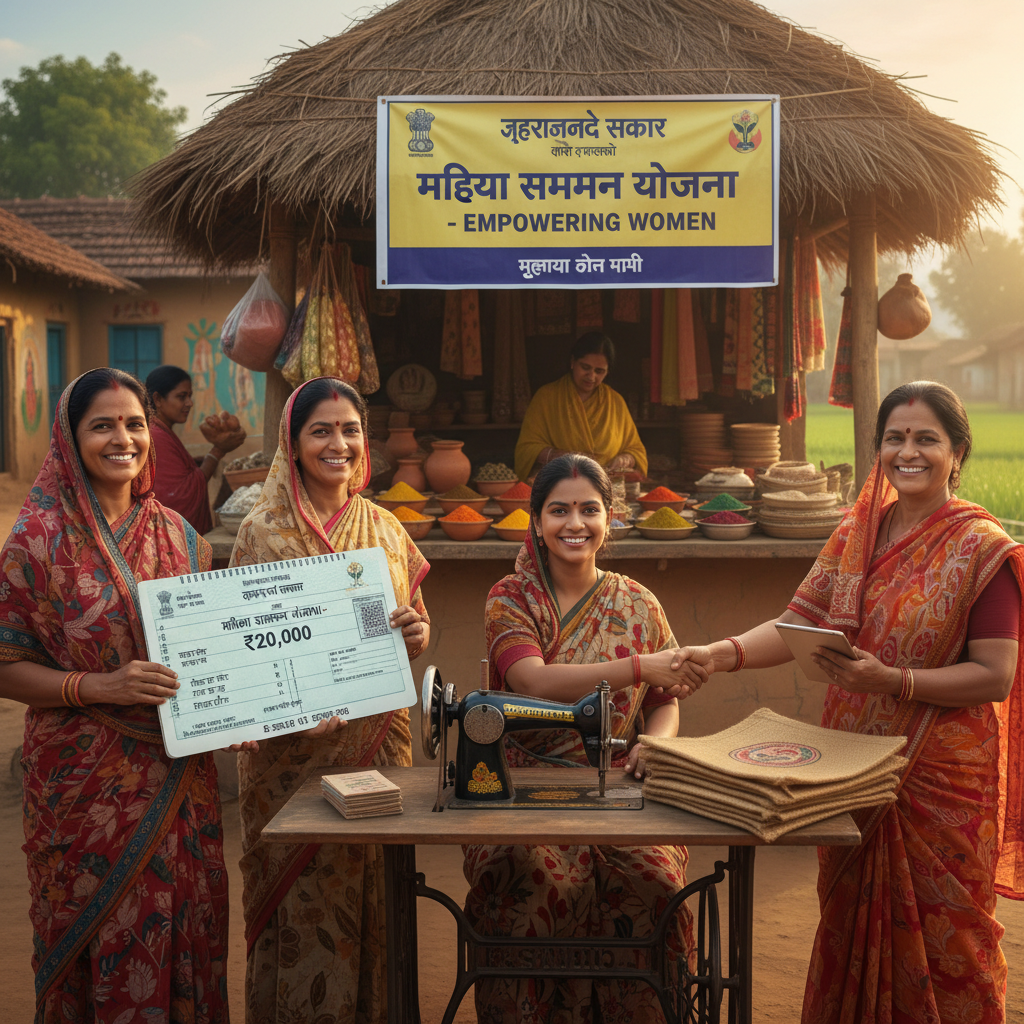
The Jharkhand government launched the Maiya Samman Yojana to provide a targeted financial lifeline to women from economically vulnerable households. Under this initiative, each eligible woman receives an unsecured loan of Rs 20,000 at a highly subsidised interest rate. The programme is designed to enable women to start small enterprises, purchase essential equipment, or meet urgent family needs while fostering greater economic independence across the state. By leveraging a low‑cost credit line, the scheme seeks to reduce reliance on informal lenders and create a sustainable pathway for entrepreneurial activity.
- Target beneficiaries: Women aged 18 to 60 belonging to below‑poverty‑line households
- Loan amount: Rs 20,000 per applicant
- Interest rate: Subsidised 4 percent per annum
- Repayment period: Five years with flexible instalments
Objectives and Vision
The core objective of the Maiya Samman Yojana is to break the cycle of financial dependency on male family members and to catalyse women’s participation in the formal economy. The state government envisions a ripple effect where micro‑enterprises grow into larger income generators, thereby contributing to rural development and gender parity. Officials have underscored that the scheme aligns with broader national goals of financial inclusion and women’s empowerment, echoing the objectives of flagship programmes such as the Financial Inclusion mission.
Key vision points include increasing enrollment of women in self‑help groups, enhancing skill development, and creating a robust financial ecosystem that supports both urban and rural districts. By facilitating access to capital, the scheme also aims to improve household savings, enable better educational opportunities for children, and promote healthier decision‑making within families. 
Eligibility Criteria
Eligibility is strict to ensure that the loan reaches genuinely needy women. Applicants must meet the following conditions:
- Reside permanently in Jharkhand
- Belong to a household whose annual income does not exceed the prescribed poverty‑line threshold
- Maintain a clean credit history with no defaults on previous government loans
- Submit essential documentation, including identity proof, residence proof, and a concise project plan outlining how the loan will be utilised
Special provisions are available for widows, single women, and women from scheduled tribes to guarantee inclusive access. The government also encourages applications from women who are members of existing self‑help groups, as they are considered to have a supportive network for loan repayment.
Application Process
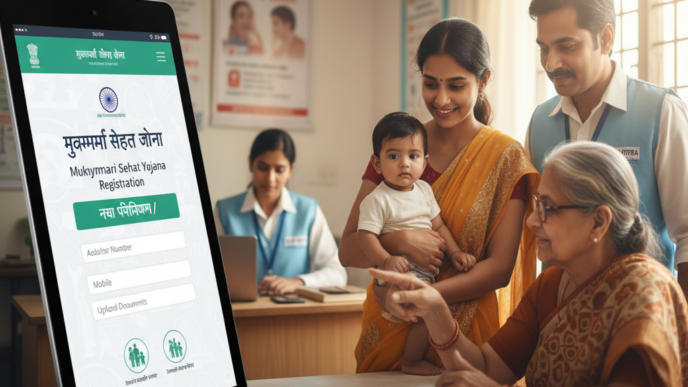
Prospective beneficiaries can apply both online through the state’s dedicated portal and offline at designated district offices. The process is streamlined to minimise bureaucratic delays:
- Register on the Maiya Samman portal using Aadhaar details
- Complete the loan request form and upload scanned copies of required documents
- Select the intended purpose of the loan and provide a brief project description
- Attend a verification meeting with the local officer for document scrutiny
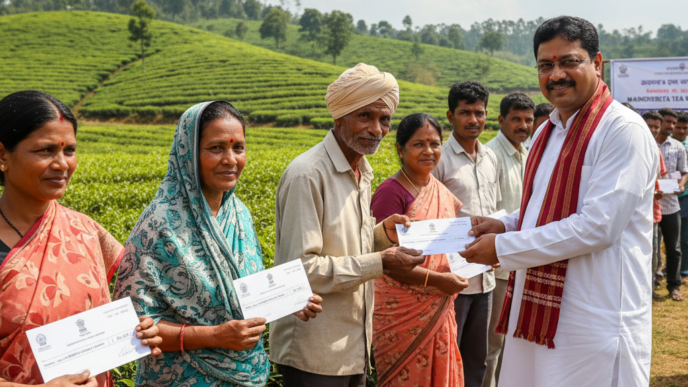
- Upon approval, the sanctioned amount is transferred directly to the beneficiary’s bank account
Applicants are advised to retain an acknowledgment receipt for future reference and to monitor the status of their application through SMS alerts.
Benefits and Expected Impact
The scheme is projected to generate multifaceted benefits for women and the wider community. Access to a low‑interest loan enables women to diversify income streams, increase household savings, and invest in sustainable micro‑businesses such as handicrafts, food stalls, or agri‑ancillary services. The 4 percent interest subvention reduces repayment pressure, encouraging longer‑term business planning and financial stability.
Economic modelling suggests that within the first three years, approximately 20,000 new micro‑enterprises could be established under the scheme, creating jobs for local youth and stimulating economic activity in underserved regions. Social impact metrics include a measurable rise in women’s participation in household decision‑making, higher school enrolment rates for girls as family incomes improve, and increased confidence among women to engage in community leadership roles.
Beyond individual beneficiaries, the programme is expected to strengthen the state’s micro‑finance ecosystem by fostering partnerships with NGOs, micro‑finance institutions, and private sector mentors who can provide technical assistance and market linkage for borrowers.
Challenges and Mitigation Strategies
Scaling a financial scheme of this magnitude presents several implementation hurdles. A primary concern is ensuring that loans are disbursed only to eligible women and not diverted to ineligible groups. To address this, the government has constituted verification committees at the block level that conduct random audits and field visits, thereby enhancing transparency and accountability.
Awareness gaps in remote villages also pose a challenge. The state has launched a multi‑channel outreach campaign that includes local radio broadcasts, community meetings, and mobile app notifications to disseminate information about the scheme’s benefits and application procedures. These initiatives aim to bridge the information divide and encourage participation among women who may otherwise remain unaware.
Continuous monitoring of loan utilisation and repayment performance is essential for the programme’s sustainability. The finance department has partnered with reputable micro‑finance organisations to conduct periodic reviews, provide technical assistance, and offer remedial measures for borrowers facing repayment difficulties. Such collaborations help maintain the scheme’s fiscal health while safeguarding beneficiaries’ interests.
Future Outlook
Looking ahead, the Jharkhand government intends to expand the Maiya Samman Yojana to encompass complementary financial products such as skill‑development grants, market‑linkage support, and collateral‑free credit facilities for high‑growth sectors. Plans are also underway to increase the loan ceiling for entrepreneurs targeting technology‑driven or export‑oriented ventures, thereby encouraging ambition beyond traditional micro‑enterprises.
Stakeholder engagement will play a pivotal role in this evolution. NGOs, self‑help groups, and private sector partners are expected to mentor beneficiaries, facilitate market access, and assist in scaling successful ventures. The government also aims to integrate the scheme with national initiatives like the Mahatma Jyotiba Phule Rohilkhand Scheme, creating synergies that amplify impact across sectors.
Feedback loops will guide ongoing policy refinements, ensuring the programme remains responsive to shifting socio‑economic dynamics. By continuously monitoring outcomes and incorporating best practices from similar schemes across India, the state hopes to position the Maiya Samman Yojana as a benchmark model for women‑centric financial empowerment.
Stay updated with the latest Yojana schemes and government initiatives for better awareness and eligibility. For personalized guidance on accessing these benefits, reach out to us.