


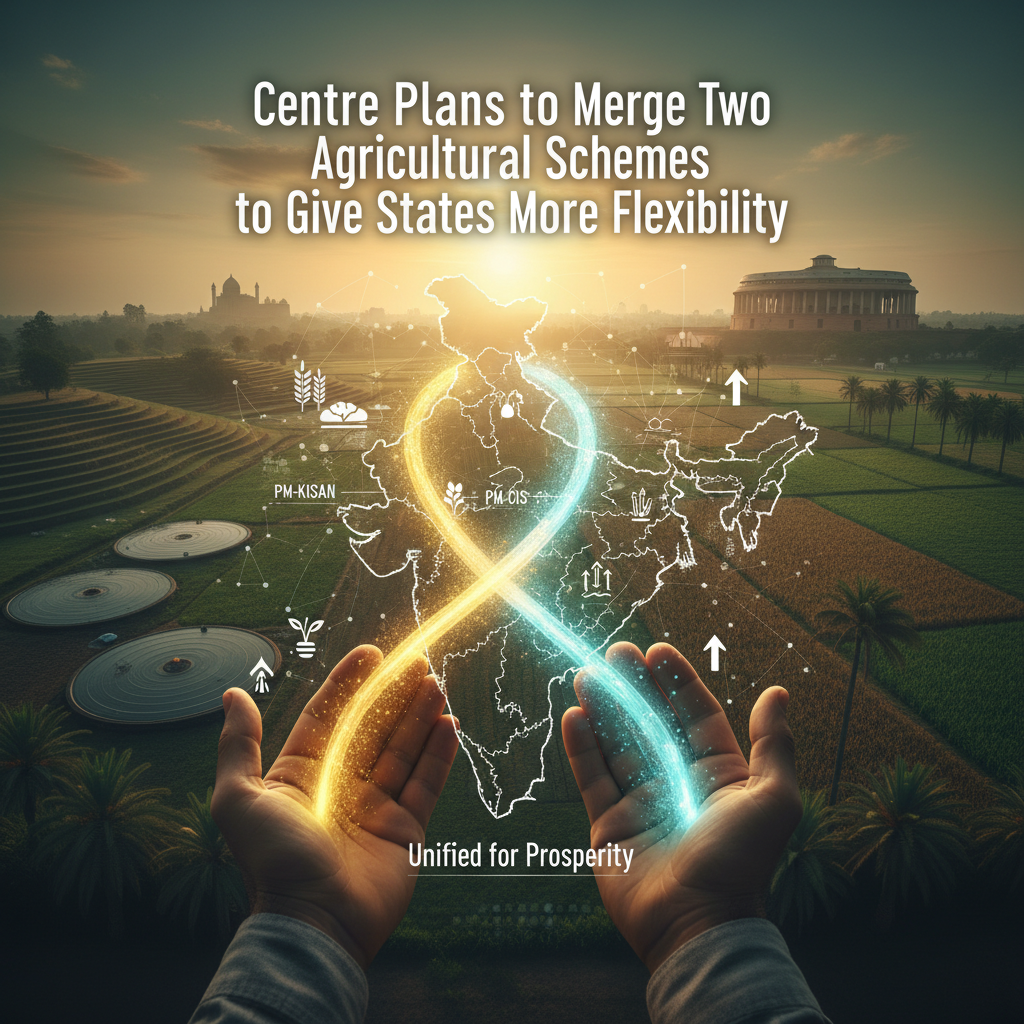
Government announces merger of PM‑KISAN and PM‑CIS to give states more flexibility
The Union Ministry of Agriculture and Farmers Welfare has unveiled a landmark agricultural scheme merger that will combine the Pradhan Mantri Kisan Samman Nidhi (PM‑KISAN) and the Pradhan Mantri Fasal Bima Yojana (PM‑FASAL Bima Yojana, often referred to as PM‑CIS) into a single, integrated programme. The proposal, disclosed in a high‑level press briefing on 24 September 2024, aims to give state governments greater discretion in tailoring benefit delivery to local agrarian realities while preserving the core objectives of income support and crop‑risk insurance for Indian farmers.
Why the merger is being pushed now
Officials say the convergence of the two flagship schemes aligns with the central government’s broader push for cooperative federalism and fiscal de‑centralisation. By integrating the six‑thousand‑rupee annual income stipend with a subsidised crop‑insurance cover, the Centre hopes to streamline fund allocation, reduce duplication, and eliminate overlapping administrative processes. The move comes at a time when the country is grappling with heightened climate‑related risks, volatile global commodity prices, and a growing demand for more responsive welfare mechanisms that can be adapted to diverse cropping patterns across states.
Recent data from the Ministry of Agriculture indicates that over 12 crore farmer families have benefited from PM‑KISAN since its inception in 2019, while the crop‑insurance scheme has covered more than 5 crore hectares in the 2023‑24 season. However, parallel administration has led to fragmented beneficiary databases, delayed claim settlements, and occasional overlap in fund utilisation. The merger is therefore positioned as a remedy to these inefficiencies. 
Details of the integrated agricultural scheme
The new integrated scheme will retain the 6,000‑rupee annual cash transfer to every eligible farmer family, while bundling it with a unified crop‑insurance product that offers coverage against drought, flood, cyclone, pest attacks and disease outbreaks. Key features include:
- Unified Beneficiary Database: A single enrolment portal will capture land‑holding details, Aadhaar verification and crop‑choice information, reducing duplicate entries.
- Flexible Fund Allocation: States can decide the proportion of central assistance earmarked for income support versus insurance premiums, subject to a minimum 30 % allocation for each component.
- Performance‑Linked Disbursements: A portion of funds may be released based on outcome metrics such as timely claim settlement and adoption of climate‑smart practices.
- Digital Claims Processing: Farmers can file insurance claims through a unified mobile application, with real‑time status tracking and automatic credit of insurance payouts.
- State‑Specific Add‑Ons: States may layer additional benefits like seed subsidies, irrigation rebates or market‑linkage programmes within the overall budget envelope.
According to the Ministry’s draft notification, the merged scheme will roll out at the beginning of the 2025‑26 fiscal year, with a six‑month transition window for states to adapt their IT infrastructure and administrative workflows.
For more details on the original schemes, see the PM‑KISAN Wikipedia page and the PM‑FASAL Bima Yojana Wikipedia article.
State‑level flexibility and implementation roadmap
The merger is expected to empower state governments to design complementary welfare interventions that reflect regional priorities. For instance, a state with a high proportion of horticultural crops may allocate a larger share of the insurance premium to protect against price volatility, while a water‑scarce region could earmark funds for drip‑irrigation subsidies under the same umbrella.
Implementation will follow a phased roadmap:
- Capacity‑building: The Centre will conduct webinars and field‑level training for state agriculture officers on the new reporting templates and beneficiary verification protocols.
- IT Integration: A unified portal will merge the PM‑KISAN direct‑benefit‑transfer (DBT) module with the PM‑FASAL Bima Yojana claim‑filing system, enabling seamless data exchange.
- Data‑Sharing Framework: Periodic exchange of beneficiary lists, claim status updates and financial utilisation metrics will be mandated between the Union and states to ensure transparency.
- Monitoring & Evaluation: Advanced analytics will track key agrarian indicators such as farmer income growth, crop productivity and claim settlement ratios, providing an evidence‑based basis for course corrections.
State agriculture ministers have welcomed the flexibility, noting that it will enable quicker rollout during critical planting seasons and allow for innovative delivery mechanisms such as village‑level distribution hubs or QR‑code‑based claim verification.
Expert reactions and challenges ahead
Policy analysts have offered mixed perspectives on the merger. Renowned agricultural economist Dr. R. Singh praised the move as “a progressive step toward cooperative federalism that can insulate small and marginal farmers from both income shocks and climate‑related losses.” Conversely, some experts caution that without robust safeguards, the integration could dilute focus on specialised objectives such as crop diversification or water‑conservation.
Key challenges identified include:
- Fiscal Synchronisation: Ensuring that state‑level allocations remain compatible with the central budgetary ceiling.
- Administrative Capacity: Addressing disparities in state‑level IT readiness that could lead to uneven implementation.
- Policy Dilution: Preventing a one‑size‑fits‑all approach that overlooks localized agrarian nuances.
To mitigate these risks, the Ministry has pledged ongoing technical assistance, a grievance redressal forum for states, and periodic review meetings with stakeholder representatives. International best practices from countries like Brazil and Kenya, where income support and crop insurance have been harmonised, are being studied to refine the Indian model.
Stay updated with the latest Yojana schemes and government initiatives for better awareness and eligibility. For personalized guidance on accessing these benefits, reach out to us.