


Overview
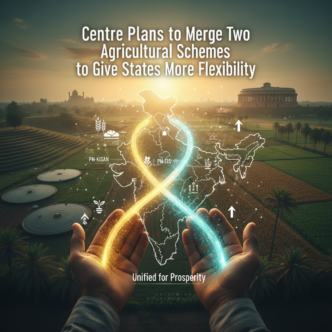
The central government has announced an agricultural scheme merger that will combine two long‑standing welfare programmes – the Irrigation Subsidy Scheme and the Crop‑Insurance Initiative – into a single, flexible programme for states. This move is part of a broader push to streamline public spending, reduce duplication and enhance the impact of farm‑related assistance. By consolidating the schemes, the Union Ministry hopes to give state governments greater discretion in tailoring support to local agrarian conditions while ensuring that the core intent of each original programme is preserved.
Officials say the merger will simplify application procedures for farmers, cut administrative delays and enable a more responsive disbursement mechanism. The decision follows recent assessments that revealed overlapping eligibility criteria and costly parallel monitoring systems, which collectively added up to an estimated 12 percent inefficiency in the federal outlay for agricultural subsidies.
Background and Rationale
The two schemes originated in different eras and were designed to address distinct challenges. The Irrigation Subsidy Scheme, launched in 2005, provides financial assistance to farmers for adopting water‑saving irrigation technologies, while the Crop‑Insurance Initiative, introduced in 2010, offers risk‑cover against yield losses due to drought, flood or pest attacks. Over the years, both programmes have expanded their reach, but state implementation offices reported that the separate application portals, data‑entry requirements and verification processes created unnecessary friction. 
A 2023 audit by the Ministry of Agriculture indicated that the combined administrative cost of the two schemes exceeded ₹2,500 crore annually, with a significant portion attributed to duplicated verification steps and fragmented fund‑flow channels. The audit also highlighted that many small and marginal farmers faced delays of up to 90 days in receiving benefits, undermining the timely support needed during critical cropping windows.
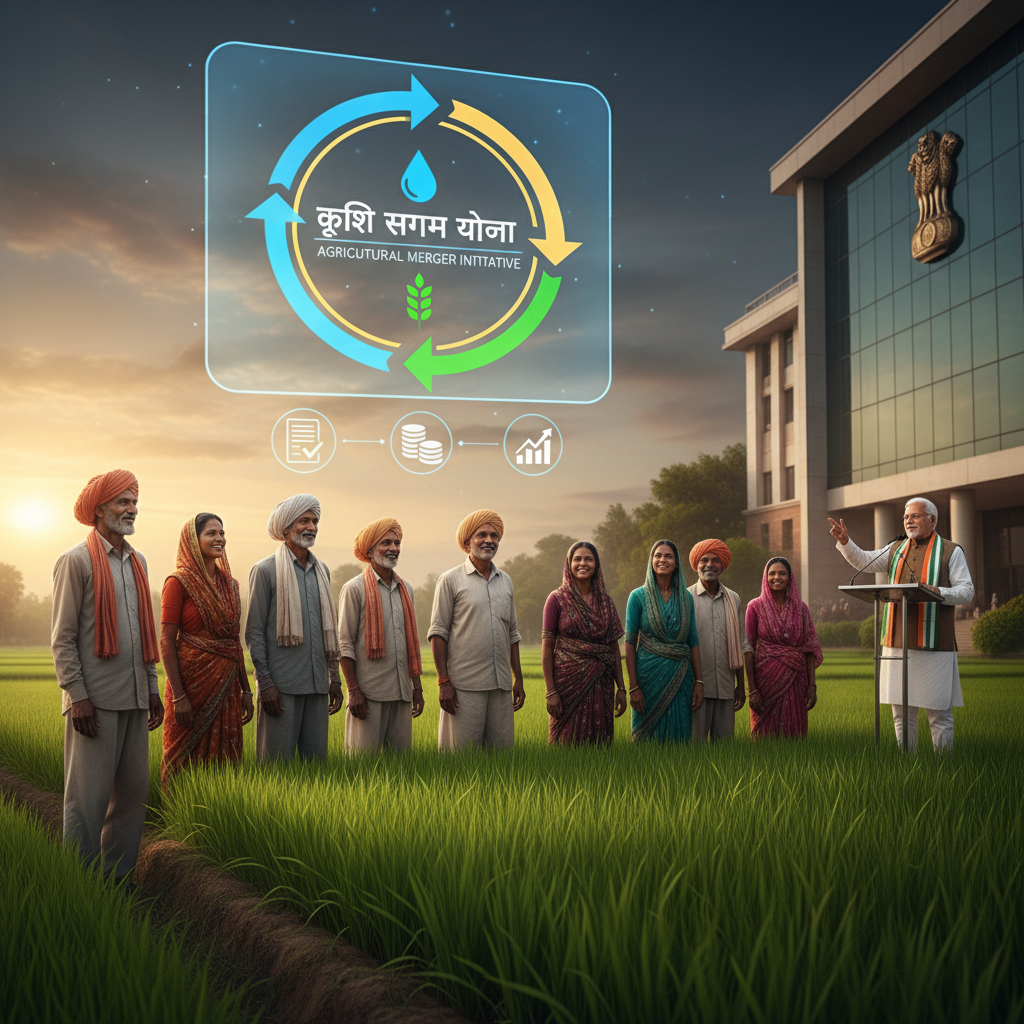
In response, the central government has framed the merger as a pragmatic solution to improve service delivery. By integrating the two programmes under a unified agricultural scheme merger, the Ministry aims to create a single‑window system that reduces paperwork, accelerates fund release and allows states to re‑allocate resources in line with emerging climate‑related risks.
Key Features of the Consolidated Scheme
The merged programme retains the essential components of both original schemes while introducing several reforms aimed at improving farmer‑centric outcomes.
- Unified Eligibility Criteria: Farmers will be assessed under a single set of parameters that cover both irrigation‑related investments and crop‑risk exposure, simplifying the verification process.
- Flexible Funding Allocation: States will receive a pooled grant that can be divided between irrigation subsidies and insurance payouts based on regional priorities, as determined through a consultative framework with local agriculture departments.
- Integrated Monitoring and Evaluation: A centralized dashboard will track disbursement timelines, usage of irrigation assets and claim settlement ratios, enabling real‑time adjustments and performance‑based reporting.
- Digital Application Platform: The scheme will be accessible through a single online portal linked to the Aadhaar‑verified farmer database, reducing the need for physical visits to multiple offices.
- Targeted Support for Smallholders: Special provisions will ensure that marginal farmers continue to receive priority in both irrigation subsidies and insurance coverage, preserving the original intent of targeted assistance.
These features are designed to maintain policy continuity while enhancing efficiency. According to a recent policy brief from the National Institute of Agricultural Economics, the consolidation could deliver up to a 15 percent reduction in administrative overhead, translating into faster cash flows for farmers and lower fiscal pressure on the central exchequer.
Implementation Roadmap and Stakeholder Reactions
The rollout will unfold in three distinct phases. The first phase, slated for the 2025‑26 fiscal year, will pilot the integrated model in five diverse states – Punjab, Madhya Pradesh, Odisha, Rajasthan and Himachal Pradesh – selected for their varied agro‑climatic zones and differing levels of scheme penetration.
During the pilot, each state will submit a detailed implementation plan outlining how it will allocate the merged funds, modify existing monitoring tools and engage farmer cooperatives. Feedback from farmer groups, state agriculture ministers and civil‑society organisations will be compiled to refine the national rollout parameters.
Stakeholder responses have been largely positive. The Indian Farmers’ Association issued a statement welcoming the reduction in procedural bottlenecks, while urging the government to safeguard the tenure of existing insurance contracts. State agriculture ministers, speaking at a recent conference in New Delhi, praised the “enhanced autonomy” granted to provinces, noting that it aligns with the principle of cooperative federalism.
From a technological standpoint, the National e‑Governance Division will develop a unified digital platform that integrates with existing state‑level portals, ensuring seamless data exchange. Early pilots have reported a 30 percent decrease in application processing time, underscoring the potential gains of a consolidated approach.
Challenges, Expert Opinions and Conclusion
Despite the optimism, several challenges remain. First, harmonising disparate data‑sets from state farm registries and insurance claim databases will require robust middleware and strict data‑privacy safeguards. Second, political resistance may emerge from bureaucracy entrenched in the status‑quo, potentially slowing legislative amendments needed to formalise the merger.
Economists specialising in agricultural policy, such as Dr. Arvind Panagariya of the Indian Council for Research on International Economic Relations, estimate that the merger could yield fiscal savings of up to 12 percent in administrative costs. However, they caution that without precise targeting mechanisms, benefits aimed at small and marginal farmers could be diluted, jeopardising the scheme’s equity objectives.
Experts also stress the importance of a robust impact‑assessment framework. The Ministry plans to commission an independent evaluation after the first two years of nationwide implementation, focusing on indicators such as crop‑yield stability, farmer income volatility and environmental outcomes linked to expanded irrigation.
In conclusion, the agricultural scheme merger represents a strategic shift toward a more adaptable and efficient governance architecture for farm‑related welfare. If executed effectively, it could serve as a blueprint for integrating other public programmes, ultimately strengthening India’s agricultural resilience and improving livelihoods for millions of farmers across the nation.
Stay updated with the latest Yojana schemes and government initiatives for better awareness and eligibility. For personalized guidance on accessing these benefits, reach out to us.