


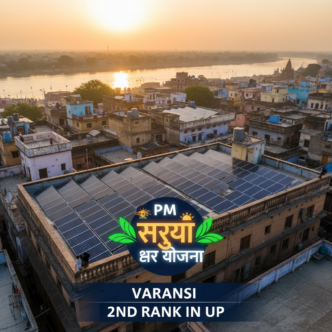
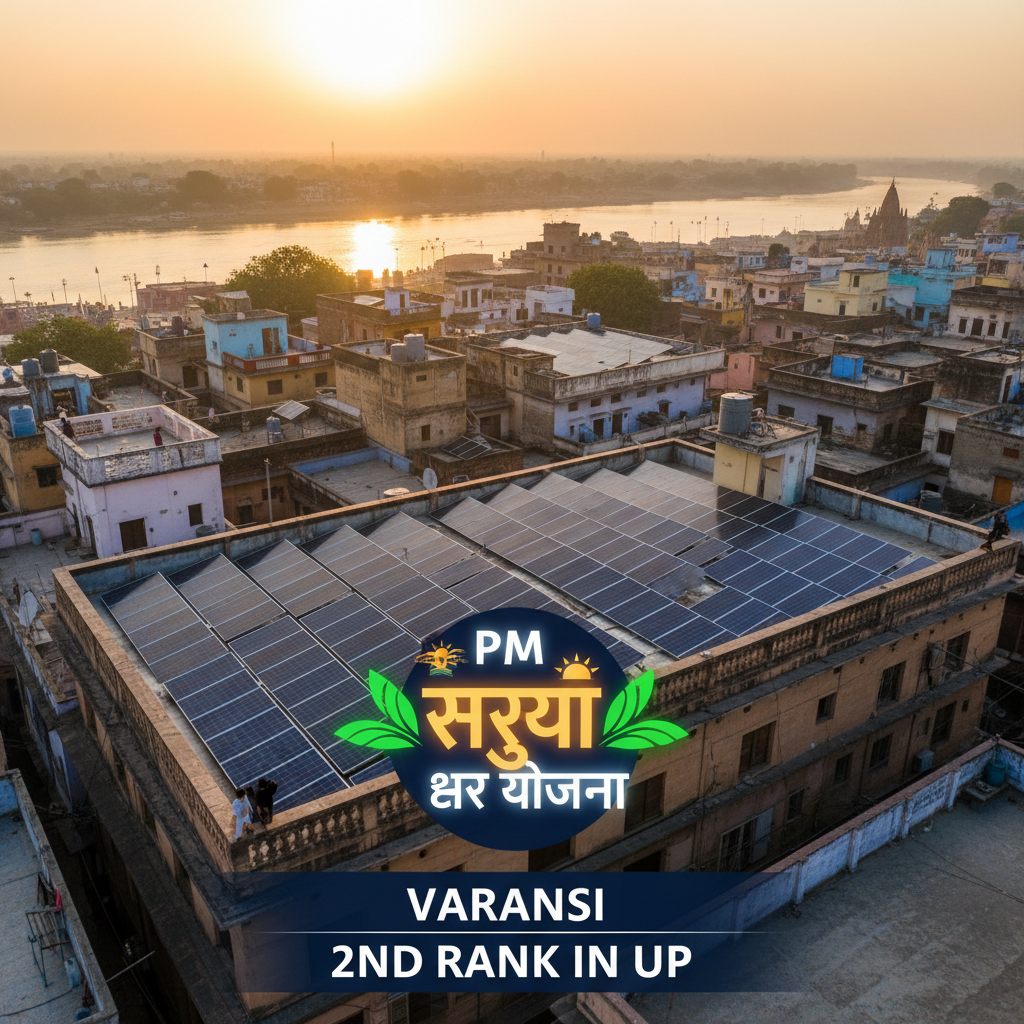
Varanasi Secures Second Spot in Uttar Pradesh under PM Surya Ghar Yojana
Varanasi has climbed to the second‑highest rank among districts in Uttar Pradesh for the number of households that have successfully installed solar rooftop systems under the PM Surya Ghar Yojana. According to the latest data released by the Ministry of New and Renewable Energy (MNRE), more than 85,000 families in the ancient city have embraced solar energy, contributing to a statewide total exceeding 1.2 million installations. This achievement reflects a rapid shift toward clean power in a region traditionally dominated by coal‑fired plants and underscores the effectiveness of the central government’s push to decentralise renewable energy generation.
What is the PM Surya Ghar Yojana?
Launched in 2023, the Pradhan Mantri Surya Ghar Yojana is a flagship initiative aimed at installing solar panels on one million households across India by the end of 2025. The scheme is designed to make solar photovoltaic (PV) systems financially accessible to the average citizen through a combination of direct subsidies, interest‑free loans, and a streamlined digital application portal. By lowering upfront costs and simplifying approvals, the program seeks to reduce household electricity bills, curb carbon emissions, and accelerate India’s transition to a low‑carbon energy mix.
For a deeper understanding of the technical aspects of solar power, you can refer to the Wikipedia entry on solar power which provides an overview of photovoltaic technology, efficiency metrics, and global adoption trends. 
Key Components of the Scheme
The success of the PM Surya Ghar Yojana hinges on several interlocking components that together create an enabling environment for residential solar adoption:
- Financial Subsidy: Eligible families can receive a subsidy of up to 40 % of the total installation cost, capped at ₹80,000 for a typical 2 kW system.
- Interest‑Free Financing: The balance amount can be financed through zero‑interest loans offered by participating banks, with repayment periods extending up to seven years and equated monthly instalments tailored to household cash‑flow.
- Unified Digital Platform: An online portal (https://suryaghry.gov.in) guides applicants through eligibility checks, site assessments, and installer selection, reducing paperwork and Turnaround Time (TAT) by up to 30 %.
- Outreach Programs: Targeted campaigns in rural and semi‑urban clusters ensure that marginalized communities are aware of the benefits and can access the scheme.
- Real‑Time Monitoring Dashboard: A government‑run dashboard tracks energy generation, consumption patterns, and system performance, allowing beneficiaries to optimise usage and verify savings.
Performance Snapshot in Uttar Pradesh
Uttar Pradesh stands as one of the leading states in the nation for solar rooftop uptake under the scheme, having recorded over 1.2 million installations as of the latest MNRE report. Varanasi alone accounts for approximately 85,000 of these installations, a figure that surpasses the per‑capita average for the state and highlights the district’s grassroots mobilisation effort.
When compared with other high‑performing districts such as Lucknow and Kanpur, Varanasi exhibits a higher adoption rate per 1,000 households, despite having a smaller overall population. This disparity is attributable to intensive community engagement, partnership with reputable installers, and the strategic use of subsidised financing that together lower barriers to entry.
What Drives Varanasi’s Success?
Several inter‑related factors have propelled Varanasi to the forefront of the Surya Ghar Yojana:
- Awareness Campaigns: The district administration organized over 150 awareness camps in schools, marketplaces, temples, and community centres, reaching an estimated 250,000 residents.
- Public‑Private Partnerships: Collaboration with certified solar installers ensures a steady supply of high‑quality panels and skilled technicians, reducing project delays.
- Subsidised Financing: By offering interest‑free loans up to ₹1.5 million, the scheme makes the upfront capital requirement manageable for middle‑income families.
- Women‑Led Initiatives: Self‑help groups and women’s collectives have taken an active role in disseminating information and coordinating financing, boosting household participation.
Economic and Environmental Impact on Households
Early adopters in Varanasi are reporting average electricity bill reductions of 30 % after switching to solar. For a typical 2 kW system costing roughly ₹200,000, a beneficiary can offset up to ₹80,000 through the subsidy, leaving an out‑of‑pocket expense of about ₹120,000. The remaining balance can be serviced through an interest‑free loan, resulting in monthly payments of roughly ₹1,800 over five years. Over a 25‑year lifespan, these savings translate into an estimated cumulative benefit of ₹3 lakh per household.
From an environmental perspective, the widespread deployment of solar panels in Varanasi has contributed to a measurable decline in carbon emissions. Preliminary calculations by the Uttar Pradesh Energy Development Agency estimate an annual reduction of approximately 150 tonnes of CO₂, aligning with the state’s climate‑action targets and supporting India’s broader net‑zero ambitions.
Eligibility Criteria and Application Process
To qualify for the PM Surya Ghar Yojana, households must meet the following criteria:
- Own a residential property with a roof that receives adequate solar irradiance (minimum 4 hours of direct sunlight daily).
- Be an Indian citizen with a valid Aadhaar card.
- Have an average monthly electricity consumption of up to 300 kWh (or be classified as a “low‑consumption” consumer).
- Not have previously received a central government subsidy for solar installations.
The application workflow is streamlined through the Surya Ghar Portal. Prospective beneficiaries first register using their Aadhaar details, upload property documents, and select a pre‑approved installer from the portal’s vendor list. A technical survey follows, after which the applicant receives a subsidy approval order and, if needed, a loan sanction letter from a partner bank. Once installed, the system is connected to the grid, and the household can begin feeding excess power back to the utility, earning feed‑in tariffs where applicable.
Community Engagement and Gender Inclusivity
Women’s self‑help groups (SHGs) in Varanasi have been pivotal in amplifying the scheme’s reach. By training SHG members as “solar ambassadors,” the district has turned community leaders into information hubs that demystify technical jargon and assist peers in navigating the digital application. This approach not only increases awareness but also empowers women economically, as many SHG leaders receive commissions for successful referrals.
Local NGOs have partnered with the administration to conduct gender‑sensitive workshops, ensuring that female household heads feel confident in applying for subsidies and managing loan repayments. These initiatives have contributed to a 12 % increase in female‑led installations over the past year, a statistic that underscores the scheme’s broader social impact.
Future Roadmap and Ambitious Targets
Looking ahead, the Varanasi administration has laid out an ambitious roadmap to achieve a 100 % solar adoption rate among eligible households by 2027. Key components of this plan include:
- Expanding the number of awareness camps to cover an additional 30 % of villages and urban wards.
- Introducing incentive schemes such as bonus subsidies for early adopters who install systems before the end of 2024.
- Forging new financing partnerships with regional rural banks to broaden loan availability.
- Deploying a geospatial analytics tool to identify low‑adoption clusters and target them with tailored outreach.
- Launching a public recognition program that awards “Solar Champion” status to families achieving full household electrification through solar.
Data from the real‑time monitoring dashboard will be analysed quarterly to fine‑tune these interventions, ensuring that resources are directed where they are most needed.
Conclusion
Varanasi’s ascent to the second‑position in Uttar Pradesh under the PM Surya Ghar Yojana illustrates how policy‑driven incentives, streamlined administrative processes, and robust community participation can collectively accelerate the adoption of renewable energy at the grassroots level. The district’s experience offers a replicable model for other states seeking to scale up residential solar installations, and its emphasis on gender‑inclusive outreach demonstrates the broader socio‑economic benefits that clean energy can deliver. As more Indian households turn to the sun for power, the nation inches closer to its vision of a sustainable, energy‑secure future powered by solar.
Stay updated with the latest Yojana schemes and government initiatives for better awareness and eligibility. For personalized guidance on accessing these benefits, reach out to us.