


Chhattisgarh Sets New Benchmark in PM Awas Yawaja
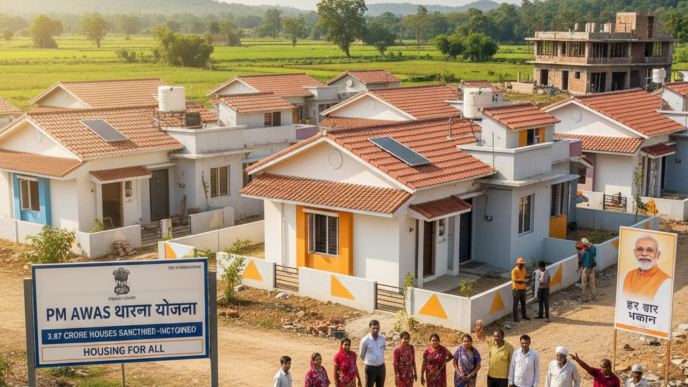
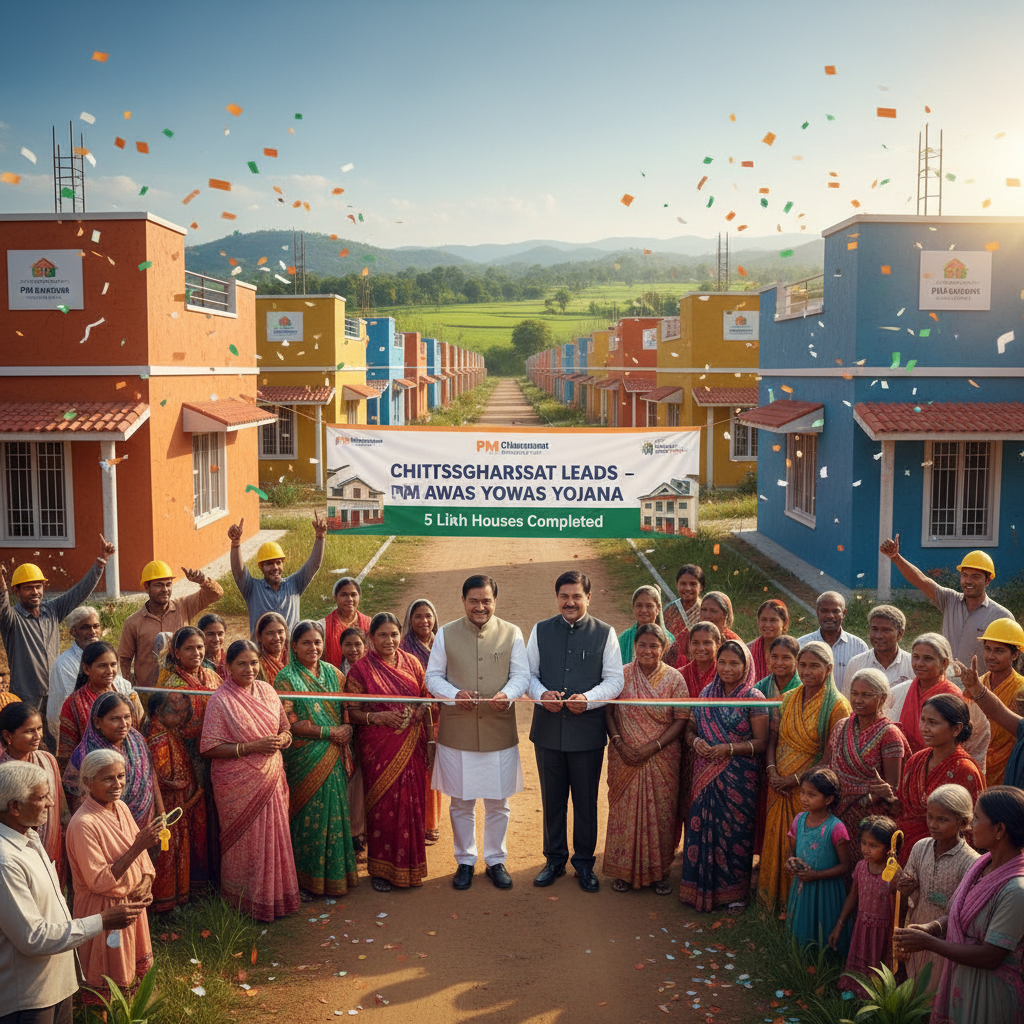
The state of Chhattisgarh has emerged as the front‑runner in the implementation of the Pradhan Mantri Awas Yojana (PMAY), achieving the completion of five lakh (500,000) houses within an unprecedented timeframe. According to the latest bulletin from the Ministry of Housing and Urban Affairs, Chhattisgarh topped the national ranking for house deliveries under the scheme, surpassing high‑performing states such as Madhya Pradesh, Rajasthan and Gujarat. The achievement was highlighted during a press briefing in Raipur, where Chief Minister Bhupesh Baghel presented official statistics showing that the state crossed the half‑million‑house milestone well before the central deadline of 2022. This performance not only reflects robust state‑level execution but also underscores the effectiveness of aligning central assistance with localized action plans.
Accelerated Execution and Policy Impact
Chief Minister Bhupesh Baghel announced that the state successfully delivered the targeted number of houses ahead of the central government’s timeline, reflecting a robust execution model that combines accelerated construction, efficient land allocation, and streamlined beneficiary verification. The chief minister emphasized that the state leveraged its “Mukhyamantri Awas Yojana” to complement the central scheme, providing additional subsidies for low‑income families and ensuring that no eligible household was left behind. Key policy measures included a fast‑track approval process for building permits, a dedicated budgetary allocation of INR 2,800 crore for PMAY activities, and the establishment of a real‑time dashboard to monitor construction progress across districts. According to officials from the Rural Development Department, the state’s proactive stance enabled the mobilization of over 150 construction clusters, each equipped with modern machinery and skilled labor pools, thereby shortening project cycles from the typical 18 months to under 12 months.
Strategic Planning Behind the Numbers
Officials from the Housing and Urban Development Department revealed that the state mapped high‑demand blocks using GIS‑based demand analytics, identifying vacant land parcels in peri‑urban and tribal areas where housing deficits were most acute. By prioritizing these zones, Chhattisgarh avoided the pitfalls of scattered development and maximized the impact of each sanctioned house. The state also instituted a “fast‑track land acquisition” protocol that cut average land‑allocation time from 180 days to under 45 days, facilitating quicker commencement of construction. Public‑private partnerships played a pivotal role: collaborations with reputable builders such as Larsen & Toubro and local cooperatives enabled the deployment of pre‑fabricated module technologies, which reduced construction costs by approximately 15 percent and accelerated completion rates. The result was a steady monthly output of roughly 40,000 houses, culminating in the five‑lakh milestone ahead of schedule. 
Beneficiary Impact and Socio‑Economic Benefits
More than 4.8 million families have been officially allotted homes under the scheme, many of whom belong to economically disadvantaged categories such as low‑income workers, tribal communities, and informal sector employees. The new dwellings come equipped with basic amenities—electricity, water supply, and sanitation—thereby improving living standards and reducing displacement pressures in urban peripheries. Beneficiaries have reported increased job stability and enhanced social security, as secure housing facilitates better access to education and healthcare services. In the tribal belt of Bastar, for instance, families who previously lived in makeshift shanties now enjoy pucca houses with roof‑top solar lighting, a development that has spurred local micro‑enterprise activity and improved school attendance rates. Moreover, the scheme’s emphasis on women‑centric ownership has empowered female heads of household, granting them legal title and boosting household resilience. According to a survey conducted by the Chhattisgarh Statistical Department, 78 percent of newly housed beneficiaries reported a noticeable uplift in their overall quality of life within six months of occupancy.
National Context and Comparisons
While the central PMAY target aims for “Housing for All” by 2022, many states experienced delays due to logistical challenges, funding constraints, and land acquisition issues. Chhattisgarh’s performance stands out as it not only met but exceeded the national average in terms of houses per capita. Data released by the Ministry of Housing and Urban Affairs shows that the state’s completion rate surpasses the national average by 18 percent, positioning it as a model for other states seeking to accelerate housing delivery. Compared with neighboring Madhya Pradesh, which reported around 3.2 lakh houses completed by the same period, Chhattisgarh’s pace is markedly higher. Internationally, the success aligns with global Sustainable Development Goal 11, which calls for inclusive, safe, and sustainable urban habitats. The state’s aggressive timeline also reflects lessons learned from pandemic‑era disruptions, where remote monitoring and digital beneficiary verification proved essential for continuity.
Government Schemes Supporting the Initiative
Several complementary schemes bolstered Chhattisgarh’s ability to achieve the milestone:
- Pradhan Mantri Awas Yojana (Urban) – Provides central assistance of up to INR 2.67 lakh per beneficiary for slum redevelopment and in‑situ upgrading. Learn more.
- Pradhan Mantri Awas Yojana (Gramin) – Targets rural beneficiaries with direct cash transfers and subsidy mechanisms. Ministry of Housing and Urban Affairs.
- State‑Level Housing Schemes – Chhattisgarh’s own “Mukhyamantri Awas Yojana” complements central initiatives by offering additional subsidies for low‑income families and priority to tribal hamlets.
- Finance Commission Grants – Allocation of additional state‑level grants to augment construction budgets and ensure uninterrupted cash flow for project execution.
Future Outlook and Scaling Up
Looking ahead, the state government plans to maintain its accelerated pace by expanding the pipeline of sanctioned projects and enhancing monitoring mechanisms. A target has been set to complete an additional 300,000 houses by the end of the fiscal year, leveraging emerging construction technologies such as pre‑fabricated modules, 3D‑printed building components, and green‑building materials. The integration of these technologies is expected to further reduce construction time by up to 30 percent while adhering to environmentally sustainable standards. Policy analysts suggest that if Chhattisgarh sustains this momentum, it could influence national policy adjustments, prompting a reevaluation of implementation benchmarks for PMAY across the country. Chief Minister Baghel has already announced plans to institutionalize a “Housing Acceleration Cell” that will coordinate inter‑departmental efforts, streamline data analytics, and ensure transparent reporting to both state and central stakeholders.
Expert Commentary
Dr. Anjali Verma, a senior researcher at the Centre for Rural Development Studies, noted, “Chhattisgarh’s success demonstrates that with political will, data‑driven planning, and adequate resource allocation, the ambitious goals of PMAY can be realized on a large scale. This achievement also underscores the importance of localized interventions that address ground‑level realities rather than a one‑size‑fits‑all approach.” Read the full analysis.
Conclusion
In summary, Chhattisgarh’s record‑breaking accomplishment in the Pradhan Mantri Awas Yojana not only reflects effective state governance but also sets a compelling precedent for national housing initiatives. By delivering half a million homes ahead of schedule, the state showcases the potential of coordinated policy frameworks, strategic planning, and beneficiary‑centric approaches to achieve the broader vision of “Housing for All.” As other states observe this model, it may catalyze a new wave of efficiency and transparency in the implementation of central welfare schemes.
Stay updated with the latest Yojana schemes and government initiatives for better awareness and eligibility. For personalized guidance on accessing these benefits, reach out to us.