


Overview of Mahatma Gandhi Gram Swaraj Yojana
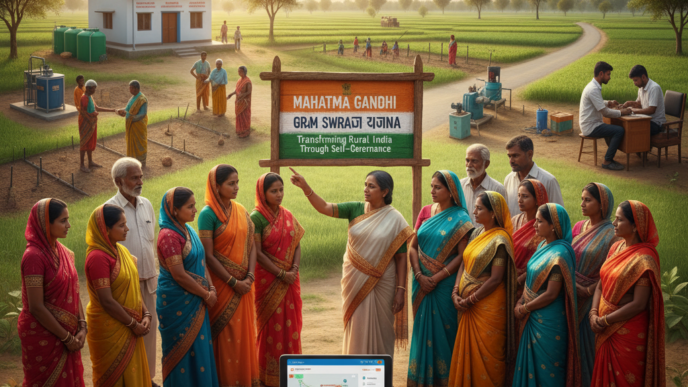
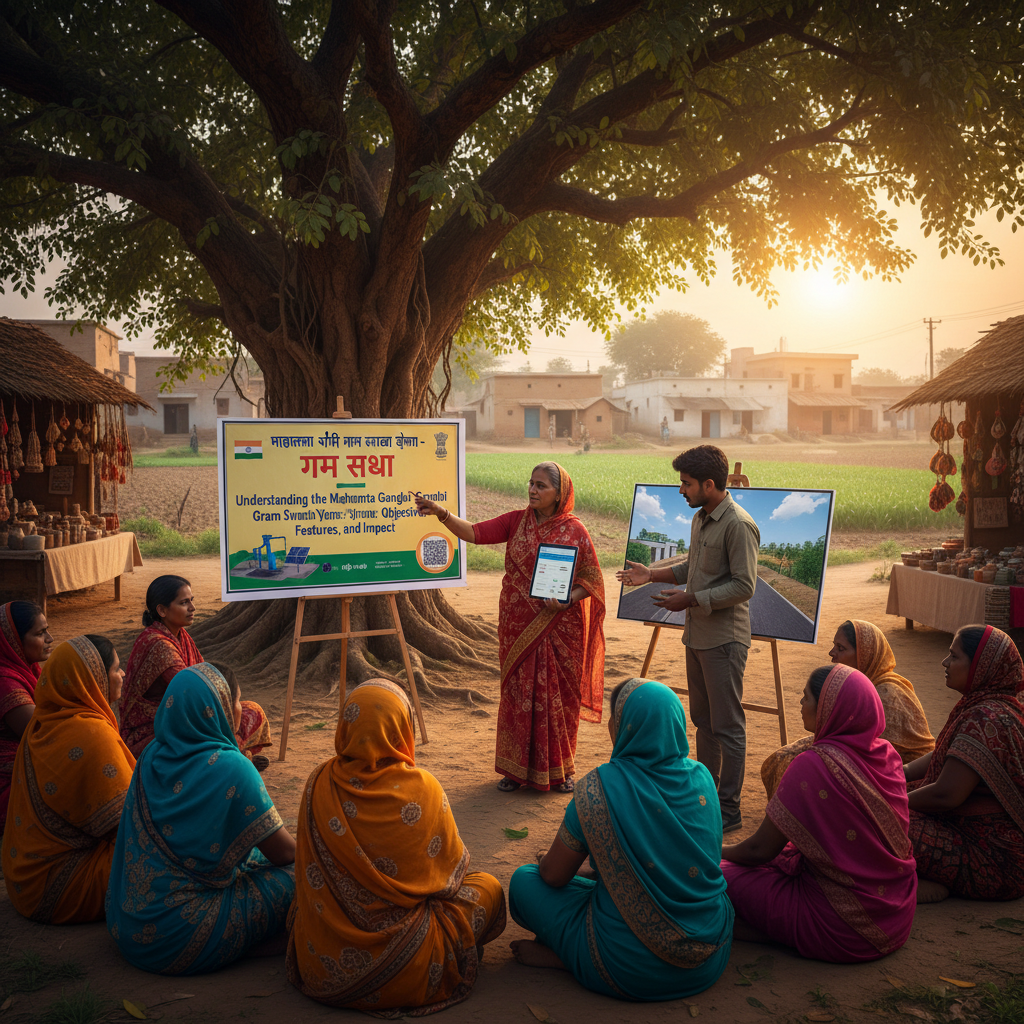
The Mahatma Gandhi Gram Swaraj Yojana (MGGSY) is a flagship initiative of the Ministry of Rural Development designed to rejuvenate the Panchayati Raj system across India. By channelising central and state resources directly to village‑level institutions, the scheme empowers elected Gram Panchayats to formulate and implement development plans that reflect local priorities. Its overarching mission is to create self‑reliant villages that can drive economic prosperity, improve social welfare, and protect the environment through participatory governance. The programme aligns with the national vision of “Sabka Saath, Sabka Vikas” and seeks to accelerate rural transformation in line with the Sustainable Development Goals. For a detailed historical perspective, see the Wikipedia entry.
- Objective: Strengthen decentralized governance and promote participatory planning at the village level.
- Funding Ratio: 60% central assistance, 40% state contribution, with flexibility for additional local matching funds.
- Timeframe: Launched in FY 2021‑2022 with a phased approach extending to FY 2025‑2026, subject to periodic evaluation.
Since its inception, MGGSY has been rolled out in 28 states and union territories, covering over 1.2 million Gram Panchayats. The scheme’s design emphasizes convergence with other central programmes, ensuring that resources are not duplicated but synergised to achieve maximal impact on livelihoods and service delivery.
Strategic Components of MGGSY
MGGSY rests on five inter‑related pillars that together form a robust framework for rural transformation. These pillars are implemented through a coordinated set of actions that involve capacity building, financial support, infrastructure creation, digital monitoring, and convergence with national missions. 
- Capacity Building: Structured training modules cover financial management, project formulation, gender‑inclusive planning, monitoring techniques, and digital tools for elected representatives, officials, and community volunteers. In the 2023‑24 fiscal year, more than 150,000 functionaries received certification under the MGGSY training curriculum.
- Financial Assistance: Grants are provided as direct cash transfers to eligible Panchayats for sanctioned development projects. Disbursement is tied to verified milestones and audit clearance, ensuring fiscal accountability. In the first two years, the central government released over ₹7,500 crore under MGGSY, benefiting more than 40,000 villages.
- Infrastructure Development: Investment is directed toward essential amenities such as sanitation complexes, safe drinking water facilities, all‑weather rural roads, renewable energy installations, community halls, and market sheds. These assets are designed to improve quality of life and create enabling environments for economic activity.
- Monitoring & Evaluation: A real‑time digital dashboard, GIS‑based asset tracking, and quarterly social audits provide transparency and accountability. The dashboard, accessible at MGGSY Monitoring Portal, shows fund utilisation, project milestones, and outcome indicators.
- Convergence: MGGSY aligns with flagship schemes such as PM‑Kisan, Swachh Bharat, Jal Jeevan Mission, Ayushman Bharat, and the National Rural Livelihood Mission, maximising synergistic impact and avoiding duplication of effort.
Together, these components ensure that each village can translate its development vision into tangible outcomes while maintaining fiscal discipline and social inclusivity.
Eligibility and Project Approval Process
Eligibility for MGGSY is contingent upon a Gram Panchayat having a legally constituted elected body and a ratified Gram Panchayat Development Plan (GPDP). The approval workflow involves several steps: submission of project proposals, technical appraisal by state‑level expert committees, and final sanction by the Ministry’s regional office. Projects must clearly link to livelihood enhancement, basic service delivery, or environmental stewardship, and they must comply with the scheme’s technical and financial norms.
- Priority Sectors: Agriculture and allied activities, water‑resource management, clean energy, skill development, women‑empowerment initiatives, and rural entrepreneurship.
- Matching Fund Requirement: Varies across states, typically ranging from 20% to 35% of the total project cost. Special provisions exist for North‑Eastern and Himalayan states where the matching percentage can be lower.
- Special Provisions: Tribal areas, hill states, and Left‑Wing Extremism‑affected regions receive tailored support to address unique developmental challenges, including additional technical assistance and relaxed norms for land acquisition.
For instance, in the fiscal year 2023‑24, the Ministry approved 3,500 projects in Odisha alone, with a total outlay of ₹1,200 crore, focusing on water‑harvesting structures and women‑led self‑help groups. The rigorous approval process ensures that only projects with clear benefits to citizens receive funding, thereby safeguarding public resources.
Case Studies Illustrating Impact
Real‑world examples demonstrate how MGGSY translates policy intent into measurable outcomes for citizens. These case studies showcase the scheme’s versatility across states and its role in fostering inclusive growth.
- Rajasthan: MGGSY funding enabled the construction of over 3,500 household toilets and the installation of solar‑powered water pumps in 120 villages. As a result, water‑borne disease incidence fell by 25% and women’s participation in local decision‑making rose by 15%.
- Odisha: The scheme supported the formation of women‑led self‑help groups that now manage micro‑enterprise units producing eco‑friendly handicrafts. These groups have provided supplemental income to more than 2,000 families and boosted school enrolment rates by 12% in participating villages.
- Madhya Pradesh: Over 1,200 km of rural roads have been built using MGGSY resources, cutting average travel time to market centres by 30 minutes and facilitating better market access for farmers.
- Gujarat: Installation of 500 community bio‑gas plants has generated renewable energy for village institutions and reduced household fuel‑wood consumption by an estimated 18%.
- Karnataka: A digital land‑record management system was launched, enhancing transparency in land‑ownership disputes and reducing litigation by 9%.
These successes underscore MGGSY’s capacity to address diverse local challenges while fostering community ownership and empowerment.
Monitoring, Evaluation, and Digital Governance
The Ministry of Rural Development has instituted a comprehensive Monitoring & Evaluation (M&E) architecture that blends quantitative metrics with participatory assessment tools. This system ensures that funds are used efficiently and that projects deliver on promised outcomes.
- Real‑time Dashboard: An online portal displays fund utilisation, project milestones, and outcome indicators, accessible to stakeholders at all levels. The dashboard can be accessed at MGGSY Real‑time Dashboard.
- GIS Mapping: Geotagged assets are mapped to facilitate spatial analysis, prevent duplication, and support periodic audits. This technology enables officials to visualise infrastructure placement and plan future interventions.
- Quarterly Social Audits: Community‑led audits verify asset creation, financial transparency, and beneficiary satisfaction. Findings are compiled into annual public documents, enhancing accountability.
- Performance Indicators: Key metrics include the number of households with improved sanitation, villages with functional electricity, and Panchayats achieving financial transparency scores above 80%. These indicators guide policy adjustments and resource allocation.
By integrating these tools, MGGSY not only tracks progress but also promotes learning and the replication of best practices across states.
Challenges and the Road Ahead
Despite notable progress, several challenges continue to impede the full realisation of MGGSY’s objectives. Understanding these hurdles is essential for designing effective mitigation strategies.
- Fund Release Delays: Bureaucratic bottlenecks at the state level sometimes delay the disbursement of funds, jeopardising project timelines and inflating costs.
- Technical Capacity Gaps: Limited technical expertise among grassroots officials can affect the quality of project design and implementation, leading to sub‑optimal outcomes.
- Social Inclusion Constraints: Cultural norms in some regions still restrict participation of marginalized groups such as Dalits and tribal communities, limiting the scheme’s inclusivity.
To address these issues, the Ministry has announced a series of reforms for the upcoming phase of MGGSY. These include launching a mentorship programme that pairs experienced Panchayat leaders with emerging officials, expanding capacity‑building workshops to cover at least 80% of Panchayats by 2027, and introducing a grievance redressal portal for real‑time citizen feedback. Additionally, public‑private partnerships are being encouraged to leverage additional resources for sustainable infrastructure and skill‑development initiatives.
Future Outlook and Recommendations
Looking ahead, MGGSY is poised to play an even more critical role in advancing the Sustainable Development Goals related to decent work, clean water, gender equality, and sustainable communities. Experts recommend several strategic enhancements to scale impact.
- Climate‑Resilient Infrastructure: Integrating climate‑adaptive technologies into all new projects will mitigate environmental risks and promote sustainability.
- Performance‑Based Incentives: Introducing financial incentives for Panchayats that achieve high transparency and service‑delivery scores can motivate better governance.
- Gender‑Disaggregated Data: Strengthening data collection on gender‑specific outcomes will enable targeted interventions to close gender gaps.
- Community‑Owned Enterprises: Supporting village‑level enterprises that generate employment and retain wealth within rural areas can enhance economic resilience.
By institutionalising these measures, MGGSY can deepen its impact and ensure that rural development keeps pace with national growth objectives, fostering a more inclusive and prosperous future for all citizens.
Conclusion
The Mahatma Gandhi Gram Swaraj Yojana embodies the vision of a self‑reliant rural India where decentralized governance empowers villages to chart their own development pathways. Through a structured blend of financial assistance, capacity enhancement, robust monitoring, and forward‑looking recommendations, the scheme not only addresses immediate infrastructural gaps but also cultivates long‑term institutional resilience. Continued investment, stakeholder collaboration, and adaptive management will be essential to scale its successes and achieve inclusive, sustainable rural development across the nation.
Key Takeaways
MGGSY offers a structured pathway for villages to achieve self‑reliance through decentralized funding, capacity building, and participatory governance. Its success hinges on timely fund releases, community involvement, and alignment with national priorities. Continuous monitoring and innovative financing will determine its long‑term impact.
- Decentralized governance empowers villages.
- Financial transparency drives accountability.
- Strategic convergence amplifies development outcomes.
Stay updated with the latest Yojana schemes and government initiatives for better awareness and eligibility. For personalized guidance on accessing these benefits, reach out to us.