


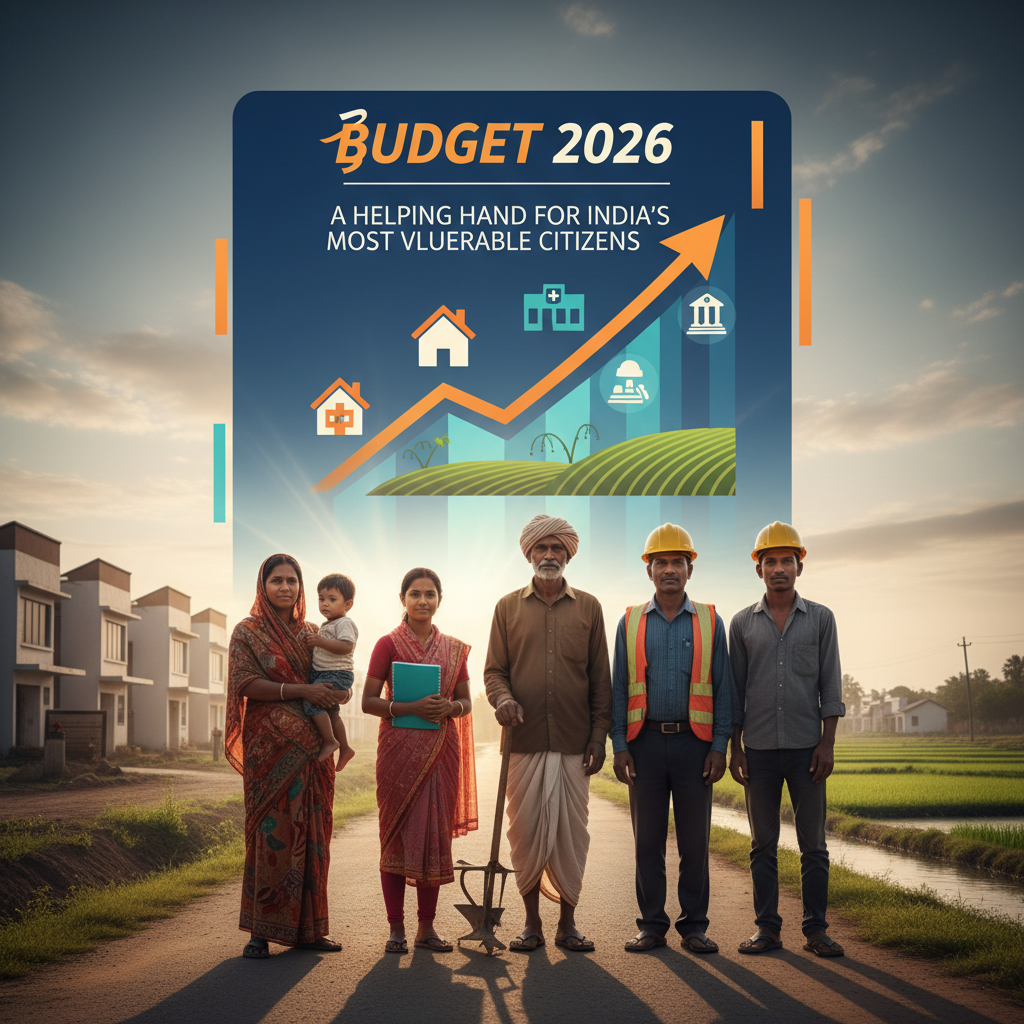
Budget 2026 Prioritises Welfare for the Vulnerable
Prime Minister Narendra Modi’s government unveiled the Union Budget 2026 as a decisive step toward “inclusive growth,” placing a robust safety net for the nation’s most disadvantaged citizens at the centre of fiscal policy. Finance Minister Nirmala Sitharaman presented the budget on 1 February 2026, announcing a sweeping increase in allocation for social sector programmes, aiming to lift millions out of poverty, bridge the digital divide, and ensure that the benefits of India’s economic surge reach every household. By earmarking record‑breaking funds for schemes that target health, education, housing, and rural livelihoods, the budget seeks to transform welfare from a peripheral concern into a core driver of demand and long‑term socio‑economic stability.
Key Welfare Initiatives and Funding Boosts
The 2026 budget introduces a suite of new programmes and significantly expands the reach of existing ones. For instance, the Pradhan Mantri Jan Dhan Yojana receives an additional INR 12,500 crore, enabling the opening of 1.5 million new banking correspondents in remote blocks. The Pradhan Mantri Awas Yojana gets a fresh infusion of INR 20,000 crore, accelerating the construction of 2 million affordable houses in both urban slums and rural habitations. A dedicated scholarship fund, the “National STEM Talent Programme,” allocates INR 5,000 crore to support 500,000 under‑privileged students pursuing science, technology, engineering, and mathematics courses at the undergraduate level.
- Pradhan Mantri Jan Dhan Yojana: Expand banking access to 30 million previously unbanked households.
- Pradhan Mantri Awas Yojana: Build 2 million low‑cost homes, priority to women‑headed families.
- National STEM Talent Programme: Provide merit‑based scholarships covering tuition, stipends, and mentorship.
- Enhanced Digital Literacy Mission: Allocate INR 2,300 crore to train 10 million rural youth in basic computer skills.
Financial Inclusion and Rural Empowerment
Recognising that over 65 % of India’s population lives in rural areas, the budget allocates a historic INR 1,20,000 crore to agriculture and allied sectors. The Agricultural Infrastructure Fund sees a 35 % increase, targeting drip‑irrigation, cold‑storage facilities, and market‑linkage platforms for smallholder farmers. Additionally, the Rural Employment Guarantee Scheme (REGS) receives an extra INR 8,000 crore, projected to generate 1.7 million person‑days of wage‑employment in the fiscal year 2026‑27, with special focus on women and marginalised communities. These investments are designed to safeguard farmer incomes, curb distress migration, and foster sustainable rural entrepreneurship. 
- Agricultural Infrastructure Fund: INR 45,000 crore earmarked for irrigation and storage upgrades.
- Rural Employment Guarantee Scheme: Expected to provide 1.5 billion work‑days over the next three years.
- Micro‑Enterprise Credit Expansion: INR 3,200 crore for micro‑finance institutions to disburse 12 million loans.
- Rural Electrification Drive: Targeting 100 % household connectivity by 2027.
Women, Children and Social Security Advancements
Gender equity and child welfare feature prominently in the 2026 fiscal blueprint. Funding for the Beti Bachao Beti Padhao scheme rises by 45 %, reinforcing efforts to improve girl‑child enrolment and reduce dropout rates. The Mahila Shakti initiative receives an additional INR 9,000 crore to support women entrepreneurs, self‑help groups, and skill‑development workshops, aiming to create 2 million new women‑led micro‑enterprises by 2028. Moreover, the National Social Assistance Programme sees its ceiling raised to INR 12,500 crore, expanding pension benefits for senior citizens and persons with disabilities, thereby strengthening the social safety net for the nation’s most vulnerable.
- Beti Bachao Beti Padhao: 15 % increase in school‑construction budget for girls.
- Mahila Shakti: Target of 500,000 women entrepreneurs by 2029.
- National Social Assistance Programme: Pension ceiling raised to INR 2,500 per month for eligible seniors.
- Child Nutrition Scheme: INR 1,800 crore allocated for supplementary feeding in Anganwadis.
Healthcare, Education and Skill Development Push
Healthcare receives a substantial boost with the Ayushman Bharat – PMJAY allocation climbing to INR 30,000 crore, enabling coverage for an additional 20 million families and expanding the network of empaneled hospitals to 30,000 across the country. The Samagra Shiksha Abhiyan gets a 30 % increase, amounting to INR 15,000 crore, to strengthen universal primary and secondary education, especially in under‑served districts. Complementing this, the new “Skill India 2.0” scheme allocates INR 6,500 crore to up‑skill 10 million youth in emerging technologies such as artificial intelligence, data analytics, and renewable energy, with industry‑partnered curricula to enhance employability.
- Ayushman Bharat – PMJAY: Cashless secondary and tertiary care for 500 million beneficiaries.
- Samagra Shiksha Abhiyan: INR 12,000 crore earmarked for digital classrooms in rural schools.
- Skill India 2.0: Partnerships with 200 industry leaders for certification programs.
- National Tele‑Health Initiative: INR 2,100 crore to connect 5,000 primary health centres with specialist doctors.
Infrastructure, Urban Development and Economic Outlook
The budget also channels significant resources into urban renewal and smart‑city projects, aiming to make cities more livable for low‑income residents. A new Urban Renewal Scheme receives INR 25,000 crore to upgrade public transport, water supply, and sanitation in tier‑2 and tier‑3 cities, targeting 150 million citizens by 2030. The Smart Cities Mission sees its funding rise to INR 18,000 crore, accelerating the deployment of IoT‑enabled services, affordable housing, and green spaces. Economists project that these welfare‑centric expenditures could add 0.7 percentage points to GDP growth in the next fiscal year, creating a multiplier effect that stimulates demand across retail, construction, and services sectors. While fiscal sustainability remains a discussion point, the government argues that targeted social spending will yield long‑term dividends by reducing inequality and fostering a more inclusive economic landscape.
- Urban Renewal Scheme: Focus on affordable housing for low‑income families.
- Smart Cities Mission: INR 6,000 crore allocated for renewable‑energy‑powered street lighting.
- Public Transport Subsidy: 30 % fare reduction for commuters below the poverty line.
- Fiscal Impact: Projected 0.7 % GDP boost from increased consumption.
Stay updated with the latest Yojana schemes and government initiatives for better awareness and eligibility. For personalized guidance on accessing these benefits, reach out to us.