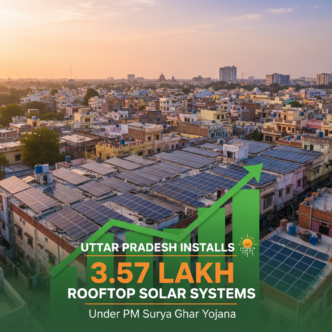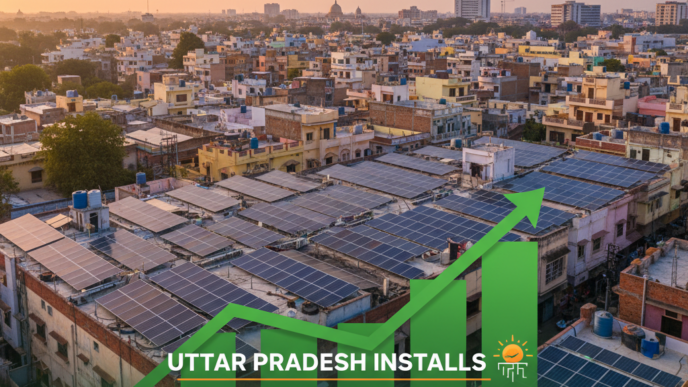



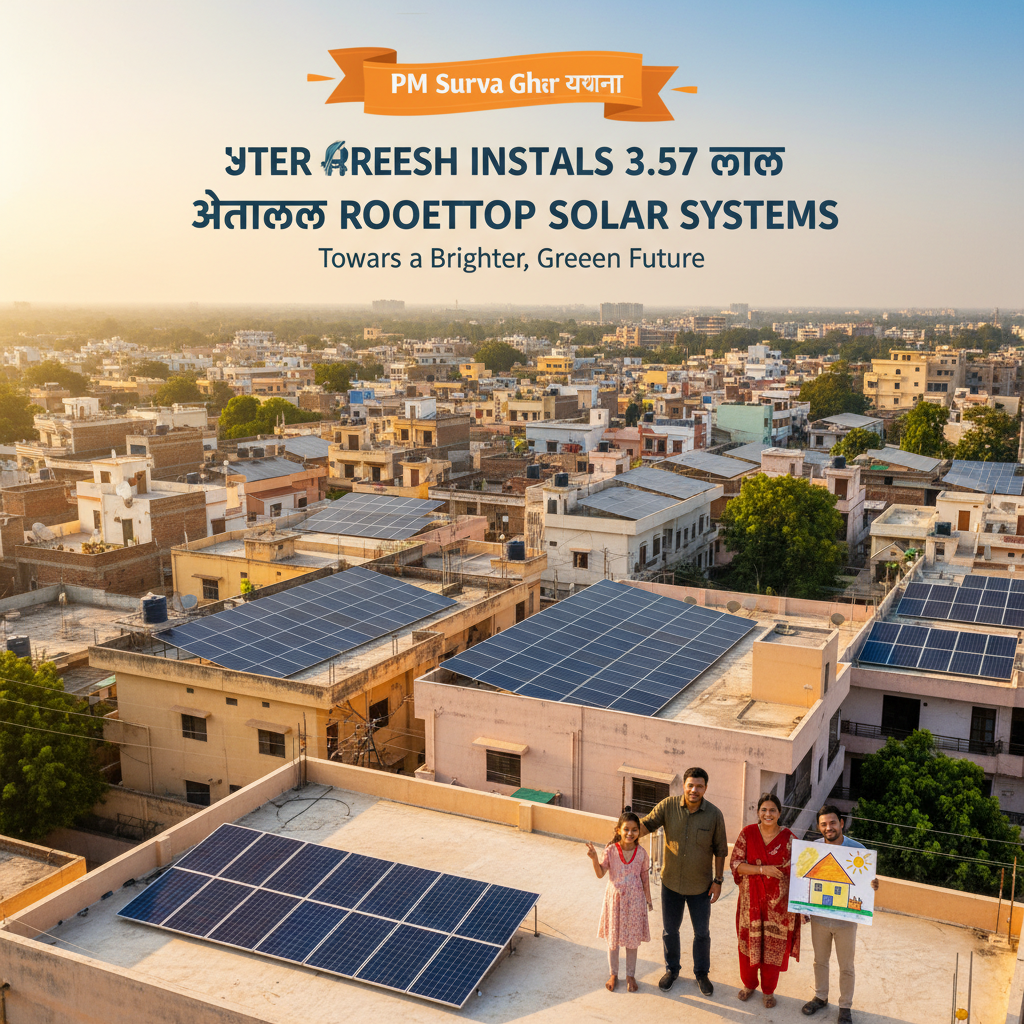
Uttar Pradesh Installs 3.57 Lakh Rooftop Solar Systems Under PM Surya Ghar Yojana
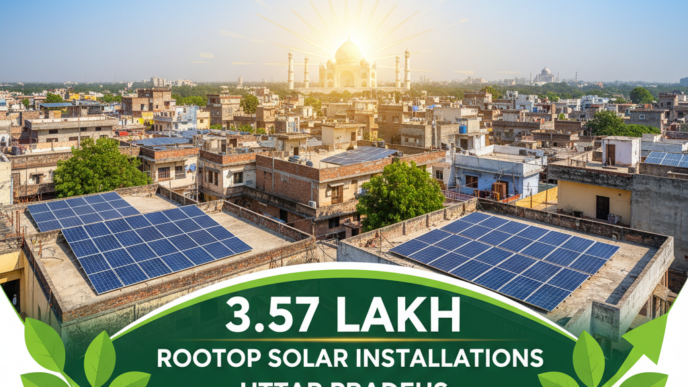
Uttar Pradesh has achieved a landmark milestone by installing 3.57 lakh rooftop solar systems across the state under the Pradhan Mantri Surya Ghar Yojana. The announcement, made by the state’s Energy Department, underscores a rapid rollout of clean energy at the household level and places Uttar Pradesh among the leading Indian states in solar adoption. This achievement not only accelerates the nation’s renewable energy targets but also promises substantial savings for citizens, reduction in carbon emissions, and new employment opportunities in the green sector.
Understanding the PM Surya Ghar Yojana
The PM Surya Ghar Yojana is a flagship central scheme that incentivises residential consumers to instal photovoltaic (PV) panels on their rooftops. Launched to democratise solar power, the programme offers a combination of subsidies, easy financing, and streamlined permitting to lower the upfront cost barrier. According to the Ministry of New and Renewable Energy (MNRE), the scheme aims to install 10 million rooftop solar systems nationwide by 2026, contributing to India’s goal of achieving 450 GW of renewable capacity by the same year.
Key benefits for beneficiaries include a reduction of up to 40% in installation costs, access to net metering for surplus generation, and long‑term savings on electricity bills. The scheme also prioritises low‑income households and those in remote areas, ensuring that the clean energy transition is inclusive. 
Statewide Implementation Strategy
Uttar Pradesh’s success stems from a coordinated implementation strategy that blends financial assistance with extensive awareness drives and simplified regulatory pathways. The state partnered with multiple Distribution Companies (Discoms), local banks, and accredited solar installers to create a seamless end‑to‑end process.
- Identification of eligible households through digital surveys and existing electricity connections.
- Collaboration with financial institutions to provide low‑interest loans and up‑front subsidies.
- Deployment of mobile workshops and community demonstrations in urban, semi‑urban, and rural locales.
- Integration with the state’s e‑Governance portal for real‑time application tracking and approval.
These measures have enabled a diverse cross‑section of citizens—from metropolitan Delhi‑adjacent neighborhoods to agrarian villages in Bundelkhand—to adopt rooftop solar, thereby expanding clean energy access beyond traditional urban centres.
Financial Support and Subsidy Details
Under the central‑state partnership, beneficiaries receive a subsidy covering up to 40 % of the total project cost, subject to a ceiling set by MNRE. The subsidy is disbursed in three instalments—30 % at project commencement, 30 % after commissioning, and the remaining 10 % following a performance audit.
Additional incentives are available for installations that meet specific performance benchmarks, such as a minimum capacity factor of 18 % and the use of certified Indigenous equipment. Low‑income families can apply for an extra ₹5,000 per kilowatt uplift, further easing the financial burden.
For detailed eligibility criteria and application procedures, aspiring applicants can refer to the official portal: MNRE – PM Surya Ghar Yojana.
Impact on Electricity Bills and Energy Savings
Householders who have embraced rooftop solar are witnessing tangible reductions in their monthly electricity expenditures. On average, solar‑equipped homes report a 30 %–50 % decline in utility bills, with some high‑consumption users achieving near‑complete offset of their grid draw.
Excess generation is fed back into the grid through net metering arrangements, allowing consumers to earn credits that further diminish future bills. In Uttar Pradesh, the state’s Discoms have reported a cumulative 1.2 GW of exported solar power, translating into significant cost savings for participating consumers and reduced strain on the regional grid during peak demand periods.
Environmental Benefits and Climate Impact
Each megawatt of installed rooftop solar capacity displaces an estimated 1,500 tonnes of carbon dioxide annually, based on average coal‑based generation profiles. The 3.57‑lakh‑system milestone translates to an approximate reduction of 350,000 tonnes of CO₂ each year, contributing markedly to India’s commitments under the Paris Agreement.
Beyond carbon mitigation, rooftop solar helps curtail localized air pollutants, improving urban air quality in densely populated districts such as Lucknow, Kanpur, and Ghaziabad. The environmental co‑benefits reinforce public health outcomes and align with the state’s broader climate resilience agenda.
Job Creation and Local Economic Development
The accelerated deployment of solar PV systems has spurred a burgeoning demand for skilled professionals across the value chain. From system design engineers to installation technicians and maintenance personnel, the sector is projected to generate over 150,000 direct and indirect jobs in Uttar Pradesh by 2027.
To harness this potential, the state government has launched vocational training programmes in collaboration with the National Skill Development Corporation (NSDC), focusing on solar PV installation, safety standards, and after‑sales service. These initiatives not only provide livelihood opportunities but also foster a skilled workforce capable of sustaining the long‑term operation of rooftop assets.
Challenges and Future Outlook
Despite the commendable progress, several challenges persist. Financing constraints, particularly for low‑income households, necessitate continued subsidy refinements and expanded credit facilities. Ensuring the durability and performance of installed systems over their 25‑year lifespan requires rigorous quality monitoring and periodic audits.
Looking ahead, the Uttar Pradesh Energy Department has outlined a roadmap that includes:
- Targeted subsidies for families below the poverty line.
- Streamlined grid‑connection procedures to minimize bureaucratic delays.
- Periodic performance audits to certify that installations meet efficiency standards.
- Awareness campaigns in underserved districts to boost adoption rates.
By addressing these issues, the state aims to double its installed rooftop capacity within the next three years, positioning itself as a national benchmark for scalable solar deployment.
Community Engagement and Awareness
Grassroots mobilisation has been pivotal in driving adoption. Local panchayats, community leaders, and NGOs have organised workshops, solar expos, and on‑site demonstrations to demystify technology and showcase tangible financial benefits. Success stories—such as a farmer in Faizabad who slashed his electricity bill by 45 %—have been amplified through regional media, fostering a ripple effect of curiosity and acceptance.
Digital outreach, including targeted social‑media campaigns and mobile apps that simplify subsidy application, has further broadened the scheme’s reach, especially among younger, tech‑savvy demographics.
Integration with Other Renewable Initiatives
Rooftop solar forms an integral component of Uttar Pradesh’s holistic renewable energy strategy, complementing large‑scale solar farms, wind projects, and emerging hybrid solutions. Integration with the state’s Smart Grid initiatives enables efficient management of distributed generation, enhancing grid stability and facilitating better utilisation of intermittent resources.
Collaborative projects with the National Hydroelectric Power Corporation and private investors are also exploring hybrid renewable parks that combine solar, wind, and storage, ensuring a more consistent power supply and reducing reliance on fossil‑fuel peaker plants.
Conclusion
Uttar Pradesh’s achievement of installing 3.57 lakh rooftop solar systems under the PM Surya Ghar Yojana exemplifies how coordinated policy, financial incentives, and community engagement can accelerate renewable energy adoption at the grassroots level. As the state scales its efforts, it not only advances India’s climate ambitions but also empowers citizens with cleaner, more affordable electricity, job creation, and economic upliftment. The momentum generated sets a compelling precedent for other Indian states to emulate, heralding a cleaner, more sustainable energy future for the nation.
Stay updated with the latest Yojana schemes and government initiatives for better awareness and eligibility. For personalized guidance on accessing these benefits, reach out to us.