


Gujarat Launches Gramotthan Yojana to Build 2,666 New Panchayat Offices
The Government of Gujarat has unveiled the Gramotthan Yojana, a flagship programme designed to construct 2,666 modern Panchayat offices across the state’s villages. Chief Minister Bhupendra Patel announced the initiative on 28 October 2025, emphasizing that the scheme will “strengthen grassroots governance and bring services closer to the people”. By providing each village with a dedicated, technologically‑enabled Panchayat premises, the programme seeks to accelerate delivery of welfare schemes, improve transparency and create short‑term employment in rural areas.
Objectives of the Scheme
The primary goals of the Gramotthan Yojana are:
- To establish functional, LEED‑certified Panchayat offices in every village lacking adequate civic infrastructure.
- To enhance the capacity of Village Panchayats to implement programmes related to health, education, sanitation and rural development.
- To promote transparency, citizen participation and grievance redressal at the local level.
- To generate approximately 12,000 temporary construction jobs during the two‑year rollout.
Upgraded facilities are expected to streamline registration of births, deaths and land records, while also serving as hubs for disseminating subsidies and benefits under various central and state welfare schemes. 
Geographical Reach and Implementation
The scheme will be implemented across all 33 districts of Gujarat, with priority given to underserved blocks in tribal and flood‑prone regions. Selection criteria include:
- Absence of existing Panchayat buildings or structures in poor condition.
- High population density requiring a dedicated administrative space.
- Low representation of women in local governance, aiming to incentivise inclusive participation.
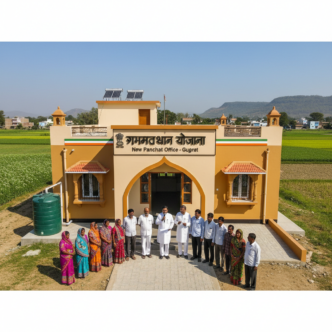
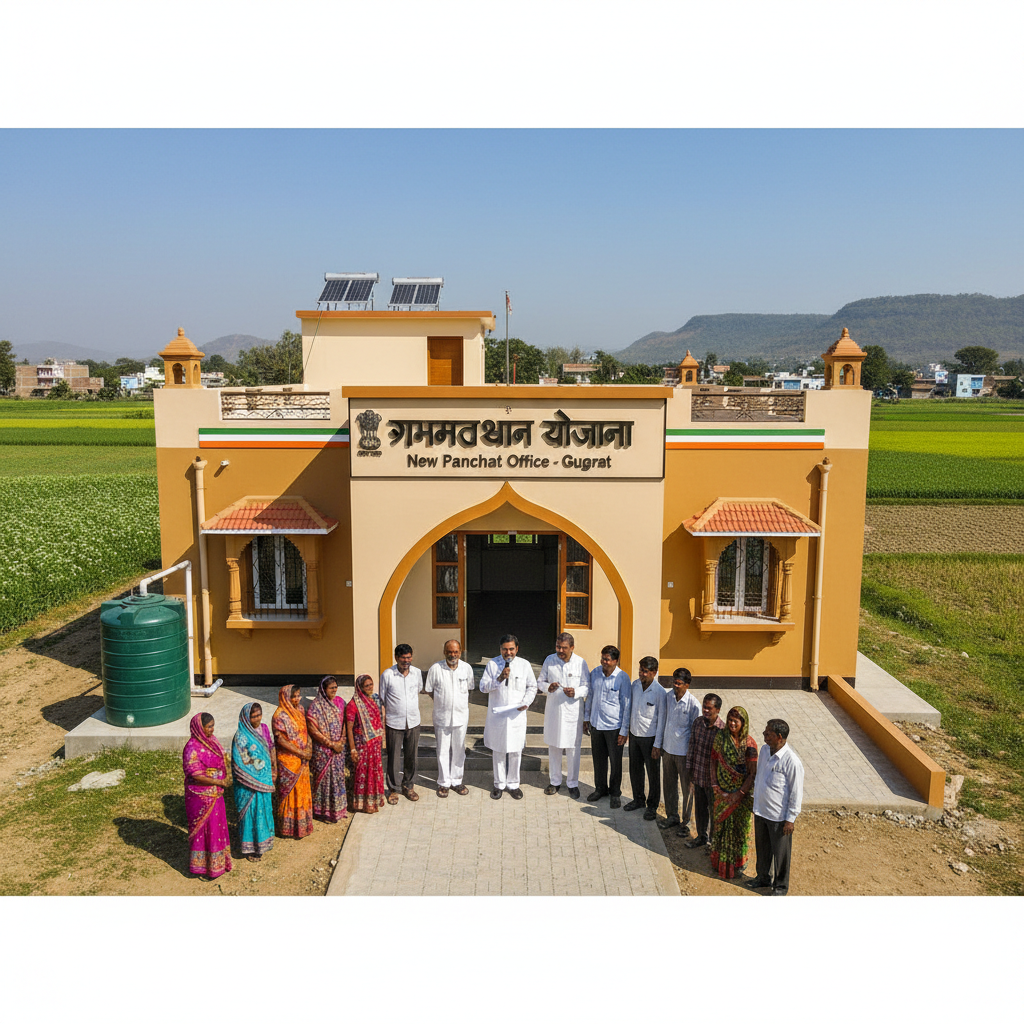
The Rural Development Department will coordinate the project in partnership with the Panchayati Raj Institutions (PRIs). Construction is slated to commence in March 2026 and conclude by December 2027. Each office will feature solar panels, rainwater harvesting, barrier‑free access for persons with disabilities and high‑speed broadband connectivity, reflecting Gujarat’s commitment to sustainable and inclusive design.
Funding and Resource Allocation
The financial outlay for the Gramotthan Yojana totals approximately INR 2,850 crore. Funding is sourced from:
- The state’s fiscal budget earmarked for rural infrastructure.
- Central‑government grants under the Rural Development Programme.
- A dedicated State‑Level Rural Infrastructure Fund.
On average, each Panchayat office will receive INR 1.07 crore covering architectural design, construction, solar installations and Information Technology (IT) equipment. The allocation model underscores the state’s resolve to invest heavily in rural upliftment while ensuring cost‑effectiveness through standardized designs and bulk procurement.
Anticipated Socio‑Economic Impact
Experts anticipate a multiplier effect on rural economies once the new offices become operational. Key benefits include:
- Faster processing of land records, birth and death registrations, and issue of caste certificates.
- Streamlined distribution of subsidies for agriculture, education and health under schemes such as PM‑Kisan and Ayushman Bharat.
- Reduced grievance redressal time from weeks to days, owing to dedicated administrative staff.
- Enhanced community engagement through regular Gram Sabhas held in purpose‑built venues.
- Stimulation of local entrepreneurship as vendors supplying construction materials and services gain steady contracts.
Improved infrastructure is also expected to boost citizen confidence in government institutions, leading to higher participation rates in village-level planning and development activities.
Monitoring and Evaluation
A robust monitoring framework, overseen by the Rural Development Department, will track construction progress, financial utilisation and quality benchmarks. Quarterly performance reports will be published on the official Gujarat government portal, with key metrics including:
- Percentage of buildings completed on schedule.
- Percentage of allocated funds spent as per norms.
- Compliance with LEED‑certified construction standards.
- Feedback collected through a mobile application and community meetings.
Independent audits will be conducted by the Comptroller and Auditor General (CAG) to ensure adherence to financial and technical standards. Real‑time adjustments will be made based on citizen inputs, ensuring that the scheme remains responsive to ground realities.
Challenges and Future Outlook
Despite its ambitious scope, the Gramotthan Yojana faces several implementation challenges:
- Land acquisition in densely populated villages may encounter legal and social hurdles.
- Timely procurement of construction materials, especially eco‑friendly building components, could experience supply‑chain delays.
- Coordination among multiple agencies—Rural Development Department, PRIs, and technical contractors—requires meticulous project management.
Long‑term maintenance of the facilities also demands a sustainable operational model. To address these issues, the state plans to pilot digitalisation of Panchayat services in the second phase, introduce capacity‑building programmes for elected representatives and integrate an e‑governance portal for seamless service delivery. If successful, the model could be replicated in other Indian states seeking to modernise rural administrative structures.
Conclusion
The launch of the Gramotthan Yojana marks a transformative step in Gujarat’s rural development agenda. By establishing 2,666 new Panchayat offices equipped with sustainable technologies and citizen‑centric amenities, the scheme aims to bridge infrastructure gaps, empower local governance and improve the quality of life for millions of villagers. Should the programme achieve its targets, it will serve as a benchmark for other states aspiring to strengthen rural administrative mechanisms nationwide.
Stay updated with the latest Yojana schemes and government initiatives for better awareness and eligibility. For personalized guidance on accessing these benefits, reach out to us.