


Scheme Details and Objectives
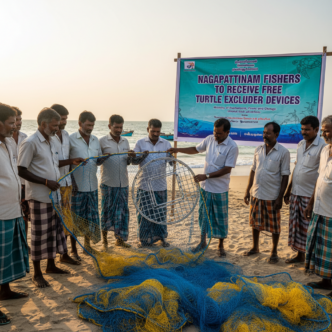
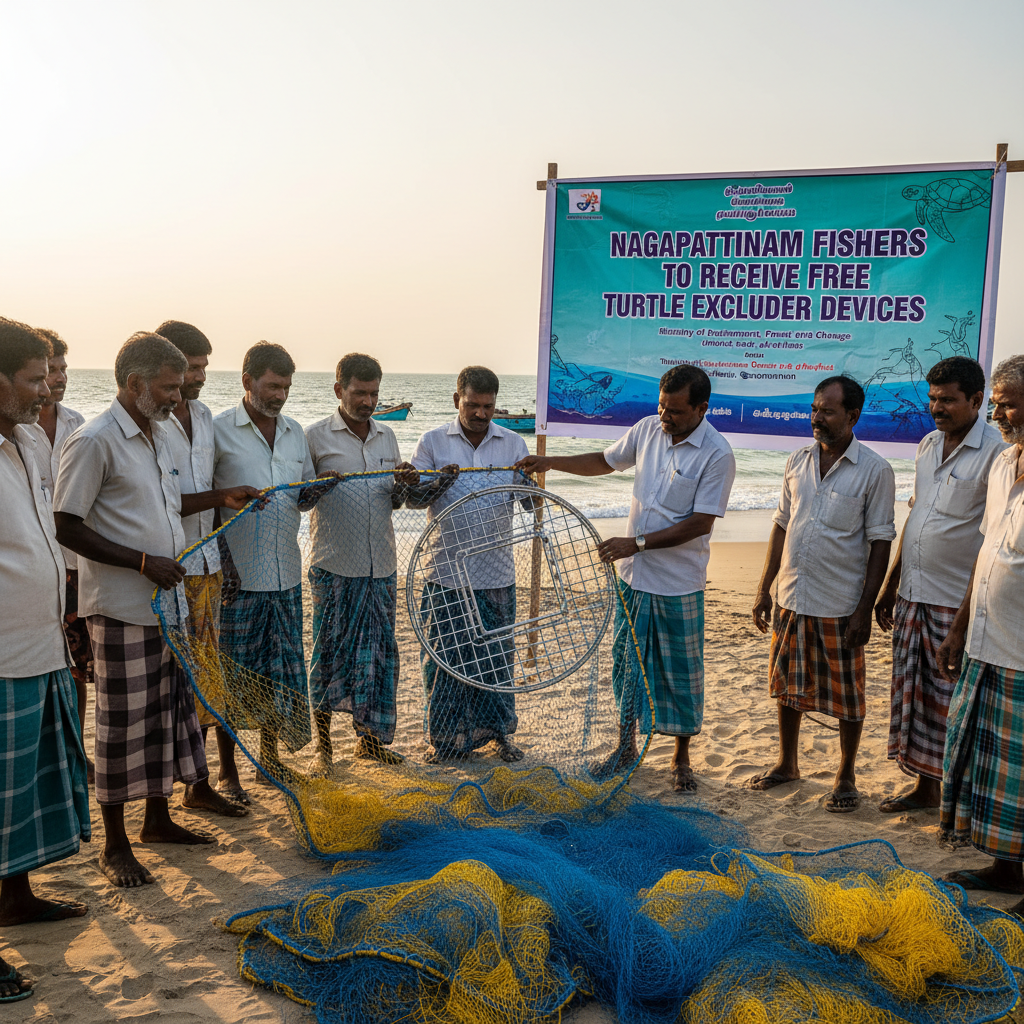
The coastal district of Nagapattinam in Tamil Nadu is poised to receive a targeted intervention that merges marine biodiversity protection with livelihood enhancement for local fishers. Under a newly launched government scheme, 300 fishers will be granted free turtle excluder devices (TEDs) to be fitted into their shrimp trawling nets. The initiative, administered by the Ministry of Environment, Forest and Climate Change in partnership with the Tamil Nadu Fisheries Department, aims to curb accidental turtle mortality while simultaneously bolstering the economic resilience of the fishing community.
Eligibility for the free TEDs is restricted to small‑scale fishers operating mechanised shrimp trawlers registered in Nagapattinam, with a focus on those belonging to economically vulnerable households. Beneficiaries will receive the devices at no cost, along with hands‑on training on correct installation and maintenance. The programme’s overarching objectives include:
- Mitigating incidental capture of endangered marine turtles during trawling activities.
- Promoting sustainable fishing practices that align with national marine conservation goals.
- Enhancing the long‑term sustainability of fish stocks by safeguarding breeding turtles.
- Providing direct financial relief to disadvantaged fishers in the region.
Distribution logistics will be coordinated through local fisheries cooperatives and community centres, ensuring that every eligible fisher receives a device before the commencement of the upcoming fishing season. 
Context and Rationale
Nagapattinam’s 105‑kilometre coastline serves as a critical habitat for Olive ridley and green turtles, which migrate to the Bay of Bengal for nesting between January and March. While the district’s shrimp trawling sector contributes significantly to India’s seafood exports, unsustainable practices have raised alarms among conservationists. Recent studies conducted by the Zoological Survey of India indicate that unmitigated trawling can result in turtle mortality rates exceeding 10 % of the local population, potentially upgrading their IUCN status from “vulnerable” to “endangered.”
In response to these ecological concerns, the central government has elevated marine biodiversity protection within its Yojana framework, integrating it into broader coastal development and livelihood security programmes. The present scheme exemplifies how welfare measures can simultaneously address biodiversity loss and fishery sustainability. For additional context, refer to the Olive ridley sea turtle Wikipedia page and the Ministry of Environment, Forest and Climate Change official site.
Benefits for Fishers and Conservation
The deployment of turtle excluder devices offers multiple advantages to participating fishers. Firstly, TEDs improve net selectivity, allowing smaller non‑target species and juvenile catches to escape while retaining the primary shrimp haul. This selectivity translates into higher‑quality catches, reduced post‑catch waste, and ultimately, greater market value for the harvested product.
Secondly, fishers who adopt TEDs become part of a government‑backed conservation effort, positioning them to access future incentives such as priority in fisheries subsidies, preferential market linkages, and recognition through fisheries certification schemes. According to a recent report by the Department of Fisheries, Government of India, early adopters of TEDs have observed a 5‑7 % increase in net profit margins due to improved catch quality and reduced penalty costs associated with by‑catch violations.
From a conservation standpoint, modeling based on data from the IUCN Red List assessment of marine turtles predicts that the full utilisation of 300 TEDs could avert up to 1,500 turtle entrapments annually along the Nagapattinam shoreline. This reduction would significantly bolster nesting success rates, supporting a measurable increase in turtle populations over the next five years.
Key benefits for fishers include:
- Enhanced catch quality and marketability.
- Potential eligibility for future subsidy programs.
- Strengthened community reputation as sustainable practitioners.
Funding and Support Mechanisms
The financial framework for the scheme draws primarily from the state fisheries budget, supplemented by allocations from the national Ministry of Environment. Each turtle excluder device incurs a cost of approximately INR 2,500, covering procurement, training, and monitoring. With 300 devices targeted for distribution, the total outlay amounts to roughly INR 750,000, a figure comfortably accommodated within the existing coastal community development allocation.
To ensure effective utilisation, the Tamil Nadu Fisheries Department will conduct a series of hands‑on training sessions across fisheries cooperatives in Nagapattinam. These sessions will cover device installation techniques, routine maintenance, and performance monitoring. Complementary support will be provided by non‑governmental organisations such as the World Wildlife Fund India, which will assist in data collection and community outreach.
Monitoring mechanisms will involve periodic field visits by fisheries officers, who will assess compliance, verify correct device utilisation, and record by‑catch reduction metrics. Feedback loops established through these visits will enable real‑time adjustments to training content and operational protocols, thereby maximizing the scheme’s impact.
Monitoring, Evaluation, and Community Impact
A robust monitoring and evaluation framework will be instituted to gauge the scheme’s effectiveness. Primary performance indicators include:
- Reduction in recorded turtle entanglement incidents reported by local marine NGOs.
- Changes in catch composition and yield among participating vessels.
- Levels of compliance among beneficiary fishers after six months of operation.
Data gathered will be compiled into quarterly reports disseminated to the Ministry of Fisheries, environmental NGOs, and community leaders. These reports will highlight progress, challenges, and actionable recommendations for scaling the initiative to other coastal districts in Tamil Nadu and, eventually, to neighbouring states.
Early community feedback indicates a cautiously optimistic reception. Local cooperative leaders acknowledge that the free provision of TEDs alleviates immediate financial barriers, yet they stress the importance of sustained technical support and demonstrable economic returns to ensure long‑term adoption. Policy analysts view this programme as a model for integrating welfare schemes with environmental stewardship, illustrating how Yojana‑driven interventions can address multifaceted challenges ranging from poverty alleviation to biodiversity protection.
Stay updated with the latest Yojana schemes and government initiatives for better awareness and eligibility. For personalized guidance on accessing these benefits, reach out to us.