


Overview of the Scheme
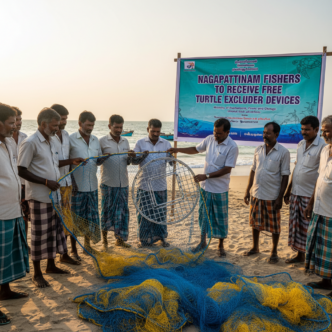
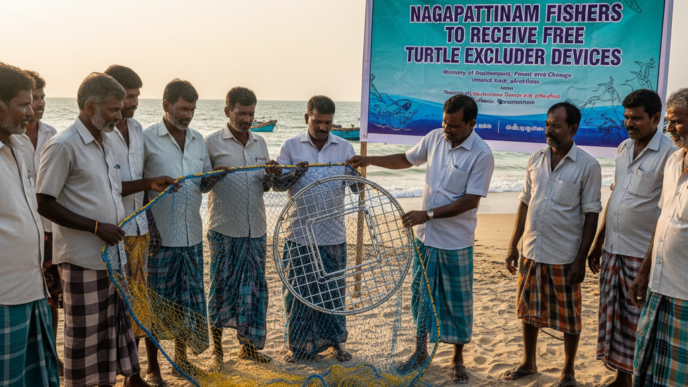
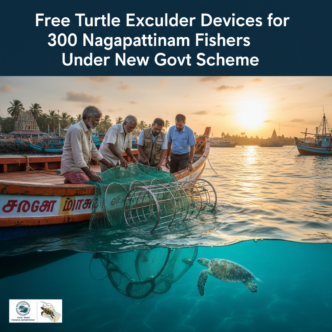
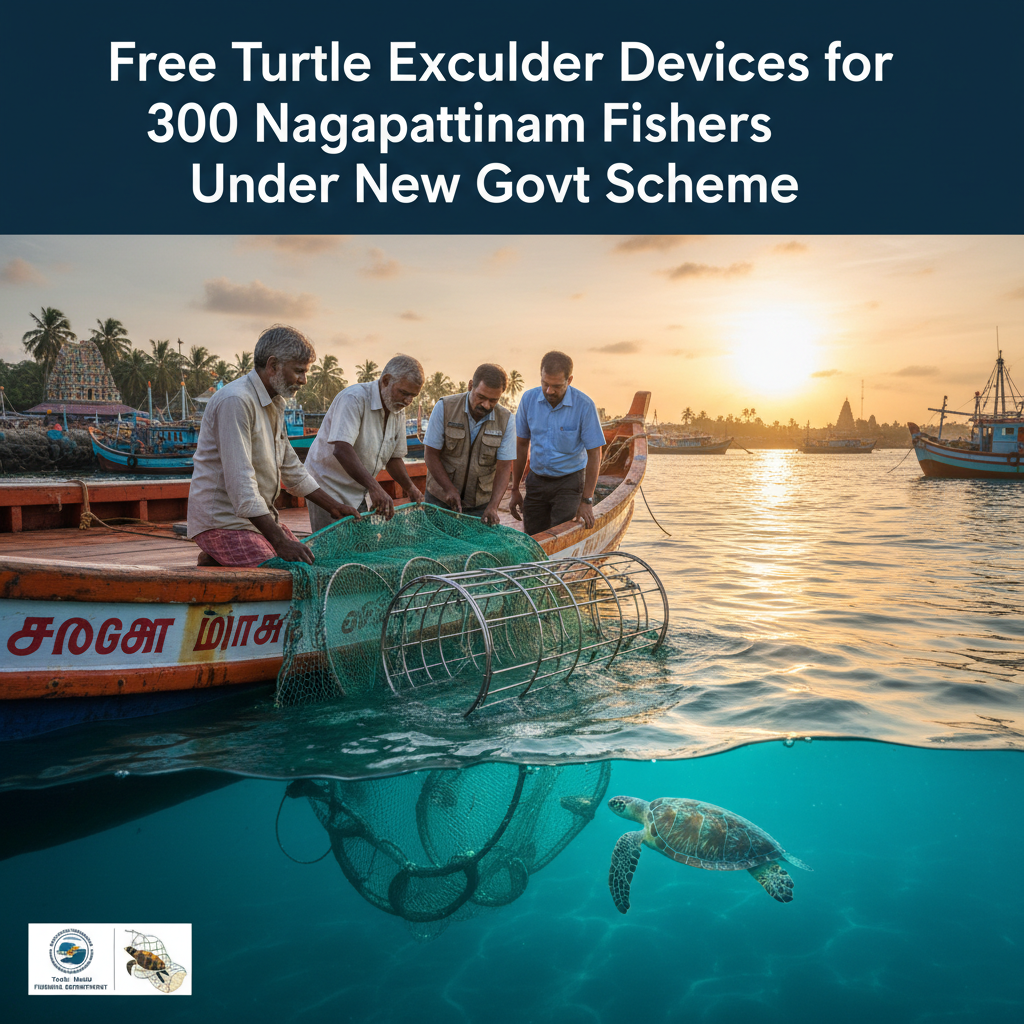
The Tamil Nadu Fisheries Department, in partnership with the Ministry of Environment, Forest and Climate Change, has launched a targeted programme to distribute free turtle excluder devices Nagapattinam to 300 fishers operating from the district’s coastal villages. This initiative forms a key component of the state’s broader coastal conservation strategy aimed at protecting Olive ridley turtles, which regularly nest along the shoreline between January and March each year. By integrating these devices into their trawling nets, fishers can continue harvesting shrimp and other commercial species while drastically reducing incidental turtle mortality. The scheme aligns with India’s national Blue Economy vision, which seeks sustainable use of marine resources for economic growth without compromising ecosystem health.
Eligibility and Distribution Process
Eligibility criteria are clearly defined to ensure that the benefits reach active shrimp trawlers who are most likely to interact with turtles. Applicants must: (1) be registered with the Tamil Nadu Fisheries Development Corporation, (2) hold a valid license for shrimp trawling in Nagapattinam waters, and (3) commit to submitting monthly logs of turtle interaction and by‑catch data. The distribution will unfold in three phases: a pilot rollout beginning on 15 January 2026, a second wave in March 2026, and a final batch in May 2026. Each approved fisher will receive a certified Turtle Excluder Device, a bilingual user manual, and an on‑site training session led by marine biologists from the Zoological Survey of India. An online portal hosted by the fisheries department streamlines applications, allowing candidates to upload required documents, track status, and receive SMS notifications once approved. Beneficiaries are then scheduled for an orientation at the nearest fisheries office, where hands‑on demonstrations ensure proper installation and removal of the devices.
Benefits for Fishers and Marine Conservation
The adoption of turtle excluder devices Nagapattinam delivers multiple, interlinked benefits for both livelihoods and the marine environment. From a conservation perspective, TEDs have been scientifically proven to reduce turtle mortality by up to 97 percent when correctly installed, safeguarding a species that plays a critical role in maintaining healthy seagrass beds and balancing coastal food webs. For fishers, studies conducted by the Central Marine Fisheries Research Institute (CMFRI) indicate that nets fitted with TEDs often retain higher‑quality shrimp, which commands better prices in domestic markets and export channels. Additionally, the scheme provides a modest compensatory allowance during the initial adjustment period, mitigating any temporary dip in catch volume and encouraging rapid adoption. 
Beyond economic and ecological gains, the programme supports broader community development. By reducing turtle mortality, the initiative helps preserve eco‑tourism attractions such as nesting beaches that draw domestic and international visitors, thereby generating ancillary income for local hospitality businesses. Moreover, participation fosters a sense of stewardship among fishers, encouraging them to become ambassadors for sustainable practices within their peer networks.
Implementation Timeline and Monitoring
Key milestones in the rollout schedule are as follows:
- 15 January 2026 – Commencement of the first distribution phase.
- 28 February 2026 – Completion of pilot training sessions and collection of initial feedback.
- 10 March 2026 – Launch of the second distribution phase.
- 30 May 2026 – Final phase concludes, delivering all 300 kits to eligible fishers.
Monitoring responsibilities are shared by a joint committee comprising officials from the fisheries department, representatives of environmental NGOs, and academic experts from institutions such as the University of Madras. Monthly data collection will focus on turtle sightings, by‑catch rates, and net performance metrics. This information will be compiled into a quarterly public report, ensuring transparency and enabling real‑time adjustments to the programme. The committee also plans to conduct periodic audits of device integrity and user compliance, thereby upholding quality standards throughout the rollout.
Expert Opinions and Stakeholder Reactions
Experts have largely praised the initiative as a pragmatic convergence of livelihood security and marine conservation. Dr. Meena Raju, a marine ecologist at the University of Madras, describes the programme as “a pragmatic step that balances economic needs with conservation imperatives, offering a clear pathway for sustainable fisheries.” Her research underscores that correctly installed TEDs can reduce turtle mortality by nearly 97 percent, a figure that aligns with global best practices documented by the U.S. Endangered Species Act and international marine stewardship frameworks.
Environmental NGOs, including the World Wildlife Fund (WWF) India, have labeled the scheme “a model that could be replicated in other coastal states,” highlighting its potential to create a network of turtle‑safe fisheries across the subcontinent. Conversely, local fisherfolk associations have expressed concerns about possible short‑term reductions in catch volume during the learning curve. In response, the department has pledged to conduct targeted workshops on net optimization, provide technical support for six months after installation, and offer a modest compensation scheme to offset any initial income dip.
Future Outlook and Expansion Plans
Looking ahead, the Tamil Nadu government intends to evaluate the outcomes of the Nagapattinam pilot before scaling the programme to other high‑risk districts such as Thoothukudi and Kanyakumari. Preliminary discussions indicate that a statewide expansion could benefit upwards of 1,200 fishers by 2028, contingent upon meeting conservation targets and demonstrating cost‑effectiveness. Analysts anticipate that successful implementation may influence national fisheries policy, potentially prompting a centrally funded TED adoption programme that would reinforce India’s commitments under the CITES and enhance the country’s reputation as a responsible marine steward.
If the pilot proves effective, the state plans to integrate the TED distribution model into its broader coastal livelihood diversification agenda, linking it with initiatives such as seaweed farming, mariculture, and eco‑tourism development. This holistic approach aims to create resilient coastal communities that benefit economically from sustainable resource use while preserving biodiversity for future generations.
Stay updated with the latest Yojana schemes and government initiatives for better awareness and eligibility. For personalized guidance on accessing these benefits, reach out to us.