


Rajasthan unveils Swarojgar Yojana: interest‑free loans up to ₹10 lakh for self‑employment
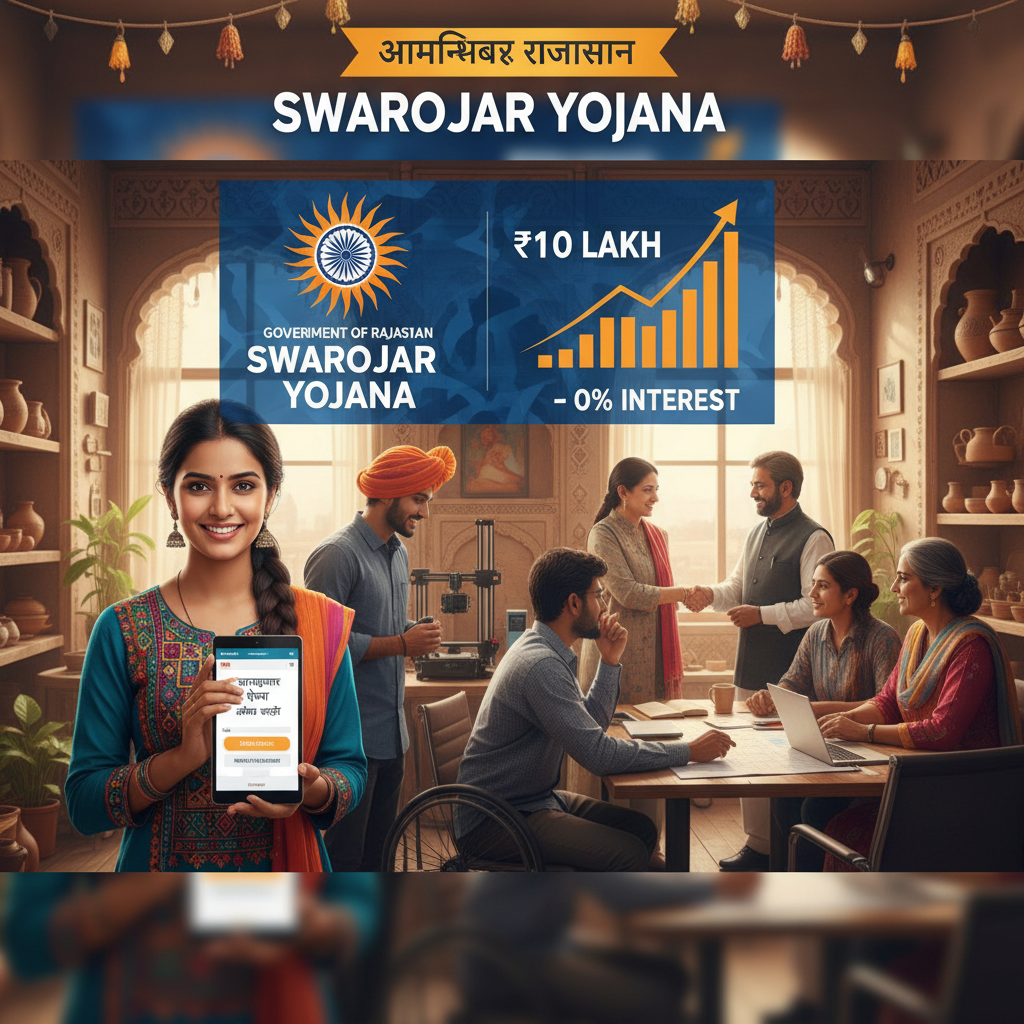
The Rajasthan government has formally launched the Swarojgar Yojana, a self‑employment programme that offers interest‑free loans of up to ten lakh rupees to aspiring entrepreneurs. announced by the state’s Department of Micro, Small and Medium Enterprises, the scheme is designed to remove the cost of borrowing for individuals from women, youth, scheduled castes, scheduled tribes and persons with disabilities who wish to start or expand micro‑enterprises. By eliminating interest charges, the programme seeks to accelerate job creation, boost rural incomes and stimulate economic activity across the state’s diverse districts. Officials say the initiative aligns with national goals of promoting inclusive growth and reducing regional disparities. The rollout follows a pilot inJaipur and Kota that demonstrated high uptake among women-led cooperatives, and the state now plans to extend the benefit to all 33 districts before the end of the financial year. The programme is being positioned as a cornerstone of Rajasthan’s push to become a hub for micro‑enterprise development, with the chief minister highlighting its potential to transform the state’s socioeconomic landscape.
Why Swarojgar matters: objectives, benefits and financial incentives
The primary objective of the Swarojgar Yojana is to foster grassroots entrepreneurship by providing capital without the burden of interest. Beneficiaries receive a zero‑percent interest rate, meaning the total repayment equals the principal amount, although a modest processing fee covers administrative costs. The loan size can range from a modest ₹10,000 for micro‑ventures to the full ₹10 lakh for larger, scalable businesses. In addition to financing, the scheme embeds a suite of support mechanisms: mandatory skill‑development workshops, mentorship from industry veterans, and market‑linkage assistance that connects borrowers with buyers and distributors. Women entrepreneurs receive an additional incentive – up to 20 % of the loan can be converted into a non‑repayable grant, encouraging greater female participation in the formal economy. The programme also prioritises businesses that align with the state’s development priorities, such as renewable energy, agri‑processing, handicrafts and digital services. By coupling financial support with capacity‑building, the Swarojgar Yojana aims to create a sustainable ecosystem where micro‑enterprises can thrive, generate employment and contribute to the state’s Gross State Domestic Product (GSDP).
Who qualifies? Eligibility criteria and preferential groups
Eligibility for the Swarojgar Yojana loan is strict but inclusive, targeting residents who demonstrate both need and viability. Applicants must be permanent residents of Rajasthan and meet at least one of the following conditions: age between 18 and 35 years, belonging to a scheduled caste (SC) or scheduled tribe (ST), being a woman, or being a person with a disability (PWD). Additionally, the applicant must possess a feasible business plan that complies with local regulations and fits within the state’s priority sectors. The scheme bars individuals who have defaulted on any previous government‑issued loans, ensuring responsible utilisation of funds. To encourage regional balance, preference is given to candidates from backward and remote districts, with a quota system that reserves a portion of loans for SC, ST and female applicants. Documentation requirements include proof of residence, educational or skill‑training certificates, a detailed market analysis, and recent bank statements. The government has also instituted a verification committee that reviews each application to prevent fraud and to ensure that the loan is directed toward genuine enterprise development. 
How to apply: online steps, required documents and verification
The application process for the Swarojgar Yojana is fully digital and hosted on the Rajasthan State Economic Development Agency (RSEDA) portal. Prospective borrowers must first create an account using their Aadhaar number and bank details, after which they can upload the required documents and submit a comprehensive business plan. The portal guides users through each section, prompting the entry of projected cash flows, raw material sourcing strategies and marketing approaches. Once the form is submitted, a designated verification officer conducts a background check, which may involve site visits and interviews to validate the business concept. If the proposal passes scrutiny, the applicant receives an electronic sanction letter outlining the approved loan amount, repayment schedule and any applicable processing fee. Funds are typically disbursed directly into the borrower’s bank account within fifteen working days of sanction, after which the repayment clock begins. The entire workflow is designed to be transparent, with real‑time status updates accessible to applicants through their portal dashboard. For those seeking additional guidance, the government provides a toll‑free helpline and a network of district‑level startup facilitation centres that assist with document preparation and business planning.
Loan parameters, real‑world impact and the road ahead
Under the Swarojgar Yohana, the sanctioned loan amount can vary from a minimum of ₹10,000 for micro‑enterprises to a maximum of ₹10 lakh for medium‑scale ventures. While the interest rate remains officially set at zero, a nominal processing fee – typically 0.5 % of the loan value – is levied to cover administrative expenditures. Repayment tenures stretch up to five years, offering borrowers flexible schedules that can be adjusted based on cash‑flow performance. Notably, up to 20 % of the loan amount can be converted into a grant for female entrepreneurs, reducing the repayment burden and encouraging gender‑balanced business ecosystems. Early case studies illustrate the scheme’s tangible impact: a women‑led organic food processing unit in Jodhpur reported a 45 % increase in monthly revenue after receiving a ₹5 lakh loan, enabling the purchase of modern equipment and expansion into neighboring states. In rural Ajmer, a group of youth established a solar‑lamp manufacturing micro‑enterprise, creating 15 new jobs and reducing reliance on imported goods. Such success stories have spurred the formation of community‑wide entrepreneur clusters that share best practices, raw‑material sourcing leads and marketing channels. Looking forward, the Rajasthan government plans to integrate advanced digital tracking tools to monitor borrower progress, introduce predictive analytics for risk assessment and expand partnerships with fintech firms and NGOs to broaden outreach. These initiatives aim to refine eligibility criteria, increase the loan ceiling, and ensure that the benefits of Swarojgar Yojana reach the most underserved corners of the state.
Stay updated with the latest Yojana schemes and government initiatives for better awareness and eligibility. For personalized guidance on accessing these benefits, reach out to us.