


Background and Rationale
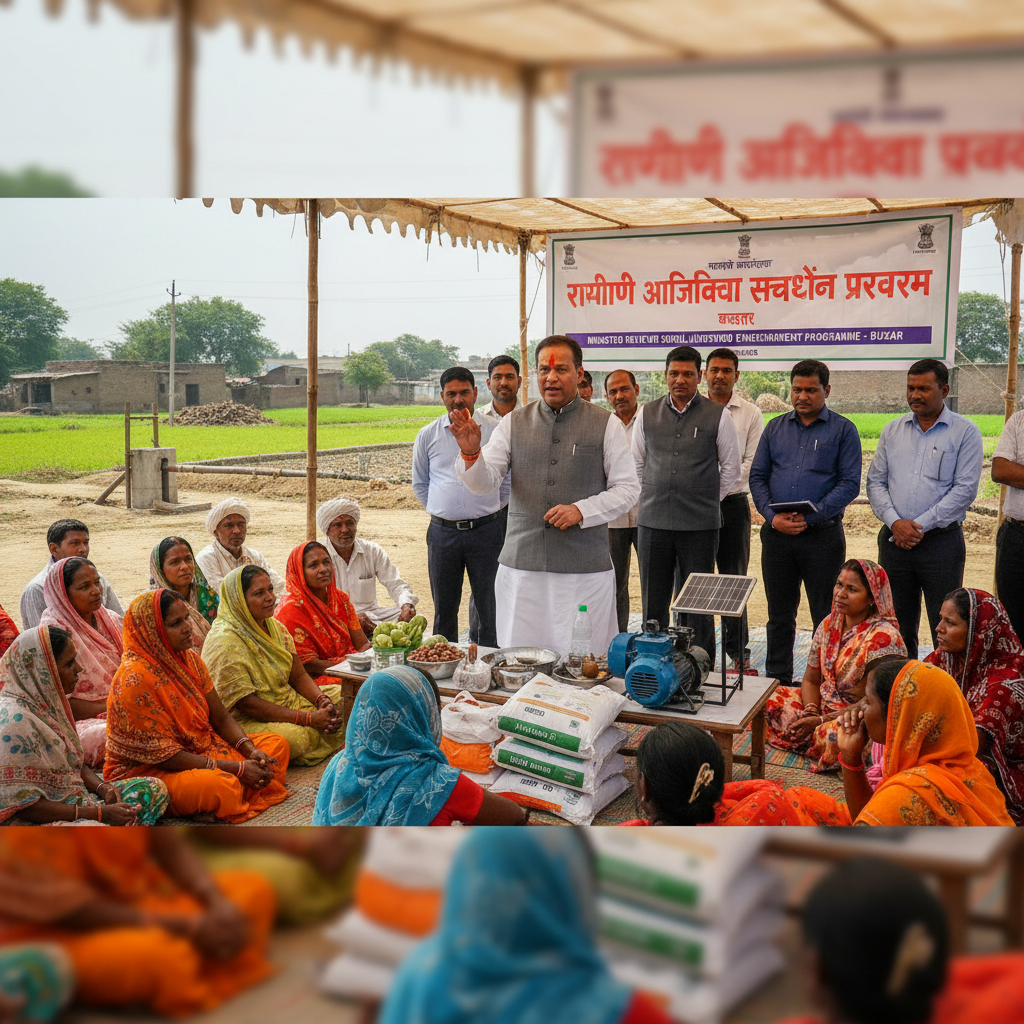
The Minister of Rural Development, accompanied by senior officials from the State Planning Department, conducted an in‑depth assessment of the newly launched “Rural Livelihood Enhancement Programme” (RLEP) in Buxar district on 27 January 2026. This review formed part of a broader effort to monitor progress across districts and ensure timely delivery of benefits. Introduced in the fiscal year 2025‑26, RLEP was designed to address multidimensional poverty in underserved rural pockets of Bihar. Its core premise revolves around a synergistic approach that combines agricultural subsidies, skill development, infrastructure upgrades, and social empowerment measures. By targeting small‑holder farmers, landless labourers, and marginalised women, the programme seeks to create a ripple effect of economic upliftment across households. The initiative aligns with the national agenda of National Rural Livelihood Mission and the state’s vision to achieve the Sustainable Development Goals (SDGs) related to poverty eradication and gender equality.
Scheme Components and Target Beneficiaries
RLEP comprises four interlinked components, each aimed at a specific development pillar:
- Agricultural Input Subsidy: Direct cash transfers to eligible farmers for procurement of seeds, fertilizers, and irrigation equipment, enabling timely sowing and reducing input cost burdens.
- Vocational Training Hubs: Community‑based training centres offering courses in digital literacy, renewable energy installation, and micro‑enterprise management, thereby enhancing employability and fostering entrepreneurship.
- Water, Sanitation and Health (WSH) Upgrades: Installation of tube‑well pumps, construction of household latrines, and distribution of clean‑water filters to improve public health outcomes and reduce water‑borne diseases.
- Women’s Empowerment Module: Micro‑credit facilities, women‑self‑help groups, and awareness campaigns on legal rights and health nutrition, designed to increase financial independence and social participation of women.
The scheme targets approximately 250,000 households, representing roughly 12 percent of Buxar’s total population. Eligibility criteria prioritize families below the poverty line, marginal farmers with less than two hectares of cultivable land, and women-headed households. Beneficiaries are identified through a verified database that cross‑references land records, voter rolls, and the Socio‑Economic Caste Census to ensure transparent inclusion. 
Financial Allocation and Disbursement Mechanism
The state government has earmarked INR 1.8 billion for RLEP in the current budget, with a 60:40 split between central and state funding. Disbursement follows a transparent, online‑based portal that tracks fund releases at each implementation tier. As of the review date, 72 percent of the allocated budget has been transferred to district treasuries, while 55 percent has reached the block‑level implementing agencies. The digital platform, built on the e‑Governance Framework, provides real‑time visibility of fund flows, enabling stakeholders to audit allocations and detect anomalies promptly.
However, the audit report flagged delays in the final mile‑to‑village disbursement, primarily due to manual verification processes and occasional data mismatches between beneficiary registries. These bottlenecks have occasionally resulted in late cash transfers, affecting planting cycles for some farmers. To mitigate this, the ministry has introduced an automated verification engine that cross‑checks beneficiary details against the unified digital registry, reducing manual intervention and speeding up fund release.
Implementation Status Across Blocks and Key Challenges
During the field visit, the Minister inspected three pilot blocks: Buxar‑Sadar, Itarhi, and Chainsa. In Buxar‑Sadar, 81 percent of targeted beneficiaries reported receipt of subsidy payments within the stipulated timeframe, reflecting the effectiveness of the streamlined verification process. In contrast, Itarhi exhibited a 48 percent receipt rate, attributed to logistical constraints in transporting cash vouchers to remote villages lacking reliable internet connectivity. Chainsa demonstrated the lowest performance, with only 34 percent of eligible households receiving the promised inputs, due to a combination of limited staff capacity and inadequate last‑mile delivery mechanisms.
The assessment uncovered several systemic issues:
- Data Integration Gaps: Inconsistent beneficiary databases across districts hinder real‑time monitoring and increase the risk of duplicate entries.
- Capacity Constraints: Front‑line staff often lack adequate training to execute complex subsidy mechanisms and manage training hubs effectively.
- Awareness Deficits: Many households remain unaware of eligibility criteria, leading to under‑utilisation of benefits.
- Infrastructure Bottlenecks: Maintenance of newly installed water pumps suffers from insufficient technical support, causing downtime and service interruptions.
These challenges are compounded by seasonal variations in agricultural activity, which can affect the timing of subsidy usage and the demand for vocational training.
Government Mitigation Strategies and Future Roadmap
In response to the identified gaps, the Minister announced a multi‑pronged remedial plan that will be rolled out over the next fiscal year:
- Digital Registry Overhaul: Deployment of a unified digital platform that integrates voter lists, land records, and beneficiary data to reduce duplication and improve data integrity.
- Capacity‑Building Workshops: Quarterly training modules for block officers on financial management, monitoring tools, and community engagement, delivered in partnership with the Bihar Public Administration Training Institute.
- Outreach Campaigns: Leveraging local radio, mobile SMS alerts, and village‑level roadshows to educate communities about scheme benefits, eligibility requirements, and grievance redressal mechanisms.
- Technical Support Cells: Establishment of on‑ground help desks at block offices to troubleshoot hardware issues, provide immediate assistance with cash voucher redemption, and coordinate maintenance of water and sanitation assets.
- Public‑Private Partnerships: Engaging with agribusiness firms and technology startups to augment financing, share best practices, and introduce climate‑resilient farming techniques such as drought‑tolerant seed varieties.
- Climate‑Resilient Practices Integration: Embedding weather‑forecast advisory services into the agricultural subsidy component, ensuring that farmers receive inputs at optimal planting windows.
Looking ahead, the roadmap outlines three strategic priorities for the next fiscal year: scaling successful pilot interventions to additional blocks, strengthening public‑private partnerships to augment financing and technical expertise, and integrating climate‑resilient practices into agricultural subsidies. The state’s Monitoring and Evaluation (M&E) framework proposes a tri‑annual review cycle, incorporating key performance indicators (KPIs) such as subsidy disbursement timeliness, training completion rates, and improvement in household income metrics. Quarterly performance dashboards will be published on a public portal, enhancing transparency and accountability.
Community feedback gathered during the visit revealed a spectrum of sentiments. While many beneficiaries expressed gratitude for the cash inflows that facilitated timely seed purchases, some voiced concerns over delayed disbursements that impacted planting cycles. Women’s groups highlighted the need for more inclusive micro‑credit terms, emphasizing that current interest rates remain prohibitive for low‑income households. Village elders suggested the incorporation of traditional knowledge systems into the vocational training curriculum, arguing that this would enhance relevance and acceptance among older cohorts.
When benchmarked against neighboring districts such as Rohtas and Kaimur, Buxar’s overall implementation score stands at 62 out of 100, positioning it in the mid‑range category. Rohtas outperforms Buxar with a score of 71, largely due to its early adoption of the digital registry system, whereas Kaimur lags behind with a score of 45, reflecting poorer fund absorption rates. These comparative insights help identify best practices that can be replicated across the state.
In conclusion, the Minister’s review of the Rural Livelihood Enhancement Programme in Buxar underscores both the promising beginnings and the critical gaps that require urgent attention. By coupling robust financial oversight with community‑centric outreach and technological upgrades, the government aims to transform welfare delivery from a procedural exercise into a catalyst for holistic rural development. Continued collaboration between state agencies, local panchayats, and civil society will be essential to realise the full potential of this ambitious scheme.
Stay updated with the latest Yojana schemes and government initiatives for better awareness and eligibility. For personalized guidance on accessing these benefits, reach out to us.