


Introduction to Nagrik Awas Yojana 2026
The Delhi Development Authority (DDA) launched the Nagrik Awas Yojana 2026 as a flagship initiative to address the chronic shortage of affordable housing in the National Capital Region (NCR). Announced in January 2026, the scheme targets middle‑income families who earn between ₹6 lakh and ₹15 lakh per annum, offering them the opportunity to acquire a pucca house at a subsidised price. According to the official DDA release, the programme aims to deliver over 10,000 new units across identified sites in Delhi, Gurugram, and Noida, with a commitment that each unit will be priced below the prevailing market rate for comparable apartments.
Key features of the Nagrik Awas Yojana 2026 include the use of under‑utilised government land, partnerships with private developers through a transparent bid process, and a streamlined allotment mechanism that prioritises eligible applicants based on income criteria and civic duties. The initiative is positioned as a cornerstone of Delhi’s broader urban housing strategy, which seeks to reduce the city’s housing deficit—estimated at more than 800,000 units—while promoting inclusive growth. The scheme also incorporates a digital portal for application tracking, ensuring that prospective buyers can monitor their status in real time. For a deeper understanding of the Delhi housing ecosystem, refer to the DDA Wikipedia page and the official DDA schemes portal.
Details of the Karamyogi Flats and Pricing Concerns
Among the first batches of units allotted under the Nagrik Awas Yojana 2026 are the so‑called Karamyogi flats, a set of ready‑to‑move residential apartments located in the East Kidwai Nagar pocket. Initial brochures released by DDA listed a base price of approximately ₹55 lakh for 1,200 sq ft units, positioning them as “affordable premium housing”. However, independent market surveys conducted by consumer advocacy groups such as the Consumer Guidance Society of India revealed that the final allotment letters quoted a price ranging from ₹65 lakh to ₹70 lakh—an increase of 20‑30 percent over the advertised figure. 
Critics argue that this pricing discrepancy was not communicated adequately during the application phase, leading many first‑time homebuyers to believe they were securing a truly low‑cost unit. A price‑benchmarking exercise by the Consumer Guidance Society found that comparable residential projects in the same neighbourhood offered per‑sq ft rates up to 15 percent lower. Additionally, the payment schedule requires a 15 percent upfront deposit, followed by quarterly instalments that many eligible applicants find financially burdensome, especially when compared with the promised “affordable” price ceiling. This has sparked a perception that the Nagrik Awas Yojana 2026 is favoring developers over genuine citizens.
Buyer Reaction and Social Media Outcry
The discontent among allottees manifested swiftly across digital platforms. Within days of the allotment announcement, hashtags such as #OverpricedKaramyogi and #DDAHousingScam trended on Twitter, accruing more than 25,000 mentions. Affected buyers posted screenshots of their initial brochures juxtaposed with the newer allotment letters, underscoring the mismatch between expectations and reality.
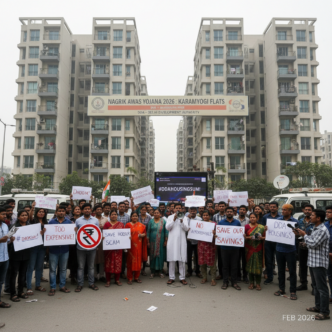
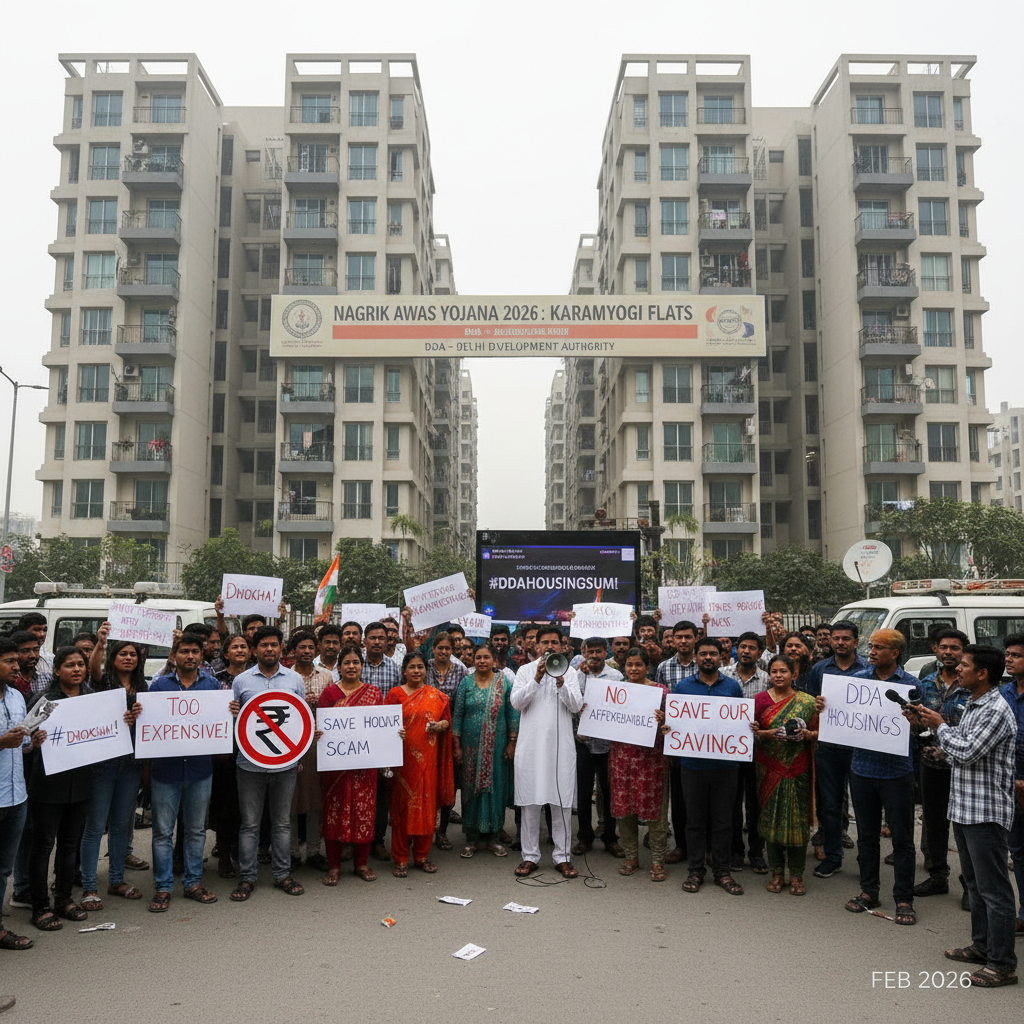
Online petitions hosted on Change.org demanded a revision of the pricing structure and garnered signatures from over 15,000 citizens across Delhi, NCR, and surrounding states. Peaceful protests were organised outside the DDA headquarters, with participants carrying banners that read “Honour the Affordability Promise of Nagrik Awas Yojana 2026”. The Times of India covered the protests extensively, highlighting personal stories of families who had saved for years to meet the upfront deposit, only to face unexpected financial strain. For readers interested in the broader context of housing activism in India, see the Housing policy in India Wikipedia article.
Government Response and Official Statements
Facing mounting pressure, DDA officials issued a formal clarification on 12 March 2026, asserting that the revised pricing reflects the true cost of construction, land acquisition, and compliance with updated statutory regulations. The authority emphasized that Karamyogi flats incorporate premium amenities—including landscaped gardens, multi‑level parking, CCTV‑monitored security, and a dedicated children’s play zone—justifying a higher valuation. Moreover, DDA pointed to recent amendments in the housing policy that permit flexible price adjustments in response to inflationary pressures and rising material costs.
In the statement, DDA reiterated its commitment to transparency and outlined a grievance redressal mechanism whereby all complaints would be examined by an independent committee within a 30‑day window. The committee is empowered to recommend revisions to allotment terms, including potential refunds or discounts, should discrepancies be identified. The full press release can be accessed on the DDA press releases page. While the authority maintains that theKarmyogi flats meet the quality standards promised, it has opened the door to dialogue with stakeholders to address the concerns raised.
Expert Analysis and Market Implications
Urban development experts have weighed in on the episode, noting that the controversy could have far‑reaching implications for future affordable housing initiatives. Economists from the National University of Singapore and the Indian Institute of Technology Delhi suggest that while the intent behind the Nagrik Awas Yojana 2026 is commendable, execution gaps—particularly around price communication—risk eroding public trust in government‑backed schemes.
A comparative study of recent government‑sponsored housing projects across India, published in the Journal of Housing Policy, reveals that price adjustments after allotment are not uncommon. However, transparency in communicating such adjustments remains a decisive factor in maintaining buyer confidence. Analysts also caution that a disproportionate backlash may emerge if the perceived overpricing is interpreted as profiteering rather than cost‑recovery. The episode underscores the need for robust stakeholder engagement and proactive disclosure of cost structures throughout the planning and implementation phases.
Potential Outcomes and Future Steps
Several possible trajectories can be envisioned for the Nagrik Awas Yojana 2026 and its Karamyogi component. One likely scenario involves DDA revisiting the pricing structure and offering refunds or concessional discounts to affected allottees, thereby restoring confidence in the program. An alternative path could see the authority introducing a revised allotment process with clearer price disclosures, stricter adherence to the originally promised affordability thresholds, and a mandatory audit of cost calculations.
In any case, the episode highlights the necessity for a dedicated oversight body to monitor price compliance and provide real‑time feedback to citizens. Policymakers may also consider embedding a consumer‑friendly grievance portal directly within the DDA website to streamline complaint resolution. Future schemes should incorporate early‑stage consultations with prospective buyers, ensuring that expectations are aligned with final allotment terms. By doing so, the government can safeguard the core promise of affordable housing while still achieving ambitious urban development targets.
Conclusion
The heated debate surrounding DDA’s Nagrik Awas Yojana 2026 underscores the delicate balance between ambitious urban development goals and the practical realities faced by everyday citizens. While the scheme aims to alleviate housing shortages across the NCR, the perceived overpricing of Karamyogi flats has ignited legitimate concerns that cannot be ignored. Constructive dialogue between the government, buyers, and advocacy groups will be essential to refine the programme, enhance transparency, and ensure that the promise of affordable housing is fulfilled for all eligible participants. As the situation evolves, stakeholders will be watching closely to see whether DDA can pivot and deliver on its commitment to inclusive, cost‑effective urban living.
Stay updated with the latest Yojana schemes and government initiatives for better awareness and eligibility. For personalized guidance on accessing these benefits, reach out to us.