


Overview of the Mukh Mantri Sehat Bima Yojana
The Mukh Mantri Sehat Bima Yojana is a flagship health‑insurance programme launched by the Punjab government to provide comprehensive medical coverage to every resident of the state. Under this initiative, eligible families receive an annual hospitalization cover of up to ₹5 lakh, with additional benefits for critical illnesses, diagnostic tests, and post‑hospitalization follow‑up. The scheme is designed to eliminate out‑of‑pocket expenses for low‑and‑middle‑income households, ensuring that financial constraints do not become a barrier to quality healthcare. By integrating a digital claim‑settlement platform, the programme promises cashless treatment at empaneled hospitals, thereby streamlining the patient experience. For detailed information, visit the Punjab Government portal or consult the health‑insurance entry on Wikipedia.
Free Surgery for a 92‑Year‑Old Man
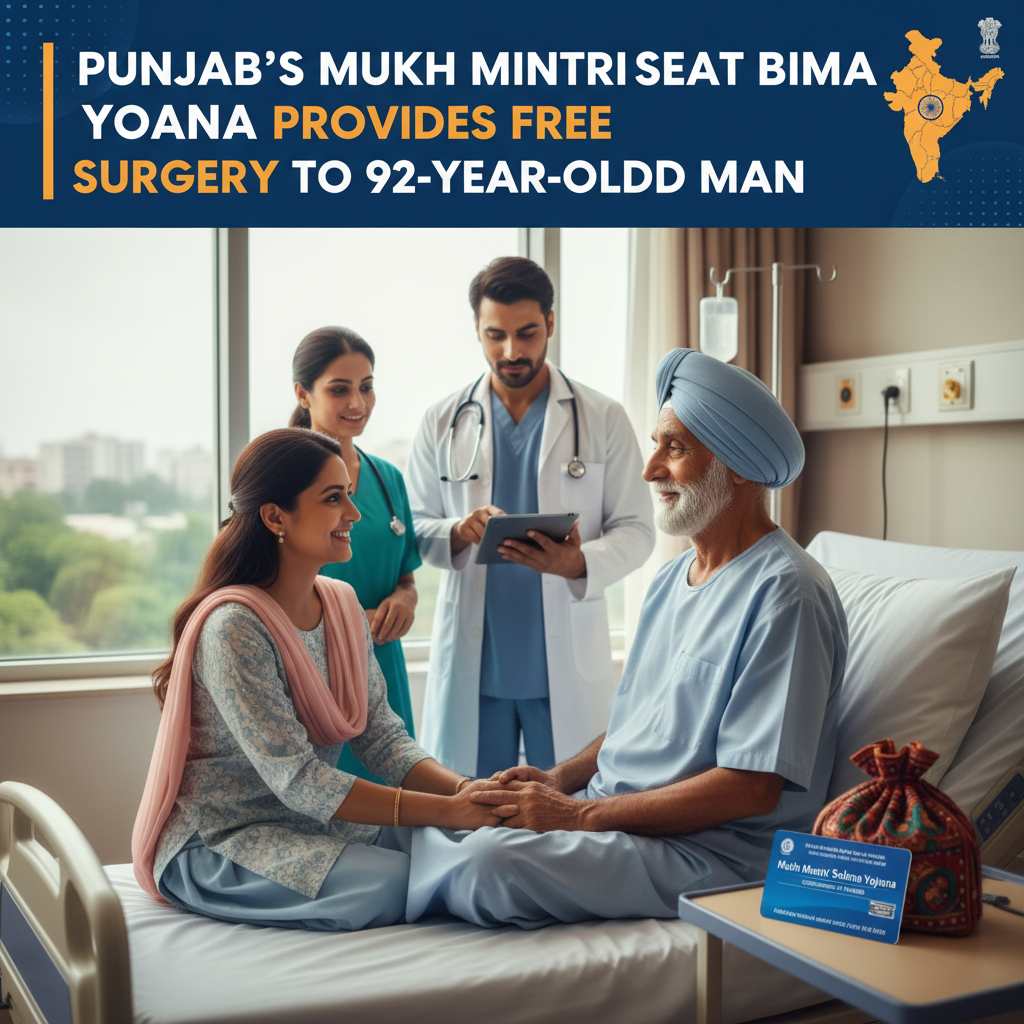
In a recent high‑profile case, a 92‑year‑old resident of Ludhiana underwent a complex cardiac surgery at a government tertiary care centre under the Mukh Mantri Sehat Bima Yojana. The operation, which would have cost the family more than ₹3 lakh in the private sector, was performed completely free of charge. Hospital officials confirmed that the patient met all eligibility criteria, including age, residency, and income thresholds. This incident highlights the scheme’s ability to fund high‑cost, specialized procedures for senior citizens, thereby protecting vulnerable families from catastrophic health expenditures.
Impact on Senior Citizens
Senior citizens often face chronic health conditions that require regular medical attention and occasional surgeries. The Mukh Mantri Sehat Bima Yojana directly addresses these challenges by removing financial hurdles that deter timely treatment. Studies cited by the NITI Aayog health report indicate that coverage for elderly beneficiaries leads to a measurable reduction in emergency admissions and improves chronic disease management. Moreover, the scheme’s emphasis on early intervention helps prevent disease progression, ultimately contributing to higher life expectancy and better quality of life among older adults in Punjab. 
Eligibility and Enrollment Process
Eligibility for the Mukh Mantri Sehat Bima Yojana is open to all resident families in Punjab, irrespective of caste, creed, or gender. Applicants must provide:
- Proof of Punjab domicile (e.g., ration card or utility bill)
- Valid identity proof (Aadhaar or voter ID)
- Income documentation to determine subsidy tier
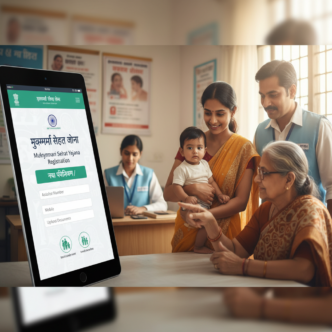
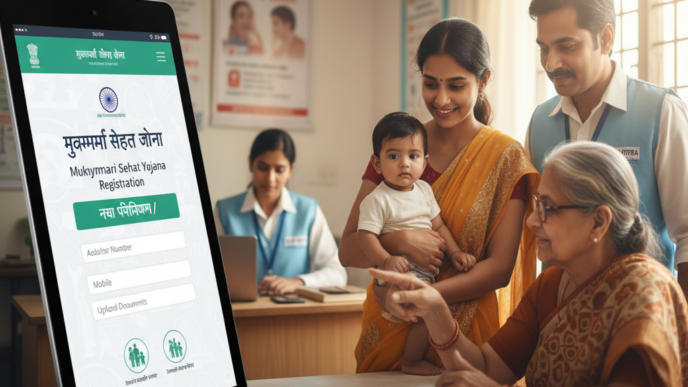
Enrollment can be completed either through the online portal at sehat.punjab.gov.in or at designated physical enrollment centres. Once registered, beneficiaries receive a digital health card that grants access to a network of empaneled hospitals and enables cashless treatment. The enrollment process is designed to be user‑friendly, with assistance available at district health offices for those less familiar with digital platforms.
Network of Empaneled Hospitals
The success of the Mukh Mantri Sehat Bima Yojana relies heavily on an extensive network of empaneled hospitals spanning both public and private sectors. These facilities must meet rigorous quality standards, maintain transparent billing, and demonstrate a track record of timely claim settlements. Consequently, beneficiaries can select treatment from a wide pool of reputable institutions without worrying about hidden costs. In the recent case of the 92‑year‑old patient, the surgery was performed at a government tertiary centre that is part of this network, showcasing the scheme’s capability to deliver high‑complexity care within the public system.
Financial Sustainability and Funding
Funding for the Mukh Mantri Sehat Bima Yojana originates primarily from the Punjab state health budget, supplemented by contributions from central health schemes such as the Ayushman Bharat Pradhan Mantri Jan Arogya Yojana. The state has instituted robust monitoring mechanisms, including quarterly audits and real‑time claim tracking, to safeguard against misuse and ensure fiscal prudence. Early assessments reveal that over 1.5 million families have been enrolled, with a substantial proportion of claims relating to surgical procedures, indicating the scheme’s growing utilization and impact on the state’s healthcare landscape.
Challenges and Future Outlook
Despite its achievements, the Mukh Mantri Sehat Bima Yojana faces several challenges. These include ensuring equitable access in remote and rural districts, maintaining the financial solvency of the insurance pool, and preventing claim fraud. To address these issues, the Punjab government plans to expand outreach programmes, increase awareness through community volunteers, and solicit feedback from beneficiaries to fine‑tune policy parameters. Experts suggest that scaling this model to other states could amplify its benefits nationwide, creating a more inclusive health‑insurance ecosystem.
Community Response and Media Coverage
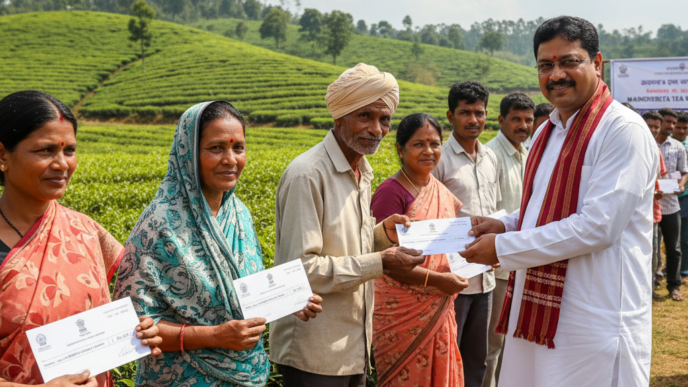
The local populace has responded positively to the Mukh Mantri Sehat Bima Yojana, with many families sharing personal testimonies of how the scheme has alleviated the fear of expensive medical procedures. Newspapers, television channels, and social media platforms have highlighted the 92‑year‑old cardiac surgery case as a powerful illustration of the programme’s life‑saving potential. These stories have spurred a wave of registrations among senior citizens, further strengthening the scheme’s reach and community endorsement.
Detailed Coverage Features
Beyond hospitalization, the Mukh Mantri Sehat Bima Yojana offers a suite of complementary benefits, including coverage for pre‑hospitalization diagnostics, post‑hospitalization follow‑up consultations, and critical‑illness riders that provide lump‑sum payouts for conditions such as cancer, heart attack, and stroke. The scheme also extends to organ transplantation, specialized therapies, and rehabilitative services, thereby broadening its applicability across diverse medical needs. These comprehensive features position the programme as one of the most all‑encompassing health‑insurance models in the country.
Integration with Digital Health Records
To enhance care coordination, the Mukh Mantri Sehat Bima Yojana integrates with a state‑wide digital health record system accessible to authorized providers. This repository stores medical histories, medication lists, and previous treatment details, reducing the likelihood of errors and enabling personalized treatment plans. Beneficiaries can view their health information through a mobile app that also facilitates appointment scheduling, claim status tracking, and real‑time notifications, thereby modernizing the patient experience.
Financial Incentives for Healthcare Providers
The Punjab health department has introduced financial incentives to encourage hospitals to join the empaneled network under the Mukh Mantri Sehat Bima Yojana. These include prompt reimbursement of claims, reduced administrative paperwork, and performance‑based bonuses for maintaining low claim denial rates. Such incentives have attracted several reputable private hospitals into the scheme, expanding choice for beneficiaries and fostering competition that can drive up quality standards across the network.
Case Study: Other Beneficiaries
The Mukh Mantri Sehat Bima Yojana has enabled numerous success stories beyond the recent cardiac surgery. A family from Patiala received full coverage for a complex knee replacement in a 70‑year‑old woman, while a child from Jalandhar underwent life‑saving leukemia treatment funded entirely by the scheme. These cases illustrate the programme’s versatility in addressing a wide spectrum of medical conditions across age groups, reinforcing its reputation as a safety net for vulnerable populations.
Monitoring and Evaluation
The Department of Health and Family Welfare conducts quarterly audits to assess the performance of the Mukh Mantri Sehat Bima Yojana. Key performance indicators include enrollment rates, claim settlement timeliness, and patient satisfaction scores. Preliminary data reveal a claim settlement rate of 96 % with an average processing time under 48 hours, reflecting efficient administrative processes. Patient satisfaction surveys consistently indicate high confidence in the scheme’s ability to deliver quality care, underscoring its positive impact on public health outcomes.
Future Expansion Plans
Looking ahead, the Punjab government aims to increase the coverage ceiling and introduce additional benefit components such as mental‑health services, physiotherapy, and rehabilitation therapies. Plans are also underway to deploy mobile health units that can reach remote villages, ensuring geographic equity in access to care. Stakeholder engagement initiatives will involve NGOs, community leaders, and medical professionals in designing these expansions, fostering a collaborative approach to strengthening the Mukh Mantri Sehat Bima Yojana for the benefit of all Punjab residents.
Stay updated with the latest Yojana schemes and government initiatives for better awareness and eligibility. For personalized guidance on accessing these benefits, reach out to us.