


98-Year-Old Woman Receives Life-Saving Cancer Treatment Through Government Health Scheme
A 98-year-old resident of Rajasthan has become the newest illustration of how India’s government health safety net can extend to the nation’s most senior citizens, delivering cutting‑edge cancer care without financial strain. According to reports filed by local health authorities, the patient was diagnosed with stage III breast cancer after presenting with persistent fatigue and unexplained weight loss. Rather than being denied treatment solely on the basis of her age, she was enrolled in the National Health Protection Mission (NHPM) and received a coordinated regimen of surgery, adjuvant chemotherapy, and targeted therapy—all fully subsidised under the scheme. The successful outcome underscores a growing commitment to universal health coverage that transcends conventional age‑related barriers.
How the National Health Protection Mission Covers Cancer Care
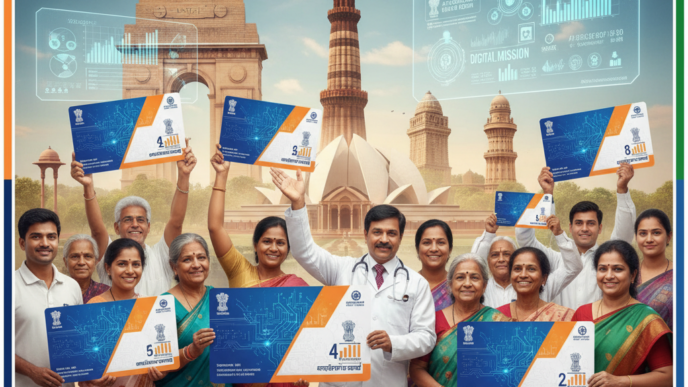
The NHPM, launched in 2018 under the umbrella of the Pradhan Mantri Jan Arogya Yojana (PMJAY), was designed to provide a health‑insurance cover of up to INR 5 lakhs per family per year for over 500 million eligible beneficiaries. While the programme’s primary focus is on preventive care and secondary hospitalization, it has progressively incorporated oncology services, allowing for coverage of diagnostics, chemotherapy, surgery, radiation therapy, and post‑operative follow‑up. Eligibility is determined by residency status and an income threshold that automatically includes senior citizens above the age of 60, regardless of pension receipt. In practice, patients need only submit a simple declaration of residence and a self‑declared income declaration to qualify. The scheme’s digital enrollment platform links directly with empaneled public hospitals and approved private partners, ensuring that claims are processed within 48 hours—an essential feature for time‑sensitive cancer treatment.
Key benefits of the oncology package include: 
- Full coverage of chemotherapy drugs listed under the National List of Essential Medicines.
- No‑cost diagnostics, such as histopathology, radiology, and laboratory tests.
- Coverage for surgical procedures performed in accredited tertiary care centres.
- Post‑operative outpatient chemotherapy sessions at designated day‑care centres.
These provisions have been reinforced through recent policy amendments in 2023 that expanded the list of covered cancer therapies to include newer targeted agents and immunotherapies, aligning the scheme with global treatment standards.
Personal Journey of an Octogenarian Patient Overcoming Age Barriers
The patient, identified as Shanti Devi, a retired schoolteacher from Jaipur, first noticed a persistent cough and a lump in her left breast. After a series of diagnostic tests—a mammogram, ultrasound, and core needle biopsy—her oncologist confirmed an invasive ductal carcinoma classified as stage III. Given her chronological age, the multidisciplinary tumor board initially debated the aggressiveness of the recommended treatment. However, functional assessments indicated a biological age equivalent to a healthier 70‑year‑old, prompting the team to proceed with a curative intent regimen.
Following a mastectomy performed at the All India Institute of Medical Sciences (AIIMS), Shanti Devi commenced a six‑month course of anthracycline‑based chemotherapy, supplemented with trastuzumab, a targeted therapy approved for HER2‑positive breast cancer. Throughout the treatment, the NHPM automatically adjudicated each claim, guaranteeing that hospitalisation costs, drug expenses, and follow‑up consultations incurred no out‑of‑pocket expenditure for the patient or her family. Six months after completing therapy, imaging studies revealed a complete metabolic response, and Shanti Devi is now disease‑free, participating in a national survivorship program that offers nutrition counseling and psychosocial support.
Her case illustrates a broader trend: older adults are increasingly accessing advanced cancer therapies that were previously considered too risky or costly for their age group. The removal of financial barriers, combined with a clinical approach that prioritises functional status over chronological age, has enabled more seniors to reap the benefits of modern oncology.
Economic Relief and Healthcare Access for Senior Citizens
Financial constraints have long represented a formidable obstacle to cancer care among the elderly in India. A 2022 health ministry survey revealed that 32 % of cancer patients aged 80 years and above discontinue or defer treatment due to unaffordable out‑of‑pocket expenses. The NHPM’s comprehensive cost‑coverage model directly addresses this gap. By absorbing the full cost of chemotherapy, surgery, and ancillary services, the scheme eliminates the need for patients to choose between treatment and basic living expenses.
Moreover, the programme’s eligibility criteria are deliberately inclusive. Senior citizens who receive a modest pension, or who are wholly dependent on family earnings, automatically qualify under the “senior citizen” bracket. This automatic enrolment removes the administrative burden of means‑testing, enabling swift activation of benefits. According to the National Health Authority, enrollment of beneficiaries aged 70 years and above rose by 18 % in the fiscal year 2023‑24, a surge attributed largely to targeted awareness drives in rural and semi‑urban districts.
The economic safety net extends beyond immediate treatment costs. The scheme also subsidises transportation to treatment centres, accommodation for out‑station patients, and nutritional supplements prescribed as part of cancer care pathways. By integrating these ancillary supports, the NHPM promotes continuity of care, reduces treatment abandonment, and ultimately contributes to higher survival rates among the elderly.
Insights from Oncologists and Policy Outlook
Oncology specialists who have observed Shanti Devi’s case stress that age should not be an automatic disqualifier for aggressive cancer therapy. Dr. Anjali Mehta, Head of Breast Oncology at AIIMS, remarked: A patient’s biological age often differs significantly from their chronological age. With proper assessment, we can identify candidates who will benefit from intensive treatment, regardless of their age bracket. This perspective aligns with emerging research advocating for personalized medicine that tailors treatment intensity to functional status, comorbidities, and supportive care availability rather than merely chronological age.
Looking ahead, policymakers are exploring several avenues to enhance the scheme’s oncology coverage. First, there is a push to incorporate novel therapies such as CAR‑T cell therapy and next‑generation checkpoint inhibitors into the reimbursable list, ensuring that cutting‑edge treatments are not reserved exclusively for younger patients. Second, the Ministry of Health intends to expand digital health portals that allow beneficiaries to track claim statuses in real time, reducing administrative delays. Finally, a national campaign targeting senior communities is slated for launch in early 2025, aiming to increase awareness of eligibility criteria and the step‑by‑step enrollment process.
These initiatives are reinforced by recent data indicating that states which implemented early NHPM pilots saw a 15 % increase in cancer treatment uptake among seniors within the first year, alongside a measurable decline in late‑stage presentations. Such evidence bolsters the argument that well‑designed health insurance mechanisms can simultaneously improve clinical outcomes and alleviate fiscal strain on families.
Stay updated with the latest Yojana schemes and government initiatives for better awareness and eligibility. For personalized guidance on accessing these benefits, reach out to us.