


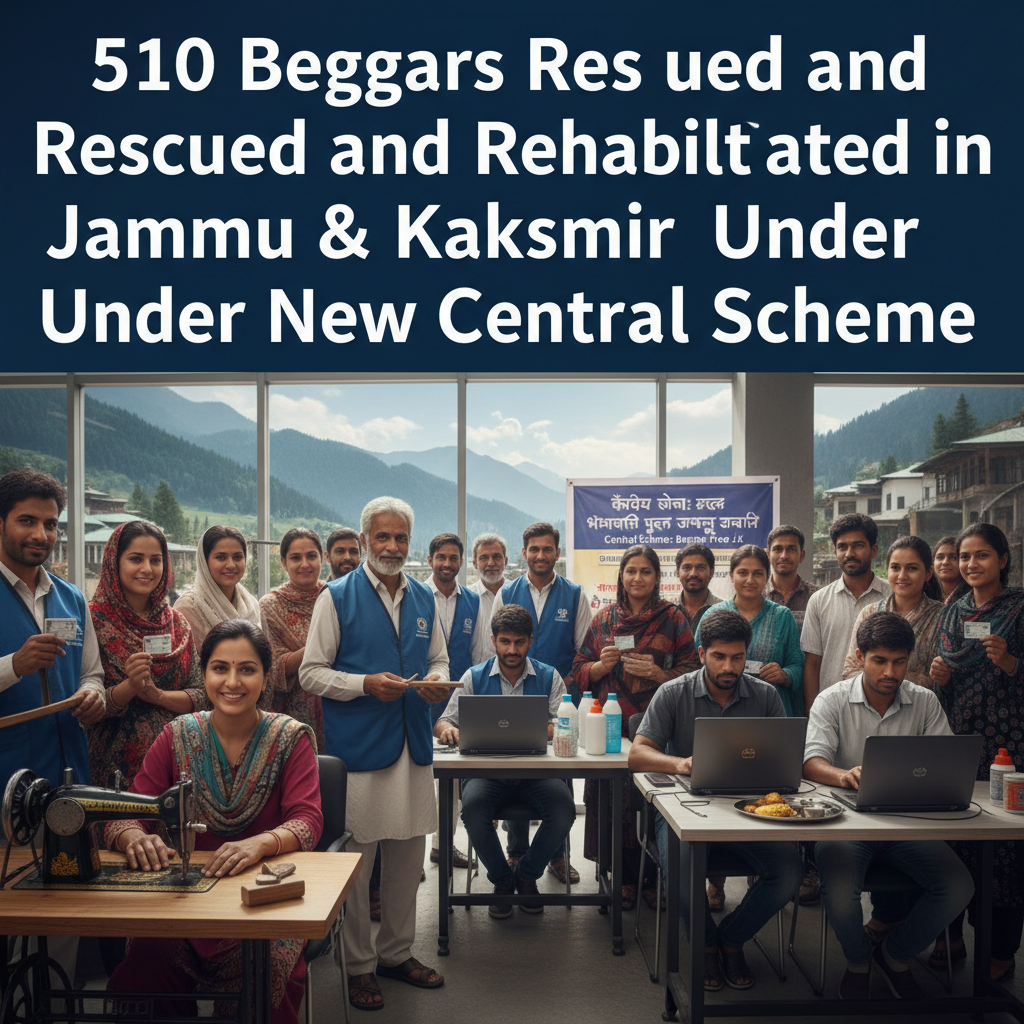
Rescue and Rehabilitation Milestone in Jammu & Kashmir
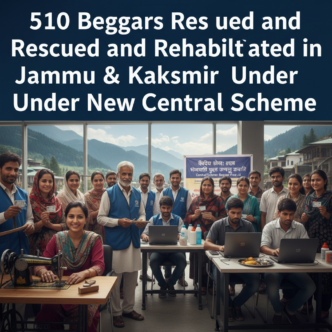
The recent operation in Jammu and Kashmir rescued and rehabilitated 510 beggars who were living on the streets of Srinagar, Jammu, and other urban centers. The coordinated effort, funded by the central government, brought together the Ministry of Social Justice and Empowerment, the Jammu and Kashmir Social Welfare Department, and several local NGOs to move vulnerable individuals from makeshift shelters into structured rehabilitation centers. This rescue marks the first large‑scale deployment of a dedicated central scheme aimed at addressing chronic street‑related poverty in the Union Territory.
According to officials, the initiative targeted individuals who had been surviving on the streets for more than a year, lacked family support, or were dealing with disability or mental health challenges. The operation not only provided immediate relief — such as warm clothing, nutritious meals, and medical check‑ups — but also launched a comprehensive assessment to map each beneficiary’s background, skills, and aspirations. By integrating health, social, and economic interventions, the program seeks to break the cycle of begging that has persisted for decades in the region.
Central Scheme Drives Action
The rescue was carried out under the National Rehabilitation Scheme for Street‑Identified Vulnerable Populations (NRS‑SIVP), a flagship program launched in 2023 to streamline assistance for beggars, homeless persons, and other marginalised groups across India. The scheme allocates ₹1,200 crore annually from the central budget, with additional matching grants from state agencies. Eligibility criteria prioritise those who have been on the streets for over 12 months, have no identifiable next‑of‑kin, or are certified as disabled under the Persons with Disabilities Act. 
Key components of the scheme include:
- Financial assistance for temporary accommodation and subsistence.
- Skill‑development modules covering tailoring, carpentry, digital literacy, and agri‑enterprise.
- Legal aid to obtain identity documents, ensuring access to banking, pensions, and other government benefits.
- Monitoring and after‑care to ensure sustainable reintegration into society.
Funding is disbursed through a transparent, web‑based platform that tracks each beneficiary’s progress from rescue to rehabilitation. The Ministry of Social Justice and Empowerment collaborates with state‑level departments, NGOs, and community‑based organisations to ensure that the scheme’s implementation is both scalable and locally adapted.
Rehabilitation Process and Support Services
Each rescued individual undergoes a multi‑stage assessment designed by public health experts and social work professionals. The process begins with a comprehensive health screening, which includes infectious disease testing, vaccination verification, and mental‑health counselling. Those identified with chronic conditions receive treatment at designated medical facilities, while psychosocial support is provided through licensed counselors.
Following health clearance, beneficiaries are transferred to state‑run rehabilitation centres where they receive:
- Three nutritious meals per day, formulated by nutritionists to address deficiencies common among street populations.
- Personal hygiene kits, including toiletries, laundry soap, and clean clothing.
- Basic education sessions focusing on literacy, numeracy, and digital skills.
- Vocational training tracks such as tailoring, carpentry, and mobile app development, tailored to local market demands.
- Micro‑enterprise grants of up to ₹50,000 to help launch small businesses, accompanied by mentorship from industry volunteers.
Upon successful completion of training, participants are linked with approved micro‑finance institutions and are required to present their newly issued identity documents — facilitated by the scheme’s legal aid component — to access banking services and social security benefits. This holistic approach ensures that beneficiaries are not only removed from the streets but also equipped with the tools to achieve economic independence.
Impact on Vulnerable Populations and Community Response
Early evaluation reports released by the Jammu and Kashmir Social Welfare Department indicate significant improvements in the lives of program graduates. Within six months of enrollment, 78 percent of trainees reported stable employment, while 65 percent noted a reduction in recurring health issues such as respiratory infections and skin ailments. Survey data also revealed a 90 percent increase in self‑reported dignity and confidence among participants, reflecting the program’s emphasis on social inclusion.
Community feedback has been overwhelmingly positive. Local residents, previously skeptical of government interventions, now regularly patronise micro‑enterprises run by former beggars, such as tailoring workshops and home‑cooked meal services. This shift has fostered a sense of ownership and pride among beneficiaries, while also encouraging neighbours to support rehabilitation efforts through volunteerism and donations.
Media coverage of the initiative has amplified public awareness, leading to a surge in inquiries about similar schemes across other Union Territories. Notably, the success story has been cited in parliamentary debates on the National Social Justice Framework, underscoring its relevance as a replicable model for addressing chronic homelessness nationwide.
Future Outlook and Policy Implications
Building on the initial success, the central government plans to expand the NRS‑SIVP to additional districts in Jammu and Kashmir, as well as to high‑burden states such as Maharashtra, West Bengal, and Delhi. Policymakers are currently drafting amendments to broaden eligibility criteria, incorporating feedback from NGOs and academic researchers who recommend a more inclusive approach that also targets street‑children and seasonal labourers.
Experts emphasise that a multi‑layered strategy — combining rescue operations, targeted rehabilitation, and preventive measures such as poverty alleviation and affordable housing — will be essential for long‑term impact. Dr. Ayesha Khan, a sociologist at the University of Jammu, argues that “the integration of livelihood programmes with mental‑health support creates a synergistic effect that addresses both the material and psychosocial dimensions of vulnerability.”
In the coming fiscal year, the Ministry of Social Justice and Empowerment aims to increase funding by 20 percent and introduce a digital dashboard that will allow real‑time monitoring of beneficiary outcomes. Such transparency is expected to boost accountability and encourage greater private‑sector participation through corporate social responsibility (CSR) initiatives.
Stay updated with the latest Yojana schemes and government initiatives for better awareness and eligibility. For personalized guidance on accessing these benefits, reach out to us.